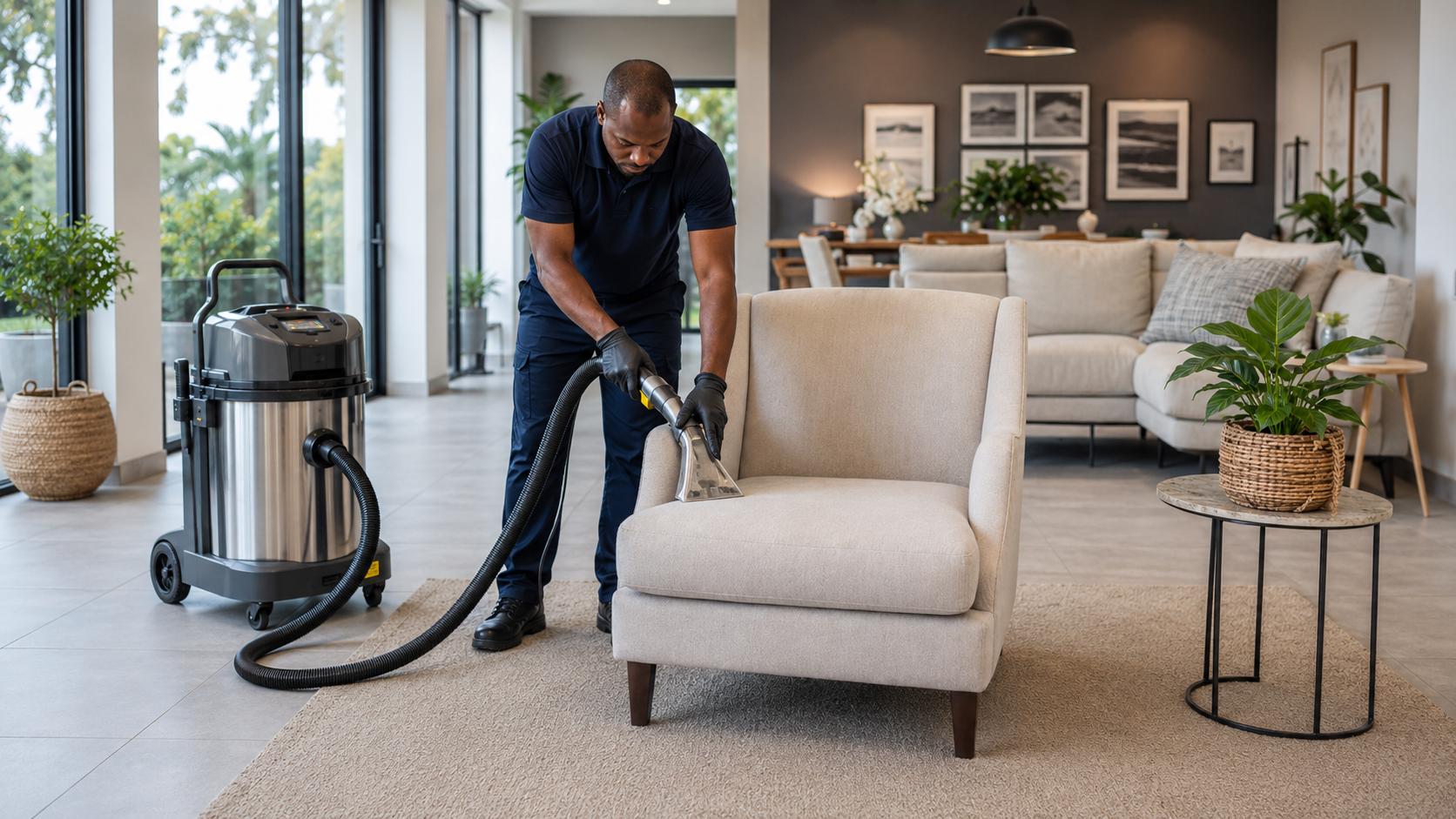
Fabric chairs can start to smell stale, look dull, or feel less fresh even when they are used in a clean home or office.
This often happens slowly. The chair may not have one obvious stain, but the fabric can collect dust, sweat, body oils, food crumbs, drink marks, pet hair, skin particles, clothing fibres, and everyday residue from repeated use.
This is common with office chairs, desk chairs, dining chairs, reception chairs, boardroom chairs, waiting-room chairs, occasional chairs and other upholstered seating.
The short answer is: fabric chairs start to smell or look dull because upholstery fabric absorbs and holds everyday buildup over time. Body oils, sweat, dust, food residue, drink marks, pet hair, poor airflow, and repeated use can make chairs smell stale, darken in high-contact areas, or lose their fresh appearance.
If your fabric chairs already smell stale, look dull, or have visible marks, you can review CleanLab SA’s fabric chair, carpet and upholstery cleaning page or choose a local carpet and upholstery cleaning page near you.
Why fabric chairs start to smell
Fabric chairs start to smell because upholstery fabric can hold small amounts of residue from daily use.
This may include:
- sweat
- body oils
- skin particles
- dust
- food crumbs
- drink residue
- pet hair
- pet dander
- saliva marks
- clothing fibres
- moisture
- poor airflow
- old spills
- general indoor odours
The smell may not come from one single stain. It often comes from the gradual buildup of several small things.
This is why a fabric chair can smell stale even when it does not look badly dirty.
Why fabric chairs start to look dull
Fabric chairs often look dull because fine dust, body oils and fabric residue slowly collect on the surface.
Over time, the fabric may start to look:
- flat
- greyish
- darker in high-use areas
- less bright than before
- slightly shiny on armrests or seat areas
- patchy in places
- older than it really is
This is especially noticeable on light-coloured fabric chairs.
Dullness does not always mean the chair is permanently damaged. In many cases, the chair is holding everyday buildup that may improve with suitable upholstery cleaning.
Why office chairs smell stale
Office chairs are one of the most common fabric chairs to develop odours.
This is because people often sit on the same office chair for many hours at a time. The chair may be used daily for work, meetings, computer use, eating at a desk, or long sitting periods.
A fabric office chair can collect:
- sweat
- body oils
- dust
- hair
- lint
- skin particles
- food crumbs
- coffee marks
- drink spills
- odours from repeated use
The smell is often strongest on the seat cushion and backrest.
If the chair is used every working day, the buildup can happen gradually without the chair looking obviously dirty at first.
Why desk chairs can smell even after vacuuming
Vacuuming a desk chair helps remove loose dust, crumbs, hair and lint.
But vacuuming does not always remove:
- body oils
- sweat residue
- drink residue
- old food marks
- odour trapped in fabric
- residue deeper in the cushion
This is why a desk chair can still smell stale after being vacuumed.
Vacuuming is useful maintenance, but it may not be enough when the chair has deeper fabric buildup, old marks, body odour, or a dirty seat cushion.
Why dining chairs start to smell or look dirty
Dining chairs collect a different type of buildup from office chairs.
Fabric dining chairs may collect:
- food crumbs
- sauce marks
- drink spills
- hand marks
- body oils
- children’s mess
- pet hair
- dust
- odours from food and daily use
Dining chairs are often used around food, so small spills and crumbs can build up before they become obvious.
A chair may look slightly dull, patchy, or stained around the seat edge, backrest, or front corners.
If several dining chairs are used every day, they may start to look uneven, with the most-used chairs appearing darker or duller than the others.
Why reception and waiting-room chairs look dull faster
Reception chairs, waiting-room chairs and boardroom chairs are used by many different people.
These chairs may collect:
- dust
- body oils
- hair
- lint
- clothing fibres
- hand marks
- coffee marks
- food crumbs
- stale odours
- daily visitor-use buildup
Customer-facing chairs matter because they affect how a space feels to visitors.
Even light dullness or stale fabric can make a reception area, waiting room, office or boardroom feel less fresh.
This is why businesses often clean fabric seating together with carpets and other upholstery.
Body oils are a major cause of dull fabric chairs
Body oils are one of the main reasons fabric chairs start to look darker or duller over time.
Body oil buildup is common on:
- seat cushions
- backrests
- armrests
- headrest areas
- favourite sitting spots
- office chair cushions
- dining chair seats
These areas may look darker, slightly shiny, or flatter than the rest of the fabric.
Body oils can also attract dust and hold odours, which is why the chair may start to look dull and smell stale at the same time.
Professional upholstery cleaning can often improve body oil buildup, depending on the fabric type, age of the mark, level of use and whether the fabric is already worn.
Sweat can make fabric chairs smell stale
Sweat is another common cause of stale chair smell.
This is especially common with:
- office chairs used for long hours
- home office chairs
- gaming chairs with fabric sections
- desk chairs used daily
- chairs in warm rooms
- chairs with poor airflow
Sweat residue can settle into the fabric and cushion over time.
The smell may become more noticeable in warm weather, closed rooms, or after long sitting periods.
This does not mean the chair is ruined. It usually means the fabric needs more than surface dusting.
Dust can make fabric chairs look grey or tired
Dust is a simple but important reason fabric chairs start to look dull.
Dust can settle into the fabric texture and make colours look less clear.
This is common in:
- homes near busy roads
- rooms with open windows
- offices with high foot traffic
- rooms with pets
- spaces with carpets and fabric furniture
- areas that are vacuumed less often
On light fabric, dust can make the chair look greyish.
On dark fabric, dust and lint may show as pale fibres or dull surface buildup.
Vacuuming can help, but deep dust and oily residue may need professional fabric chair cleaning.
Food and drink marks make fabric chairs age faster
Food and drink marks are common on dining chairs, office chairs and waiting-room chairs.
Common marks include:
- coffee
- tea
- juice
- wine
- soft drinks
- sauce
- oil
- chocolate
- snacks
- crumbs
Small marks may not look serious at first, but they can attract dirt, hold odours, or become harder to remove if left too long.
Scrubbing aggressively can make the mark worse by spreading it or damaging the fabric texture.
For visible food and drink marks, careful blotting is usually safer than hard scrubbing.
Pet hair and pet odours can affect fabric chairs
Pets can also make fabric chairs smell or look dull.
This may happen when dogs or cats sit, sleep, rub against, or walk near fabric chairs.
Pet-related chair buildup may include:
- pet hair
- dander
- saliva marks
- muddy paw marks
- outdoor dirt
- pet odours
- dirty resting spots
- light urine marks
Pet-used chairs may smell stale even if visible hair is removed.
This is because odour can sit in the fabric, not only on the surface.
Professional upholstery cleaning may help freshen pet-used fabric chairs when vacuuming is no longer enough.
Poor airflow can make chair smells worse
Fabric chairs can smell worse in rooms with poor airflow.
This is because moisture and odours do not clear as easily in closed spaces.
Poor airflow can affect:
- home offices
- bedrooms
- boardrooms
- waiting rooms
- closed lounges
- rooms with little sunlight
- rooms where chairs are used daily
If a fabric chair is slightly damp after DIY cleaning, poor airflow can also slow drying and create a musty smell.
This is one reason over-wetting fabric chairs is risky.
Why DIY sprays often do not fix smelly chairs
DIY sprays may cover a smell temporarily, but they do not always remove the cause.
A spray may add fragrance while the chair still holds:
- sweat residue
- body oils
- pet dander
- food residue
- drink marks
- dust
- old moisture
- fabric buildup
This can make the chair smell mixed rather than clean.
Some sprays can also leave residue, which may attract more dirt later.
If a chair smells stale again shortly after spraying, the source of the smell is probably still in the fabric.
Why fabric chairs can look clean but still smell
A fabric chair does not need to look badly dirty to smell stale.
This often happens when the odour comes from invisible buildup, such as:
- sweat
- body oils
- skin particles
- pet dander
- old drink residue
- food crumbs inside seams
- moisture inside the cushion
- poor airflow
The fabric may look acceptable, but the chair may still feel less fresh when someone sits on it or when the room is warm.
This is common with office chairs and desk chairs because they are used for long periods.
Why light-coloured fabric chairs show dullness faster
Light-coloured fabric chairs often show dullness sooner than darker chairs.
This is because dust, body oils, food marks, denim transfer, hand marks and everyday residue are more visible on lighter fabric.
Light chairs may show:
- grey patches
- darkened seat areas
- dirty edges
- water rings
- food marks
- hand marks
- uneven-looking fabric
This does not always mean the chair is permanently stained.
But light fabric should be treated carefully because harsh cleaning, over-wetting or scrubbing can create visible marks.
Why high-use chairs get dirty faster than occasional chairs
The more often a chair is used, the faster it usually starts to smell or look dull.
High-use chairs include:
- daily office chairs
- home office chairs
- favourite dining chairs
- TV-room chairs
- reception chairs
- waiting-room chairs
- boardroom chairs
- children’s chairs
- pet-used chairs
Occasional chairs in quiet rooms may stay fresh for longer.
The main difference is contact. More sitting, more touching, more dust movement and more food or drink exposure usually means faster buildup.
Can fabric chair smell be removed?
In many cases, yes.
Fabric chair smell can often be reduced or removed when the odour is caused by normal use, such as:
- sweat
- body oils
- dust
- food residue
- drink spills
- pet hair
- pet dander
- stale fabric buildup
Results depend on the fabric type, odour source, age of the smell, whether DIY products were used, and whether moisture has reached deeper padding.
If the smell is mostly in the upholstery fabric, professional cleaning can often make a clear difference.
If the smell comes from deep contamination inside cushion foam or long-term moisture damage, results may be less predictable.
Can dull fabric chairs look better after cleaning?
Yes, dull fabric chairs can often look better after cleaning when the dullness is caused by dirt, dust, oils, residue or everyday buildup.
Professional upholstery cleaning may help improve:
- grey-looking fabric
- dusty chair surfaces
- body oil marks
- dirty seat cushions
- dull armrests
- darkened high-use areas
- food or drink marks
- general fabric freshness
Cleaning cannot reverse permanent wear, sun fading, bleach marks, torn fabric, dye loss or physically damaged fibres.
But if the chair is structurally fine and mainly affected by normal use, cleaning can often make it look and feel fresher.
How to prevent fabric chairs from smelling
You can slow down odours with simple habits.
Helpful steps include:
- vacuum fabric chairs regularly
- clean crumbs from seams
- blot spills quickly
- avoid soaking the fabric
- improve room airflow
- avoid heavy fragrance sprays
- keep pets off delicate chairs where practical
- clean pet bedding often
- avoid eating messy food on fabric chairs
- dry chairs properly after any cleaning
These habits help, but they do not remove every type of buildup.
If a chair is used daily, it may still need professional upholstery cleaning from time to time.
How to prevent fabric chairs from looking dull
To help fabric chairs stay fresher for longer:
- vacuum regularly with an upholstery attachment
- rotate loose cushions where possible
- clean food crumbs quickly
- blot spills before they spread
- avoid harsh scrubbing
- avoid excessive DIY products
- keep rooms dust-controlled
- limit direct sunlight where practical
- clean chairs before buildup becomes severe
Light maintenance can help slow dullness, but it may not remove body oils, sweat residue or deeper fabric buildup once it has developed.
When should fabric chairs be professionally cleaned?
Fabric chairs may need professional upholstery cleaning when:
- the chair smells stale
- the chair looks dull
- the seat cushion looks darker
- armrests feel greasy or dirty
- there are food or drink marks
- pets use the chair
- the chair is used daily
- vacuuming no longer helps
- the fabric feels less fresh
- several chairs need cleaning at once
- reception or waiting-room chairs affect customer impressions
Professional cleaning is especially useful when the chair needs more than surface vacuuming.
For office spaces, it may also make sense to clean fabric chairs together with office carpets. You can read CleanLab SA’s guide on how often office carpets should be cleaned.
Should fabric chairs be cleaned with carpets and couches?
In many homes and businesses, yes.
Fabric chairs are often used in the same rooms as carpets, rugs, couches and other upholstered furniture.
For example:
- a dining room may have fabric dining chairs and nearby rugs
- a home office may have a fabric office chair and carpeted floor
- a reception area may have fabric chairs and carpeted walkways
- a lounge may have armchairs, couches, carpets and rugs
- a boardroom may have fabric chairs and office carpets
Cleaning one item can help, but the room may still feel stale if other soft surfaces are holding dust or odours.
This is why fabric chair, couch, carpet and upholstery cleaning often work well together.
Why professional upholstery cleaning is better than guessing
Professional upholstery cleaning is useful because different fabric chairs need different treatment.
A technician can consider:
- fabric type
- chair condition
- stain type
- odour source
- body oil buildup
- fabric colour
- whether the chair is delicate
- whether the fabric may watermark
- whether previous DIY products were used
- drying requirements
This matters because the wrong cleaning method can make a chair worse.
Too much water, too much soap, vinegar, baking soda, harsh stain removers or aggressive scrubbing can leave residue, spread marks, create water rings, damage texture, or make odours harder to treat.
Professional cleaning does not guarantee every mark will disappear, but it gives the chair a better chance of being cleaned safely and appropriately.
Why book fabric chair and upholstery cleaning through CleanLab SA?
Booking through CleanLab SA gives customers a structured way to arrange carpet and upholstery cleaning in South Africa.
CleanLab SA’s listed professionals are reviewed by customers and expected to meet clear standards. Customers can view available options, compare booking details, and get support from booking to completion.
This can be useful when customers need help with fabric chairs, office chairs, dining chairs, couches, carpets, rugs or other upholstered furniture.
Customers may need help with:
- selecting the right service
- understanding what is included
- clarifying fabric concerns
- cleaning several chairs at once
- refreshing a room before guests or customers arrive
- arranging related carpet and upholstery cleaning
- understanding drying and aftercare
The value is in the full booking structure:
- reviewed listed professionals
- clear standards to remain listed
- customer review visibility during booking
- support from booking to completion
- a practical way to arrange upholstery cleaning
- local booking options across major South African areas
You can also learn more from CleanLab SA’s Booking Protection and Professional Standards pages.
Find fabric chair and upholstery cleaning in your area
If your fabric chairs smell stale, look dull, or need professional cleaning, you can start with CleanLab SA’s fabric chair, couch and upholstery cleaning page.
Main city pages include:
- Cape Town carpet and upholstery cleaners
- Durban carpet and upholstery cleaning
- Johannesburg fabric chair and upholstery cleaning
- Pretoria carpet and upholstery cleaners
- Randburg upholstery and carpet cleaners
- Sandton carpet and upholstery cleaners
You can also browse the wider cleaning services hub or explore available cleaning service locations.
Final answer: why do fabric chairs smell or look dull?
Fabric chairs start to smell or look dull because upholstery fabric holds everyday buildup from repeated use.
Common causes include body oils, sweat, dust, food crumbs, drink marks, pet hair, dander, poor airflow, old spills and general fabric residue. Office chairs often smell because they are used for long hours. Dining chairs may look dull because of food, hand marks and drink spills. Reception and waiting-room chairs can look tired because many people use them regularly.
Vacuuming helps with loose dust and crumbs, but it may not remove body oils, sweat residue, stale odours or deeper fabric buildup.
If the chair is structurally in good condition, professional upholstery cleaning can often make fabric chairs look cleaner, smell fresher and feel more comfortable again. Cleaning cannot reverse permanent wear, bleach marks, sun fading, torn fabric or damaged fibres.
For professional help, review CleanLab SA’s professional fabric chair and upholstery cleaning page and use Get Rates & Availability to view prices, select your location and secure your booking.