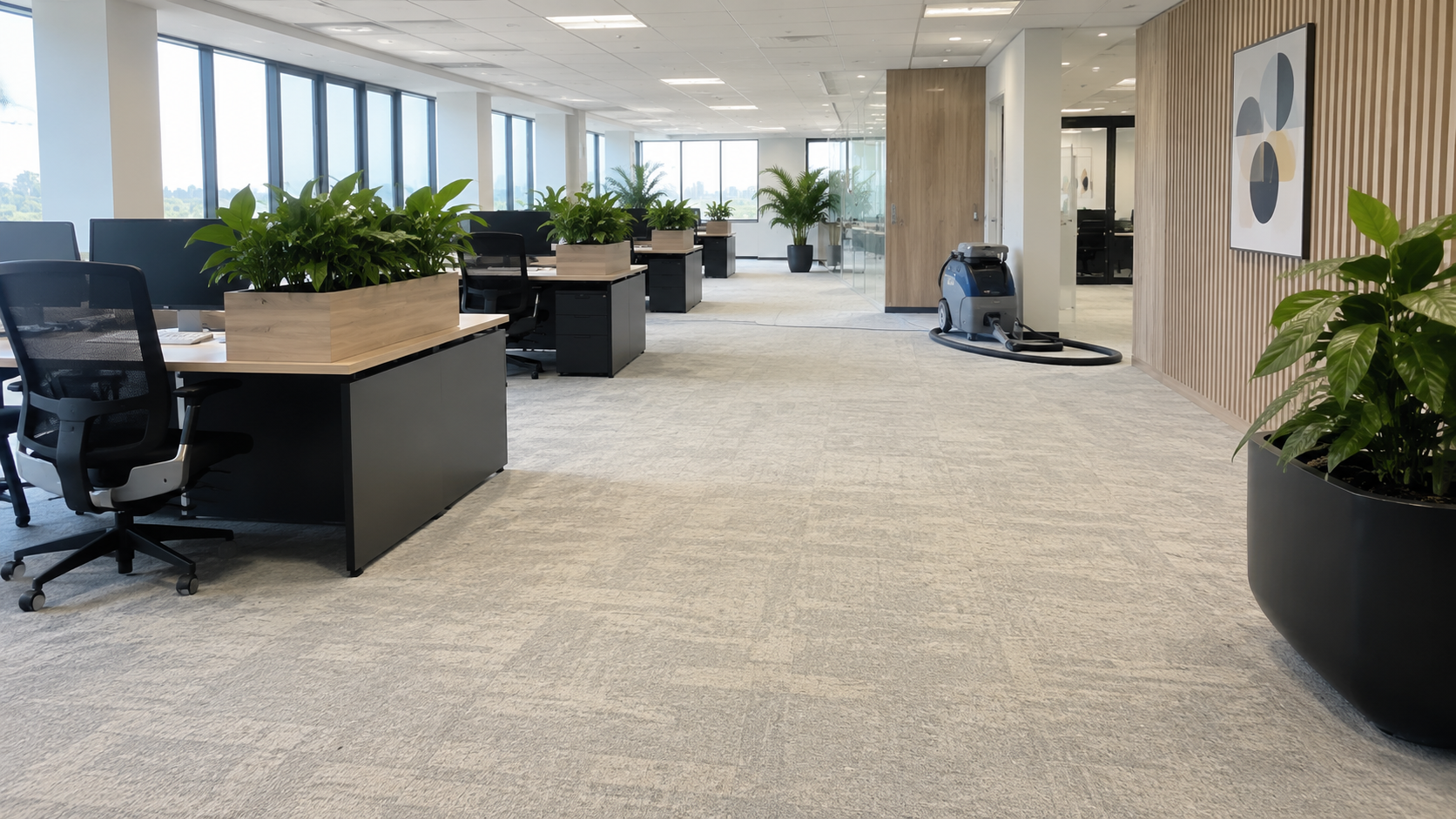
Office carpets should usually be cleaned based on how much foot traffic they receive, how the office is used, and how quickly the carpets start to show marks, dullness, odours or traffic lanes.
There is no single cleaning schedule that works for every business. A quiet private office may not need carpet cleaning as often as a busy reception area, call centre, clinic, school office, showroom, coworking space or customer-facing business.
As a general guide, businesses should inspect carpets regularly and arrange professional cleaning when carpets start to look dull, smell stale, show darker walkways, or make customer-facing areas feel less presentable.
Professional office carpet cleaning helps remove built-up dust, dirt, shoe residue, food and drink marks, stale odours and everyday workplace buildup. It can also help keep the office looking cleaner, fresher and more professional for staff, visitors and customers.
If your office carpets need professional cleaning, you can start with CleanLab SA’s carpet and upholstery cleaning page or choose your nearest local carpet-cleaning page.
Why office carpet cleaning frequency matters
Office carpets are used differently from home carpets.
In a business space, the same carpeted areas may be walked over by staff, clients, visitors, suppliers, tenants or guests every day. Even if the office looks tidy, carpets can collect dust, outdoor dirt, shoe residue, food crumbs, drink spills, body oils, hair, lint and general workplace buildup.
Over time, this can make office carpets:
- look dull
- smell stale
- show darker traffic lanes
- feel less fresh
- hold dust and debris
- look less professional
- affect reception and waiting areas
- make the office feel less well maintained
Regular carpet cleaning helps businesses manage appearance and freshness before carpets become heavily marked or unpleasant.
How often should office carpets be professionally cleaned?
The right frequency depends on the office.
A small low-traffic office may need less frequent cleaning, while busy business spaces may need professional carpet cleaning more often.
As a practical guide:
- low-traffic private offices may only need periodic cleaning
- medium-traffic offices may need cleaning more regularly
- high-traffic offices may need scheduled cleaning several times a year
- reception areas and walkways may need attention more often than private rooms
- hospitality, medical, retail, school and shared-use spaces may need more frequent cleaning
The best approach is to look at how the carpet is actually used.
If the carpets are starting to look dull, smell stale, show visible traffic lanes, or feel less fresh, it may be time to book professional carpet cleaning.
General Office and Business Carpet Cleaning Frequency Guide
There is no single carpet-cleaning schedule that works for every business. The right frequency depends on foot traffic, carpet colour, carpet fibre, weather, dust levels, food and drink use, customer-facing areas, and how quickly carpets start to show marks, odours or traffic lanes.
As a general guide, businesses can use the timeframes below to decide when to inspect carpets and when professional cleaning may be useful.
| Business or Area Type | Typical Traffic Level | Suggested Evaluation Period | General Professional Cleaning Guideline |
|---|---|---|---|
| Small private office | Low | Every 6–12 months | Clean as needed, especially if carpets look dull, smell stale or show visible marks. |
| Standard office | Medium | Every 3–6 months | Professional cleaning may be useful once or twice a year, depending on staff movement and visible wear. |
| Reception area | High | Every 1–3 months | May need cleaning more often than private offices because it affects first impressions and collects outside dirt. |
| Entrances, corridors and walkways | Very high | Monthly to every 3 months | These areas usually need attention sooner because of repeated foot traffic and shoe residue. |
| Boardroom or meeting room | Medium | Every 3–6 months | Clean before important meetings, inspections or when chair marks, drink marks or stale odours appear. |
| Open-plan office | Medium to high | Every 3–6 months | Scheduled cleaning may be useful several times a year, especially around walkways, desks and printer areas. |
| Call centre or coworking space | High | Every 1–3 months | Shared desks, daily staff movement and long operating hours can cause faster carpet buildup. |
| Clinic or consulting rooms | Medium to high | Every 1–3 months | Customer-facing and patient-facing areas may need more regular attention for presentation and freshness. |
| Retail shop or showroom | High | Monthly to every 3 months | Customer-facing carpets may need more regular cleaning to maintain a clean, professional impression. |
| School office or training centre | High | Every term or school holiday period | Learners, staff, visitors and group activity can increase dust, marks and general buildup. |
| Church or community space | Medium to high | Every 3–6 months, or after busy event periods | Shared-use spaces, aisles and gathering areas may need cleaning around services, events or seasonal use. |
| Hotel, lodge or guesthouse areas | High | Monthly to every 3 months in busy areas | Guest turnover, luggage, food and drink marks, and presentation expectations can increase cleaning needs. |
| Managed property or rental unit | Variable | Before or after tenant/guest changes | Clean between tenants, guests, inspections or when carpets need refreshing before occupancy. |
These timeframes are only general guidelines. The best approach is to inspect carpets regularly and adjust the schedule based on what the carpets actually look, feel and smell like.
If carpets still look clean and fresh, they may not need immediate professional cleaning. If they show darker traffic lanes, stale odours, visible marks, dullness, or customer-facing areas no longer look presentable, it may be time to arrange professional carpet cleaning.
What affects office carpet cleaning frequency?
Several factors affect how often office carpets should be cleaned.
These include:
- number of staff
- number of visitors
- daily foot traffic
- carpet colour
- carpet fibre
- carpet age
- office layout
- weather conditions
- dust levels
- entrance matting
- food and drink use
- number of meetings
- office chair movement
- customer-facing areas
- shared workspaces
- whether the office is near a busy road
- whether carpets are close to entrances
- how quickly carpets show marks
An office with twenty staff and limited visitors may need a different cleaning schedule from a showroom, clinic, call centre, school, church office, guesthouse reception or coworking space.
Which office areas need cleaning most often?
Not every carpeted area in an office needs the same cleaning frequency.
High-use areas usually need attention first.
These may include:
- entrances
- reception areas
- waiting rooms
- corridors
- walkways
- boardrooms
- meeting rooms
- office chair areas
- printer areas
- staff-room entrances
- kitchen entrances
- lift lobbies
- stair landings
- customer-facing areas
These areas collect more soil because people walk through them repeatedly.
Reception areas and entrances are especially important because they shape first impressions. If these areas look dull or marked, the office may feel less clean even if the rest of the space is well maintained.
How often should reception carpets be cleaned?
Reception carpets may need cleaning more often than other office carpets.
This is because reception areas are usually customer-facing and receive regular foot traffic from visitors, staff, suppliers and clients.
Reception carpets may collect:
- outdoor dirt
- dust
- shoe residue
- drink marks
- food crumbs
- moisture from rainy days
- general foot traffic buildup
- waiting-area use
- entrance dirt from outside areas
If the reception area starts to look dull, smell stale or show visible pathways, it may need cleaning before the rest of the office.
For many businesses, reception and entrance areas are the first carpeted areas to schedule for maintenance.
How often should boardroom and meeting room carpets be cleaned?
Boardrooms and meeting rooms may not receive constant foot traffic, but they are important because they are used by clients, staff, managers, suppliers and visitors.
These rooms may collect:
- coffee marks
- tea marks
- food crumbs
- chair marks
- shoe residue
- general meeting use
- stale odours
- dust from less frequent use
Boardrooms may need cleaning before important meetings, inspections, events, office refreshes or after periods of heavy use.
If the boardroom is regularly used for client meetings, training or presentations, it may need cleaning more often than a quiet back office.
How often should open-plan office carpets be cleaned?
Open-plan office carpets can show wear quickly because many staff use the same space every day.
Common problem areas include:
- desk rows
- walkways between desks
- office chair zones
- printer stations
- bin areas
- staff kitchen entrances
- meeting-room entrances
- shared collaboration areas
Office chairs can also contribute to visible marks around desks, especially where the same chair movement happens every day.
Open-plan offices may benefit from section-by-section cleaning, especially if the business wants to reduce disruption. Cleaning can sometimes be planned after hours, over weekends, or during quiet periods.
How often should commercial carpets be cleaned?
Commercial carpets should be cleaned based on traffic level, business type and presentation needs.
Commercial carpet cleaning frequency may be higher for:
- shops
- showrooms
- clinics
- schools
- churches
- hotels
- lodges
- guesthouses
- call centres
- coworking spaces
- waiting rooms
- reception areas
- rental properties
- managed properties
- hospitality spaces
- customer-facing businesses
These spaces often receive more visitors than a private office, so carpets may show marks sooner.
Commercial carpets may also need cleaning before peak seasons, inspections, events, lease changes, guest arrivals or busy trading periods.
How often should businesses clean carpets in high-traffic areas?
High-traffic areas usually need more frequent cleaning than low-use rooms.
These areas may show:
- darker traffic lanes
- dull carpet colour
- flattened fibres
- stale odours
- visible walkways
- soil near entrances
- marks around seating areas
- general buildup from repeated use
Professional cleaning can help improve many high-traffic areas, but results depend on the carpet age, fibre, condition and whether the darker appearance is caused by removable soil or permanent wear.
For businesses, high-traffic areas should be checked regularly rather than waiting for the entire office to look dirty.
Is vacuuming enough for office carpets?
Vacuuming is important, but it is not the same as professional carpet cleaning.
Regular vacuuming helps remove loose dust, crumbs, lint and surface debris. It is an important part of office carpet maintenance.
However, vacuuming does not fully remove:
- deeper soil
- traffic-lane buildup
- drink marks
- food residue
- body oils
- stale odours
- embedded dirt
- buildup inside carpet fibres
- marks from repeated office chair use
Professional carpet cleaning helps deal with deeper buildup that ordinary vacuuming cannot fully address.
The best approach is usually a combination of regular vacuuming and periodic professional cleaning.
Signs your office carpets need cleaning
Office carpets may need professional cleaning if you notice:
- dull-looking carpet
- darker walkways
- stale odours
- visible marks
- coffee or tea spots
- food marks
- entrance dirt
- office chair marks
- carpets that feel less fresh
- customer-facing areas looking tired
- staff complaints about carpet condition
- carpets looking worse after wet weather
- reception areas no longer looking presentable
You do not always need to wait until carpets look very dirty.
Cleaning earlier can help maintain a fresher, more professional appearance.
Should offices clean carpets before or after busy periods?
This depends on the business.
Some offices prefer to clean carpets before important periods, such as:
- client visits
- inspections
- office reopenings
- seasonal busy periods
- events
- conferences
- peak trading periods
- new tenant arrivals
- guest arrivals
- staff returning from holiday
Other businesses prefer cleaning after heavy use, such as:
- after events
- after renovations
- after moving offices
- after peak season
- after year-end functions
- after wet weather periods
- after high visitor traffic
For many businesses, the best schedule is a mix of routine cleaning and occasional cleaning around specific events.
Should office carpets be cleaned after renovations or moving?
Yes, office carpets may need cleaning after renovations, refurbishments, moving furniture or relocating staff.
These activities can leave:
- dust
- debris
- shoe marks
- furniture marks
- packaging residue
- construction dust
- scuff marks
- general movement buildup
Even if the carpet was not badly stained, it may feel dusty or less fresh after office changes.
Professional carpet cleaning can help refresh the space before staff return, before clients visit, or before a new tenant moves in.
How can businesses extend the time between carpet cleans?
Businesses can help carpets stay cleaner for longer by improving daily maintenance.
Useful steps include:
- vacuum regularly
- use entrance mats
- clean spills quickly
- avoid eating over carpeted areas where possible
- keep walkways clear
- manage dust near entrances
- empty bins regularly
- keep staff kitchens clean
- use chair mats where suitable
- keep outdoor dirt away from carpeted areas
- schedule periodic professional cleaning before carpets look heavily soiled
Good office habits can reduce the speed at which carpets collect dirt and buildup.
However, even well-maintained offices still need professional carpet cleaning from time to time.
How should businesses plan carpet cleaning around staff?
Carpet cleaning should be planned around how the office operates.
Businesses should consider:
- staff working hours
- customer visits
- meeting schedules
- boardroom bookings
- reception use
- drying time
- access restrictions
- security arrangements
- whether cleaning should happen in sections
- whether after-hours cleaning is needed
- whether weekend cleaning is more practical
If staff need to return soon after cleaning, airflow and drying time become important.
Opening windows where safe, using fans or air movers, and keeping rooms ventilated can help carpets dry faster.
How often should office chairs and upholstery be cleaned?
Office carpets are not the only soft surfaces that collect buildup.
Fabric office chairs, reception chairs, waiting-room seating, boardroom chairs and couches can also collect dust, body oils, hair, food crumbs, drink marks and odours.
Businesses may consider upholstery cleaning for:
- office chairs
- reception chairs
- waiting-room chairs
- boardroom chairs
- dining chairs
- staff-room seating
- guesthouse seating
- hotel lounge furniture
- showroom couches
- church seating
- school seating
Booking carpet and upholstery cleaning together can be practical when a business wants to refresh multiple soft surfaces in one appointment.
Why professional office carpet cleaning is better than waiting too long
Waiting too long between professional carpet cleans can make office carpets harder to refresh.
Over time, dirt and residue can build up in high-traffic areas. Marks can become more noticeable. Odours may become more stubborn. Some traffic lanes may start to look like permanent discolouration, even when part of the issue is removable soil.
Professional office carpet cleaning helps businesses maintain carpets before they become heavily soiled.
A technician can consider the carpet type, level of use, business environment, high-traffic areas and drying conditions before choosing a suitable cleaning method.
Why book office carpet cleaning through CleanLab SA?
Booking through CleanLab SA gives businesses a structured way to arrange carpet and upholstery cleaning in South Africa.
CleanLab SA’s listed professionals are reviewed by customers and expected to meet clear standards. Customers can view available options, compare booking details and get support from booking to completion.
This can be useful for office and business customers because commercial cleaning often needs more planning than a simple home appointment.
Businesses may need help with:
- selecting the right service
- understanding what is included
- arranging suitable timing
- preparing the space
- clarifying access details
- managing expectations around drying
- understanding what may or may not be practical
- arranging related upholstery cleaning where needed
The value is in the full booking structure:
- reviewed listed professionals
- clear standards to remain listed
- customer review visibility during booking
- support from booking to completion
- a clearer place to ask follow-up questions
- a practical way to arrange carpet and upholstery cleaning
- local booking options across major South African areas
You can also learn more from CleanLab SA’s Booking Protection and Professional Standards pages.
Find carpet and upholstery cleaning in your area
If your office carpets need professional cleaning, you can start with CleanLab SA’s carpet and upholstery cleaning page.
Main city pages include:
- Cape Town carpet cleaners
- Durban carpet cleaners
- Johannesburg carpet cleaners
- Pretoria carpet cleaners
- Randburg carpet cleaners
- Sandton carpet cleaners
You can also browse the wider cleaning services hub or explore available locations.
Final answer: how often should office carpets be cleaned?
Office carpets should be cleaned based on foot traffic, business type, carpet condition and presentation needs.
Quiet private offices may only need evaluation every 6–12 months, while standard offices may need evaluation every 3–6 months. Busy reception areas, corridors, waiting rooms, showrooms, clinics, call centres, coworking spaces and hospitality venues may need to be checked monthly to every 3 months.
These timeframes are only general guidelines. The best decider is what the carpets actually look, feel and smell like. If carpets look dull, show darker traffic lanes, smell stale, have visible marks, or make customer-facing areas feel less presentable, it may be time to arrange professional carpet cleaning.
For professional carpet and upholstery cleaning, review CleanLab SA’s carpet and upholstery cleaning page and use Get Rates & Availability to view prices, select your location and secure your booking.