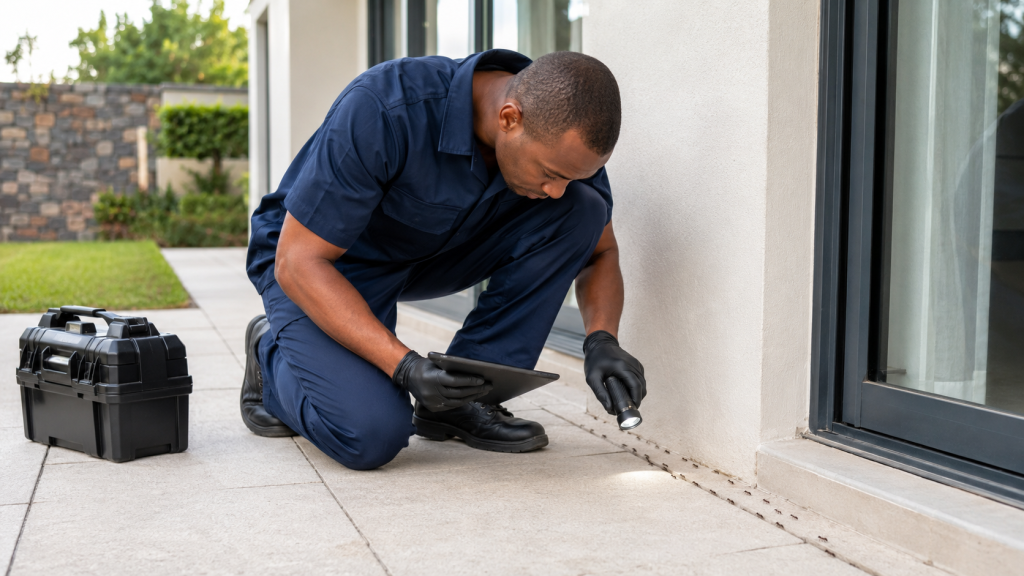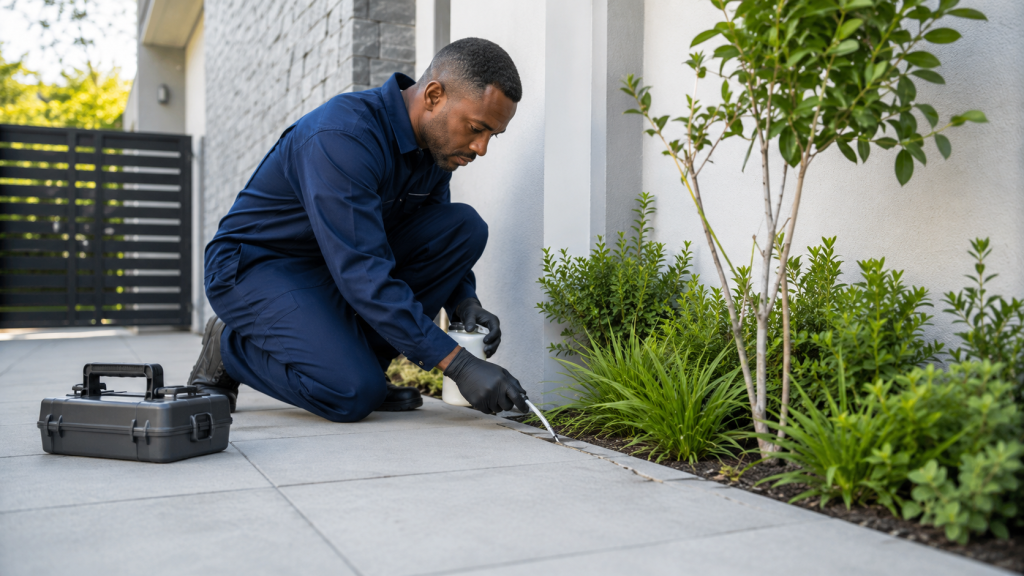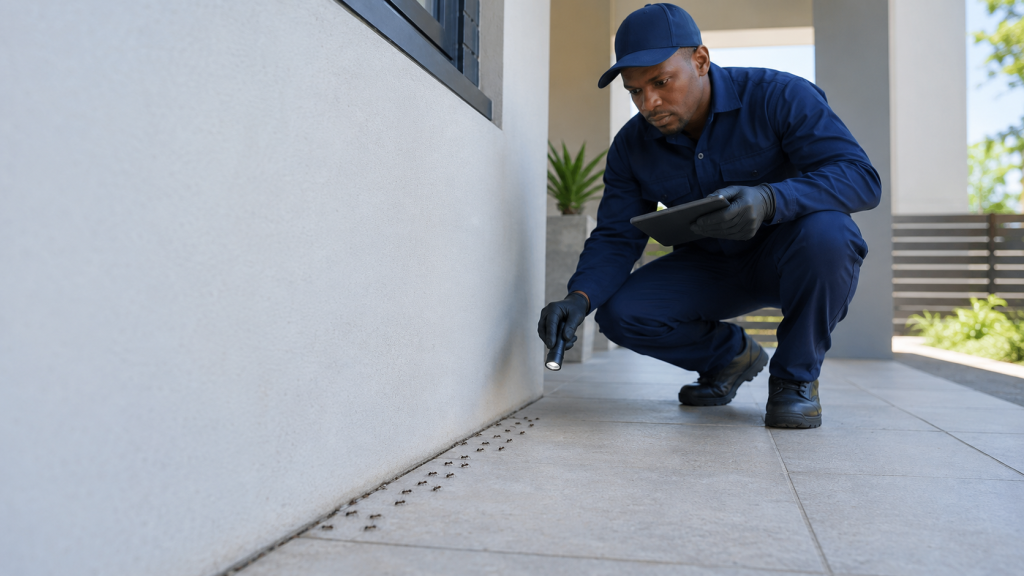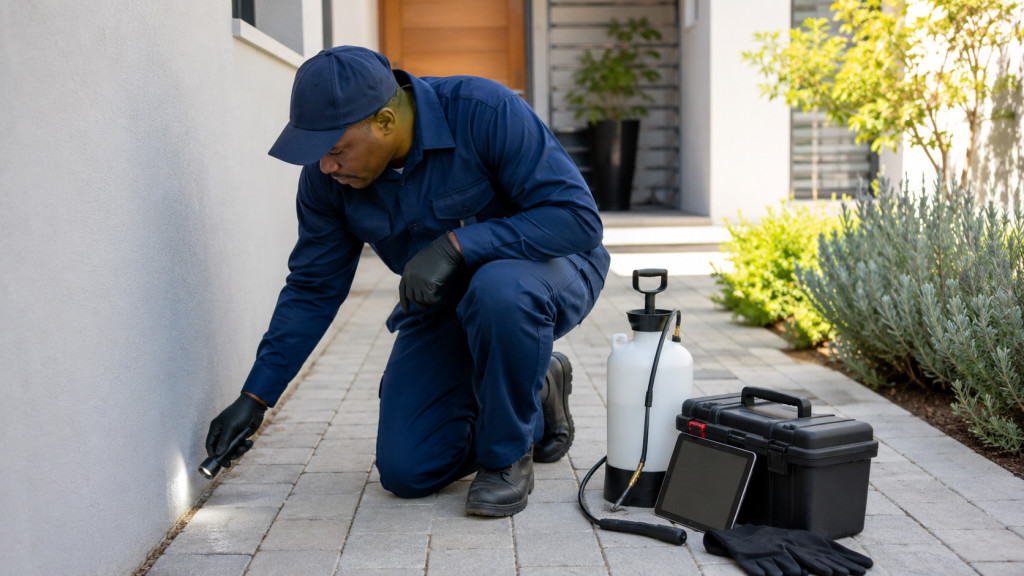
If you keep killing ants but they return a few days later, the visible ants are probably not the real source of the problem.
Ants often return because the nest is still active, the entry point is still open, the trail has not been disrupted properly, or food and moisture sources are still attracting them. Surface sprays may kill the ants you can see, but they do not always reach the colony, outdoor nest, wall void or hidden activity area.
This is why recurring ants can be frustrating. You clean the counter, spray the trail, wipe the floor, and for a short time the problem seems better. Then the ants return in the same place, or appear somewhere nearby.
This guide explains why do ants keep coming back, why DIY spraying may not solve the source, and when professional ant pest control may be a better next step.
For current listed options, customers can view the main Ant Pest Control service page. For other pest treatment options, visit the main Pest Control Services hub.
To view current CleanLab SA listed options and live pricing for your area, use the Get Rates & Availability CTA where available. This lets you select your location, view listed ant pest control options and check open slots.
Suggested image placement: Add the featured image here using the WordPress image block or Elementor image widget.
Image alt text: why do ants keep coming back near a home entry point
Quick answer: common reasons ants return
Ants usually return because the source of the activity has not been solved.
Common reasons include:
- the nest is still active
- only visible ants were killed
- the colony is outside the house
- ants are entering through the same crack or gap
- food crumbs, sugar or grease are still attracting them
- moisture is attracting ants indoors
- ant trails are still active
- the wrong DIY product was used
- the treatment did not reach the nest
- neighbouring properties or shared walls are contributing
- more than one entry point exists
- the infestation is larger than it looks
To stop recurring ant activity, the focus should be on the source, not only the ants you can see.
You may only be killing the visible ants
One of the most common reasons ants return is that only the visible worker ants are being killed.
The ants on your counter, floor, wall or windowsill are usually workers. Their job is to search for food and carry it back to the colony.
If you spray those visible ants but the nest remains active, more ants may continue coming from the same source.
This can make it seem as if the spray did not work at all. In reality, the spray may have killed the ants you saw, but not the colony behind the activity.
That is why ongoing ant problems often need a more targeted approach than surface spraying.
The nest may still be active
Ants can continue returning when the nest is still active.
The nest may be:
- outside in the garden
- under paving
- near an exterior wall
- in a paving crack
- below a patio
- inside a wall void
- near a leaking pipe
- in a ceiling or roof void
- on a neighbouring property
- in a shared building area
If the nest is hidden or hard to access, ants may keep sending workers into the house even after visible ants are killed.
Where practical, professional ant pest control may include nest treatment or targeted treatment around the source area. However, if the nest is hidden, inaccessible or outside the property boundary, complete control may need a broader approach.
Ant trails may still be active
Ants often follow established trails. Once they find food or water, they can leave a trail that other ants follow.
This is why they often reappear in the same places, such as:
- the same kitchen counter
- the same cupboard
- the same bathroom
- the same skirting board
- the same patio door
- the same window frame
- the same paving crack
Cleaning the trail can help, but if the food source, moisture source or entry point remains, ants may rebuild the route.
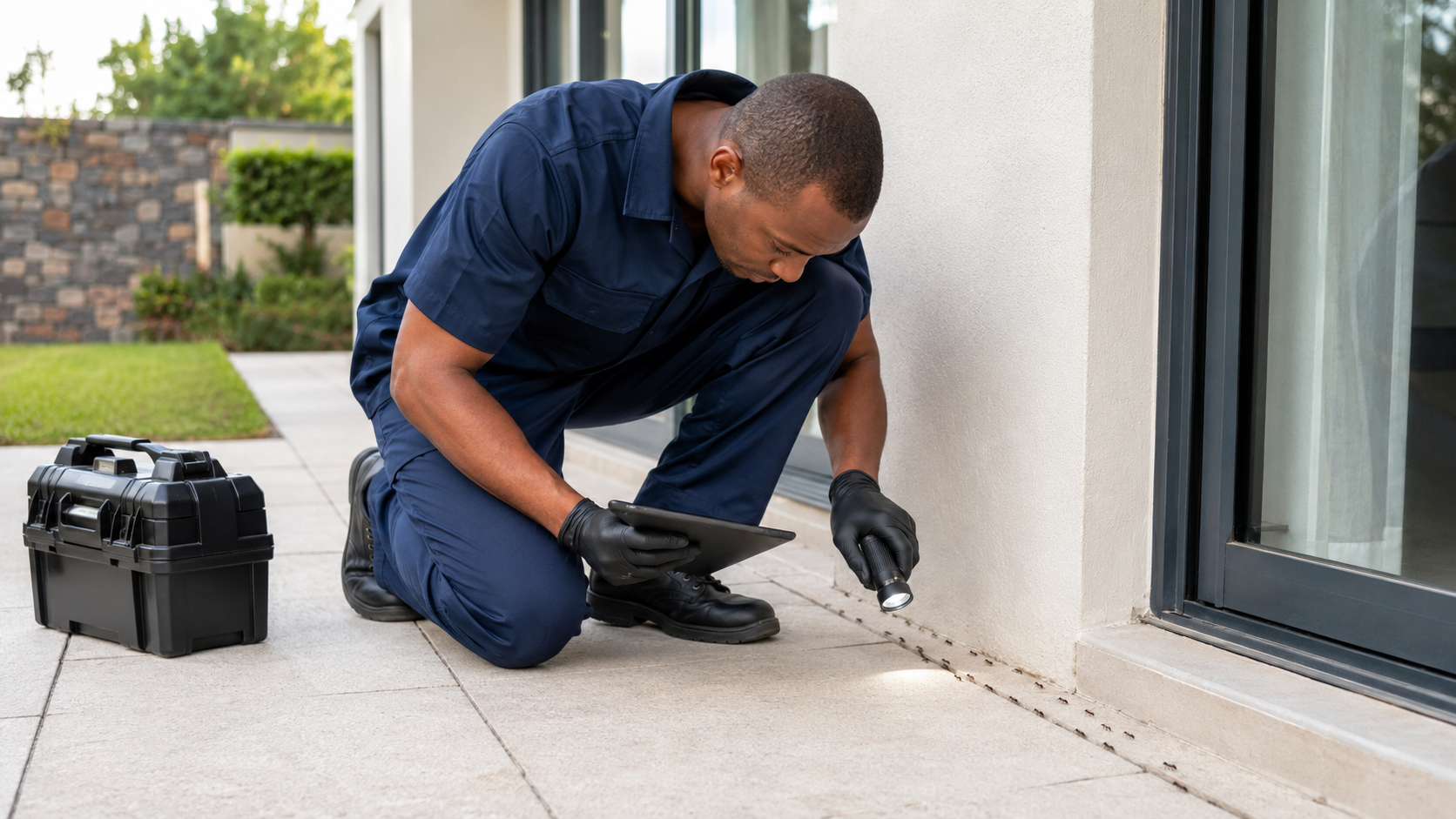
This is also why following the trail before wiping it away can be useful. It may show where the ants are entering or where the activity is coming from.
Food sources may still be attracting ants
Ants are strongly attracted to food.
Common food sources include:
- crumbs
- sugar
- syrup
- fruit
- cereal
- biscuits
- pet food
- grease
- dirty dishes
- food waste
- sticky jars or bottles
- open pantry items
- bin residue
Even a small amount of food can attract ants. This is especially common in kitchens, pantries, dining areas and around pet bowls.
If ants come back after cleaning, check less obvious areas:
- under appliances
- behind the bin
- inside cupboards
- around the toaster
- under the fridge
- along skirting boards
- behind pet food bowls
- near recycling bags
- around sticky bottles and containers
Professional treatment can help target the activity, but food sources still need to be managed to reduce repeat attraction.
Moisture may be attracting ants indoors
Ants do not only come inside for food. Moisture can also attract them.
Moisture sources may include:
- leaking taps
- damp cupboards
- bathroom moisture
- wet shower areas
- condensation
- leaking pipes
- sink areas
- drain areas
- wet pet bowls
- damp walls
- irrigation near exterior walls
This is why ants may appear in bathrooms, laundries, kitchens or rooms with plumbing.
If ants repeatedly appear in a bathroom or near a sink, the issue may not be crumbs. It may be moisture.
In that case, spraying visible ants without addressing the moisture source may only give temporary relief.
Entry points may still be open
Ants can enter through very small gaps.
Common entry points include:
- cracks in paving
- gaps under doors
- door frames
- sliding door tracks
- window frames
- wall cracks
- skirting board gaps
- plumbing openings
- electrical openings
- garage doors
- exterior wall gaps
- weep holes
If ants keep entering through the same gap, they may continue returning even after cleaning or spraying.
Pest control can target active areas, trails and perimeter zones, but sealing and repairing structural gaps is usually not included in standard ant pest control. Customers may need to arrange repairs separately where needed.
The colony may be outside the house
Many indoor ant problems start outside.
Ants may be nesting or travelling from:
- garden beds
- soil near the house
- paving cracks
- patios
- exterior walls
- boundary walls
- lawn edges
- pot plants
- bin areas
- drains
- neighbouring properties
If ants are entering from outside, indoor-only spraying may not solve the problem.
A more effective approach may involve inspecting the outside source, treating affected entry points where suitable, and reducing outdoor attractants near the house.
For broader removal guidance, see How to Get Rid of Ants Permanently.
Why ants return after you kill them
Ants may reappear after you kill them because the colony remains active.
Killing the ants you see does not always affect:
- the nest
- the queen
- the colony
- the entry point
- the food source
- the moisture source
- the outdoor trail
This is why new ants may appear a few hours or days later.
If the same area keeps getting ants, the problem is probably not just the ants on the surface. There is likely an active source or route that needs to be identified.
Why ants come back after spraying
Ants may come back after spraying because the spray only treated the visible area.
Spraying can fail when:
- the nest is not reached
- the trail is only partly treated
- ants are coming from outside
- food or moisture remains
- the wrong product is used
- ants avoid the treated area and find another route
- the spray kills workers but not the colony
In some cases, repeated spraying can also scatter ant activity and make the trail harder to follow.
This is why targeted treatment, inspection and source-finding can matter more than simply spraying the area where ants are visible.
Why ants come back after cleaning
Cleaning helps, but it may not solve the source.
Ants may return after cleaning because:
- the nest is still active
- the entry point is still open
- moisture remains
- food is hidden in another area
- the trail was not fully disrupted
- outdoor ants are still entering
- the colony has already established a route
Cleaning is still important because it removes attractants. But if ants keep appearing after the area is clean, the problem may need targeted treatment.
Why ants keep appearing in one room
Repeated ant activity in one room usually means there is a nearby attractant or entry point.
Possible causes include:
- food crumbs
- sweet drinks
- pet food
- indoor plants
- damp areas
- window gaps
- wall cracks
- skirting board gaps
- nearby patio or garden access
- ants travelling through wall voids
If the room does not have food, check where the ants are entering. They may be using the room as a route rather than a feeding area.
If ants appear repeatedly in the same room, try to follow the trail to the source before wiping or spraying everything away.
Why sugar ants return repeatedly
People often use “sugar ants” to describe small ants that are attracted to sweet foods.
These ants may return because they have found:
- sugar
- syrup
- fruit
- jam
- honey
- cooldrink residue
- sweet crumbs
- sticky containers
- food cupboards
- dirty dishes
- pet food
If sugar ants keep appearing, clean the trail, remove sweet food sources, store food in sealed containers and check where the ants are entering.
If they continue appearing, there may be a nest or entry point that needs treatment.
Are ants coming back because the house is dirty?
Not always.
Ants can enter very clean homes if they find:
- water
- easy entry points
- outdoor nests
- garden access
- wall cracks
- neighbouring activity
- damp areas
- one small food source
A clean home can still have ants if there is an active colony nearby.
However, cleaning remains important because crumbs, sugar, grease, pet food and bins can make the problem worse.
How to stop ants coming back
To help stop ants coming back:
- follow the trail before removing it
- identify where ants are entering
- remove crumbs and spills
- store food in sealed containers
- clean around bins
- rinse sticky bottles and jars
- keep pet food controlled
- reduce moisture around sinks and bathrooms
- repair leaks where needed
- seal visible gaps where practical
- keep garden beds and paving edges maintained
- check outdoor trails
- avoid random spraying without finding the source
- consider professional treatment if activity continues
The key is to reduce the conditions that keep attracting ants while also treating the active source where practical.
When professional ant pest control is needed
Professional ant pest control may be a better option when:
- ants return after spraying
- ants come back after cleaning
- ants are in the kitchen
- ants are in cupboards or pantry areas
- ants appear in multiple rooms
- ants are entering from outside
- you can see outdoor trails
- there are visible nests or ant hills
- the source is hard to find
- children or pets make DIY product use difficult
- the problem affects a business or food area
Professional ant pest control can help inspect the affected areas, identify trails and entry points, and apply targeted treatment where suitable.
For service-scope details, see What Is Included in Professional Ant Pest Control.
Customers can also compare pest control providers against recognised industry bodies such as the South African Pest Control Association.
Ant pest control prices
Ant pest control prices can depend on property type, property size, whether the activity is residential or commercial, and whether inspection, nest treatment or barrier treatment is needed.
For a detailed cost guide, see Ant Pest Control Prices in South Africa.
To view current CleanLab SA listed options and live pricing for your area, use the Get Rates & Availability CTA where available. This lets you select your location, view listed ant pest control options and check open slots.
Ant pest control services by area
Ant pest control availability can vary by area. Customers can view listed ant pest control options in major areas here:
- Ant Pest Control in Sandton
- Ant Pest Control in Randburg
- Ant Pest Control in Johannesburg
- Ant Pest Control in Pretoria
- Ant Pest Control in Cape Town
- Ant Pest Control in Durban
You can also browse all available service areas on the main CleanLab SA locations page.
Why book ant pest control through CleanLab SA?
CleanLab SA helps customers find listed ant pest control options, view upfront pricing where available and book online.
This can be useful when ants keep returning and customers want to compare listed treatment options without phoning around for every quote.
Customers can select their area, view listed service options and check live pricing where available.
For current listed options, visit the main Ant Pest Control service page or browse the Pest Control Services hub.
Booking through CleanLab SA can also help with peace of mind because the platform includes support around Booking Protection and Professional Standards.
FAQs about recurring ants
Why do ants return again and again?
Ants usually return because the nest, entry point, food source, moisture source or outdoor trail is still active. Killing visible ants does not always solve the source of the problem.
Why do ants return after I kill them?
Ants may return after you kill them because the colony is still active. The ants you kill are usually workers, while more ants may continue coming from the nest or entry point.
Why do ants come back after spraying?
Ants may come back after spraying because the spray killed visible ants but did not reach the nest, colony, trail or entry point. Food and moisture sources may also still be attracting them.
Why do ants come back after cleaning?
Cleaning removes attractants, but ants may return if the nest remains active, the entry point is still open or moisture is still attracting them.
Why do ants reappear in the same room?
Ants may keep returning to one room because of food crumbs, drinks, pet food, indoor plants, damp areas, window gaps, wall cracks or a nearby outdoor entry point.
Why do sugar ants return repeatedly?
Sugar ants may return because they have found sweet food, sticky residue, fruit, syrup, cooldrink residue, pet food or food storage areas.
Does killing ants attract more ants?
Killing visible ants does not usually solve the source. More ants may appear because the colony is still active and continues sending workers along the trail.
Can vinegar stop ants coming back?
Vinegar may help clean scent trails and reduce visible activity, but it may not solve a hidden nest, outdoor colony, entry point or moisture problem.
How do I stop ants coming back permanently?
To stop ants coming back, identify the trail and entry point, remove food and moisture sources, seal gaps where practical, treat the nest or activity zone where possible and consider professional ant pest control for recurring problems.
When should I book professional ant pest control?
You should consider professional ant pest control if ants return after spraying or cleaning, affect kitchens or cupboards, appear in multiple rooms, enter from outside or if the source is hard to find.
Can I check ant pest control prices online?
Yes. To view current CleanLab SA listed options and live pricing for your area, use the Get Rates & Availability CTA where available. Customers can also visit the main Ant Pest Control service page or read the Ant Pest Control Prices in South Africa guide.
Final answer
Recurring ants usually mean the source of the problem is still active. This may be a hidden nest, outdoor colony, entry point, food source, moisture source or trail system.
Spraying or killing visible ants may give short-term relief, but it often does not solve the reason ants are entering in the first place.
For recurring ants, kitchen ants, multiple-room activity or ants returning after DIY treatment, professional ant pest control may be the better next step.
To view current CleanLab SA listed options and live pricing for your area, use the Get Rates & Availability CTA where available, visit the main Ant Pest Control service page, or browse the Pest Control Services hub.