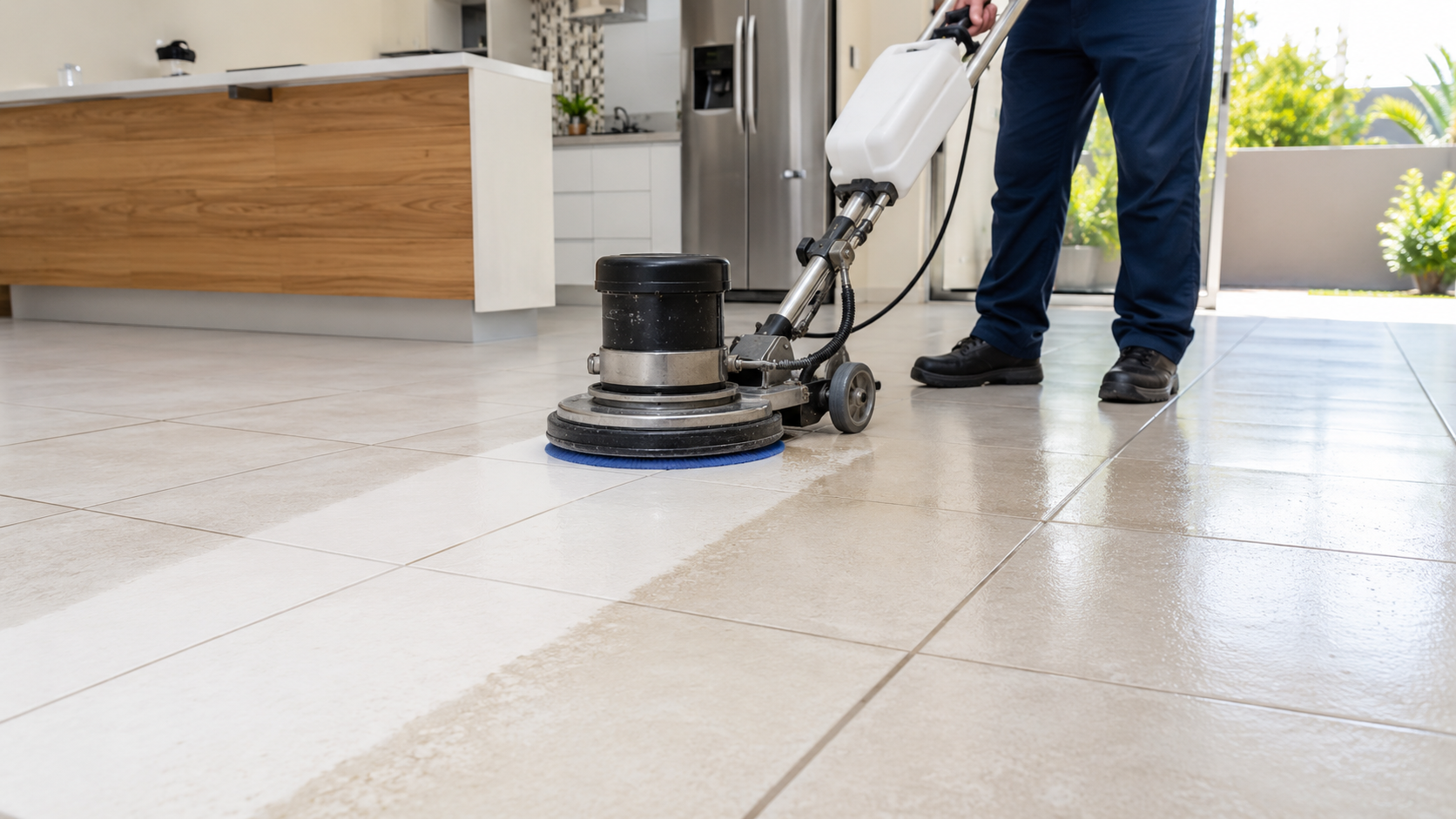
Professional tile and grout cleaning usually includes the use of an industrial-grade floor scrubber, heavy-duty floor scrubbing machine or professional tile-cleaning equipment to deep clean tiled floors and grout lines more effectively than ordinary mopping.
This is the main customer benefit. A mop can wipe the surface of a tiled floor, but it often cannot clean the grout lines properly. Grout sits slightly lower than the tile surface and can trap dirty mop water, grease, soap residue, dust and everyday grime. Professional tile and grout cleaning is designed to agitate the tile surface and grout lines more deeply, loosen built-up residue and remove more dirt than normal household mopping.
Depending on the service option selected, professional tile and grout cleaning may include inspection of the tiled area, normal furniture movement where needed, application of suitable cleaning solutions, machine scrubbing, grout-line cleaning, residue removal, rinsing or extraction where suitable, and drying guidance after cleaning.
Quick answer: what does tile and grout cleaning include?
Professional tile and grout cleaning may include:
- checking the tiled area before cleaning
- moving normal furniture where needed
- applying suitable tile and grout cleaning solutions
- using a heavy-duty floor scrubber or industrial-grade floor cleaning machine
- scrubbing or agitating the tile and grout surface
- cleaning grout lines more deeply than basic mopping
- removing loosened dirt and residue
- rinsing or extraction where suitable
- improving dull or dirty tiles
- improving darkened grout lines where possible
- drying guidance after cleaning
The exact cleaning method can vary depending on the tile surface, grout condition, selected service option and listed provider, but the core purpose is the same: a deeper clean for tiled floors and grout lines than ordinary mopping.
Why tile and grout cleaning is different from mopping
Mopping is useful for everyday cleaning, but it often only deals with light surface dirt.
Tile and grout cleaning goes deeper because grout lines are harder to clean than the tile surface itself. Grout is usually slightly recessed and more porous than tile, which means dirt can settle into the lines even when the floor looks like it has been mopped regularly.
This is why tiled floors can still look dull after cleaning. The tiles may be wiped, but the grout lines can remain dark.
Professional tile and grout cleaning is different because it can use:
- stronger agitation than normal mopping
- suitable tile and grout cleaning solutions
- a heavy-duty floor scrubber or industrial-grade machine
- equipment designed for tiled floors
- better removal of loosened dirt and residue
- more consistent cleaning across larger floor areas
This is why customers often book professional tile and grout cleaning when mopping no longer gives the floor a clean result.
The main equipment: industrial-grade floor scrubber
The key piece of equipment customers should understand is the industrial-grade floor scrubber.
This machine is important because it helps explain why professional tile and grout cleaning is more effective than a mop.
A heavy-duty floor scrubber can:
- agitate the tile surface
- scrub across grout lines
- loosen stuck-on dirt and residue
- help lift grime from textured tiles
- clean larger tiled areas more consistently
- reduce the amount of manual hand scrubbing needed
- improve the appearance of dull tiled floors
This does not mean every mark will disappear completely, but it gives the floor a deeper clean than ordinary mopping.
For kitchens, bathrooms, passages, patios, garages, offices and commercial tiled floors, the machine-cleaning process is often the main reason professional service is worthwhile.
What happens before tile and grout cleaning starts?
Before cleaning starts, the tiled area is usually checked so the technician can understand what needs to be cleaned.
This may include looking at:
- the size of the tiled area
- the grout lines
- high-traffic areas
- greasy kitchen sections
- bathroom residue
- patio or outdoor dirt
- garage grime
- existing marks or stains
- loose or damaged grout
- cracked or damaged tiles
This helps set realistic expectations before cleaning begins.
Professional tile and grout cleaning can improve many tiled floors, but it should not be treated as tile repair, regrouting or restoration. If grout is missing, tiles are cracked, or there is permanent staining, cleaning may improve the appearance but may not fully reverse the damage.
Is furniture moved during tile and grout cleaning?
Yes. The technician and team will move normal furniture around where needed so the tiled floor can be cleaned more properly.
This may include moving practical furniture items away from the cleaning area, then working through the room section by section so the floor can be accessed properly.
Customers should only need to move items that are fragile, valuable or unsafe to move. This may include breakables, loose décor, delicate items, valuables or items that need special handling.
Customers can help by removing small loose items, breakables, toys, loose mats, bins and clutter before the appointment.
This gives the technician clearer access to the tiled floor and helps the cleaning process run more smoothly.
Applying tile and grout cleaning solutions
Professional tile and grout cleaning may include applying suitable cleaning solutions to help loosen dirt, grease, residue and grime.
This step helps prepare the floor before machine scrubbing.
Cleaning solutions may help break down:
- general dirt
- dirty mop-water residue
- grease build-up
- soap residue
- foot traffic marks
- outdoor dirt
- cleaning product build-up
- dull surface residue
- grime in grout lines
The solution should be suitable for the tile type and cleaning method being used. Some tile surfaces need more care than others, especially natural stone, sealed floors, textured tiles or sensitive finishes.
Machine scrubbing the tile surface
After the cleaning solution has been applied where suitable, the tiled floor is scrubbed or agitated.
This is where professional tile cleaning becomes very different from normal mopping.
A heavy-duty floor scrubber can work across the tile surface more strongly and consistently than a mop. The machine helps loosen dirt and residue that may have built up over time.
This can be especially useful in:
- kitchens
- bathrooms
- passages
- lounges
- tiled living areas
- patios
- garages
- offices
- reception areas
- commercial spaces
Machine scrubbing helps restore a cleaner appearance to the floor, especially where tiles have become dull from everyday traffic and residue.
Cleaning the grout lines
Grout-line cleaning is one of the most important parts of professional tile and grout cleaning.
Grout lines often collect more dirt than the tile surface because they are slightly lower and more absorbent. This is why the floor can still look dirty even when the tiles have been mopped.
Professional grout cleaning can help remove or improve:
- dark grout lines
- dirty mop-water residue
- kitchen grease residue
- bathroom soap residue
- foot traffic grime
- outdoor dirt
- pet residue
- general build-up
- dull grout appearance
The industrial floor scrubber or professional tile-cleaning equipment helps agitate the grout lines more effectively than ordinary mopping.
In some cases, grout lines may still need extra attention, especially where residue is heavier or staining has been present for a long time.
Removing loosened dirt and residue
Once the floor has been scrubbed, the loosened dirt and cleaning residue need to be removed.
This step is important because a floor can dry dull or sticky if residue is left behind.
Depending on the method used, the service may include rinsing, wet vacuuming, extraction or another suitable residue-removal process.
The goal is to remove as much loosened dirt as possible so the tile surface and grout lines look cleaner once dry.
Rinsing or extraction where suitable
Some tile and grout cleaning methods include rinsing or extraction where suitable.
This helps remove:
- loosened dirt
- cleaning solution residue
- dirty water
- grime released from grout lines
- surface residue from tiles
This step is especially useful when the floor has built-up residue from repeated mopping, old cleaning products or everyday foot traffic.
The exact method can vary, but the principle is simple: loosen the dirt, then remove it properly.
Drying guidance after cleaning
After tile and grout cleaning, the floor needs time to dry.
Customers may be advised to:
- allow airflow where possible
- avoid walking on wet areas until safe
- keep pets away from damp floors
- avoid dragging furniture across the floor immediately
- allow grout lines to dry properly
- avoid heavy use until the floor is dry
Drying helps prevent streaking, water marks and residue settling back into the grout lines.
What types of tiled areas can be cleaned?
Professional tile and grout cleaning may be suitable for many tiled floor areas, including:
- kitchens
- bathrooms
- passages
- bedrooms with tiled floors
- lounges
- dining rooms
- TV rooms
- living areas
- studies
- patios
- outside tiled areas
- garages
- offices
- reception areas
- clinics
- shops
- restaurants
- guesthouses
- rental properties
- commercial bathrooms
- tiled business premises
Availability can vary by area and selected service option.
Tile and grout cleaning for kitchens
Kitchen tile and grout cleaning is useful because kitchens often collect grease, food residue, spills, sticky marks and foot traffic dirt.
Professional cleaning can help improve:
- greasy tile surfaces
- sticky residue
- dull tiles
- dirty grout lines
- food-related marks
- residue near counters
- grime around appliances
- foot traffic areas
A heavy-duty floor scrubber is especially useful in kitchens because it can agitate the tile surface and grout lines more strongly than normal mopping.
Tile and grout cleaning for bathrooms
Bathroom floor tiles and grout can collect moisture residue, soap residue, body oils, dust and general grime.
Professional cleaning can help improve:
- soap residue
- dull floor tiles
- darkened grout lines
- moisture-related marks
- residue around high-use areas
- general bathroom floor grime
If mould staining has penetrated deeply into grout, cleaning may improve the appearance but may not fully remove permanent staining. Missing grout, damaged grout or deep staining may need repair or replacement rather than cleaning alone.
Tile and grout cleaning for patios and outside areas
Patios and outside tiled areas can collect dust, soil, leaves, water marks, outdoor shoe dirt and weather-related residue.
Professional patio tile and grout cleaning can help improve:
- outdoor dirt
- soil marks
- dull tile surfaces
- dirty grout lines
- weather-related build-up
- general outdoor grime
Outdoor tiles often need more agitation than indoor tiles because the dirt can be heavier and more exposed to the elements.
Tile and grout cleaning for garages
Garage tiled floors can collect dust, tyre marks, outdoor dirt, oil residue and general grime.
Professional garage tile and grout cleaning can help improve:
- dusty tile surfaces
- darkened grout lines
- tyre-related marks
- general garage grime
- dirt around high-use areas
Some deep oil stains, chemical marks or old tyre staining may not fully come out, especially if they have penetrated the tile or grout.
Tile and grout cleaning for offices and commercial spaces
Commercial tile and grout cleaning is useful for larger tiled floors where mopping alone is not enough.
This may include:
- offices
- reception areas
- passages
- shops
- clinics
- schools
- restaurants
- guesthouses
- commercial bathrooms
- tiled business premises
For commercial floors, professional equipment is useful because it can clean larger tiled areas more consistently than manual mopping.
Commercial tile and grout cleaning is often priced per square metre because the floor area can vary widely.
Does tile and grout cleaning remove dirty grout lines?
Professional tile and grout cleaning can in many cases remove or improve dirty grout lines, general grime and surface build-up.
It can often help with grout lines affected by:
- foot traffic
- dirty mop water
- grease residue
- soap residue
- dust
- outdoor dirt
- everyday grime
- cleaning product build-up
However, some grout marks may not fully reverse.
This may include:
- permanent grout staining
- missing grout
- damaged grout
- old chemical damage
- deep mould staining
- discolouration caused by age
- staining that has penetrated deeply
Professional cleaning can make many tiled floors look fresher, but it is not the same as regrouting or replacing damaged grout.
Does tile and grout cleaning remove stains?
Professional tile and grout cleaning can remove or improve many general marks and stains, depending on the cause of the stain and how long it has been there.
It can often help with:
- general dirt
- muddy marks
- light food residue
- soap residue
- grease residue
- foot traffic marks
- dullness
- dirty grout lines
- surface build-up
However, not every mark can be fully removed.
Some issues may not fully reverse, including:
- rust marks
- paint marks
- deep oil stains
- etched tiles
- cracked tiles
- damaged grout
- missing grout
- old chemical damage
- permanent discolouration
- deep mould staining
Professional cleaning should be seen as a deep cleaning service, not a repair or restoration service.
Is tile and grout cleaning worth it?
Professional tile and grout cleaning is often worth it when the floor still looks dull or dirty after normal mopping.
It is especially useful when:
- grout lines are dark
- the tile surface looks dull
- kitchens have grease build-up
- bathrooms have soap residue
- patios have outdoor grime
- garages have tyre or dust marks
- several tiled rooms need cleaning
- the floor has heavy foot traffic
- hand scrubbing would take too long
- the customer wants a deeper clean than mopping
The value comes from the stronger equipment and deeper agitation, especially across grout lines.
How long does tile and grout cleaning take?
The time needed depends on the number of rooms or areas being cleaned and the size of the tiled floor.
A small tiled area may be quicker, while several rooms, patios, garages or commercial floors may take longer.
Commercial tile and grout cleaning may require measurement or area confirmation because pricing and time are often based on square metres.
How to prepare for tile and grout cleaning
Customers can usually prepare by:
- removing small loose items from the floor
- lifting small mats where possible
- clearing toys, bins and clutter
- moving fragile items out of the area
- keeping pets away from the work area
- pointing out specific marks or concerns
- allowing airflow after cleaning where possible
The technician and team will move normal furniture around where needed, so customers do not usually need to move standard furniture themselves before the appointment.
Only fragile, valuable or unsafe items should be moved or handled by the customer before the appointment where needed.
This helps the technician work more efficiently and reduces the chance of delays.
Tile and grout cleaning prices
Tile and grout cleaning prices in South Africa are usually based on room or area category for residential work, and square metres for commercial work.
As a general market guide:
| Cleaning item or area | Typical guide range |
|---|---|
| Smaller tiled areas, passages, closets or studies | R200 – R350 |
| Standard bedroom, lounge, dining, kitchen, bathroom or living room tiled floors | R300 – R550 |
| Patio, outside tiled areas or garage tiled floors | R300 – R550 |
| Commercial tile and grout cleaning | R20 – R35 per sq. m |
For a fuller breakdown, see the tile and grout cleaning prices in South Africa guide.
To check current CleanLab SA listed prices for your area, use the Get Rates & Availability CTA where available.
Tile and grout cleaning services by area
Tile and grout cleaning availability can vary by area. You can view listed options in major areas here:
- Tile cleaners in Sandton
- Tile cleaners in Randburg
- Tile cleaners in Johannesburg
- Tile cleaners in Pretoria
- Tile cleaners in Cape Town
- Tile cleaners in Durban
You can also browse all available service areas on the main CleanLab SA locations page.
For other home and business cleaning services, visit the main professional cleaning services hub.
Why book tile and grout cleaning through CleanLab SA?
CleanLab SA helps customers find listed tile and grout cleaning options, view upfront pricing where available and book online without needing to phone around for every quote.
For tile and grout cleaning, this is useful because different rooms and floor areas may use different pricing categories. Smaller tiled areas, standard rooms, patios, garages and commercial floors may all be priced differently.
Customers can select their area, view available options and use the Get Rates & Availability CTA to check current live prices and open slots where available.
Booking through CleanLab SA can also help with peace of mind because the platform includes support around Booking Protection and Professional Standards.
This gives customers a clearer booking process, especially when arranging tile and grout cleaning for homes, offices, guesthouses, rental properties and commercial spaces.
FAQs about what is included in tile and grout cleaning
What is included in tile and grout cleaning?
Tile and grout cleaning may include checking the tiled area, moving normal furniture where needed, applying suitable cleaning solutions, using a heavy-duty floor scrubber, agitating the tile and grout surface, removing loosened dirt and giving drying guidance after cleaning.
What machine is used for tile and grout cleaning?
Professional tile and grout cleaning may use an industrial-grade floor scrubber, heavy-duty floor scrubbing machine or professional tile-cleaning equipment. This helps agitate the floor and grout lines more effectively than normal mopping.
Does tile and grout cleaning clean the grout lines?
Yes, grout-line cleaning is one of the main reasons customers book tile and grout cleaning. Professional cleaning can in many cases remove or improve dirty grout lines, general grime and surface build-up.
Is tile and grout cleaning better than mopping?
Yes, tile and grout cleaning is usually deeper than mopping because it can use stronger agitation, suitable cleaning solutions and professional floor-cleaning equipment. Mopping is useful for regular maintenance, but it often does not clean grout lines properly.
Does tile and grout cleaning remove stains?
Professional tile and grout cleaning can remove or improve many general marks and stains. Permanent staining, damaged grout, missing grout, rust marks, deep oil stains, etched tiles and old chemical damage may not fully reverse.
Is furniture moved for tile and grout cleaning?
Yes. The technician and team will move normal furniture around where needed so the tiled floor can be cleaned more properly. Customers should move or secure fragile, valuable or unsafe items before the appointment where needed.
How do professionals clean tile and grout?
Professionals may apply suitable cleaning solutions, use an industrial-grade floor scrubber or heavy-duty scrubbing machine, agitate the tile and grout surface, remove loosened dirt and provide drying guidance after the service.
Final answer
Professional tile and grout cleaning usually includes more than basic mopping. The main difference is that the service may use an industrial-grade floor scrubber or heavy-duty floor scrubbing machine to deep clean tiled floors and grout lines.
This helps loosen and remove built-up dirt, residue and grime from both the tile surface and grout lines. It is especially useful when grout lines stay dark, tiles look dull, kitchens have grease build-up, bathrooms have soap residue, patios have outdoor dirt or larger tiled areas need a deeper clean.
Professional cleaning can in many cases remove or improve dirty grout lines, general grime and surface build-up. However, permanent staining, damaged grout, missing grout, cracked tiles, etched surfaces, rust marks, deep oil stains and old chemical damage may not fully reverse through cleaning alone.