Mattress stains can come from sweat, urine, blood, food, drinks, pets, body oils or old spills. Some light surface marks can be improved at home, but mattress stains are often harder to clean than they look because liquid and residue can move below the surface.
To remove mattress stains safely, start by blotting fresh liquid, vacuuming the area, spot testing any cleaning product, using very little moisture and drying the mattress completely. For urine stains, sweat marks, blood stains, yellowing, pet accidents or old marks, professional mattress cleaning is usually the better option. In most normal treatable cases, professional mattress cleaning can remove or significantly reduce visible mattress stains and related odours more effectively than DIY cleaning.
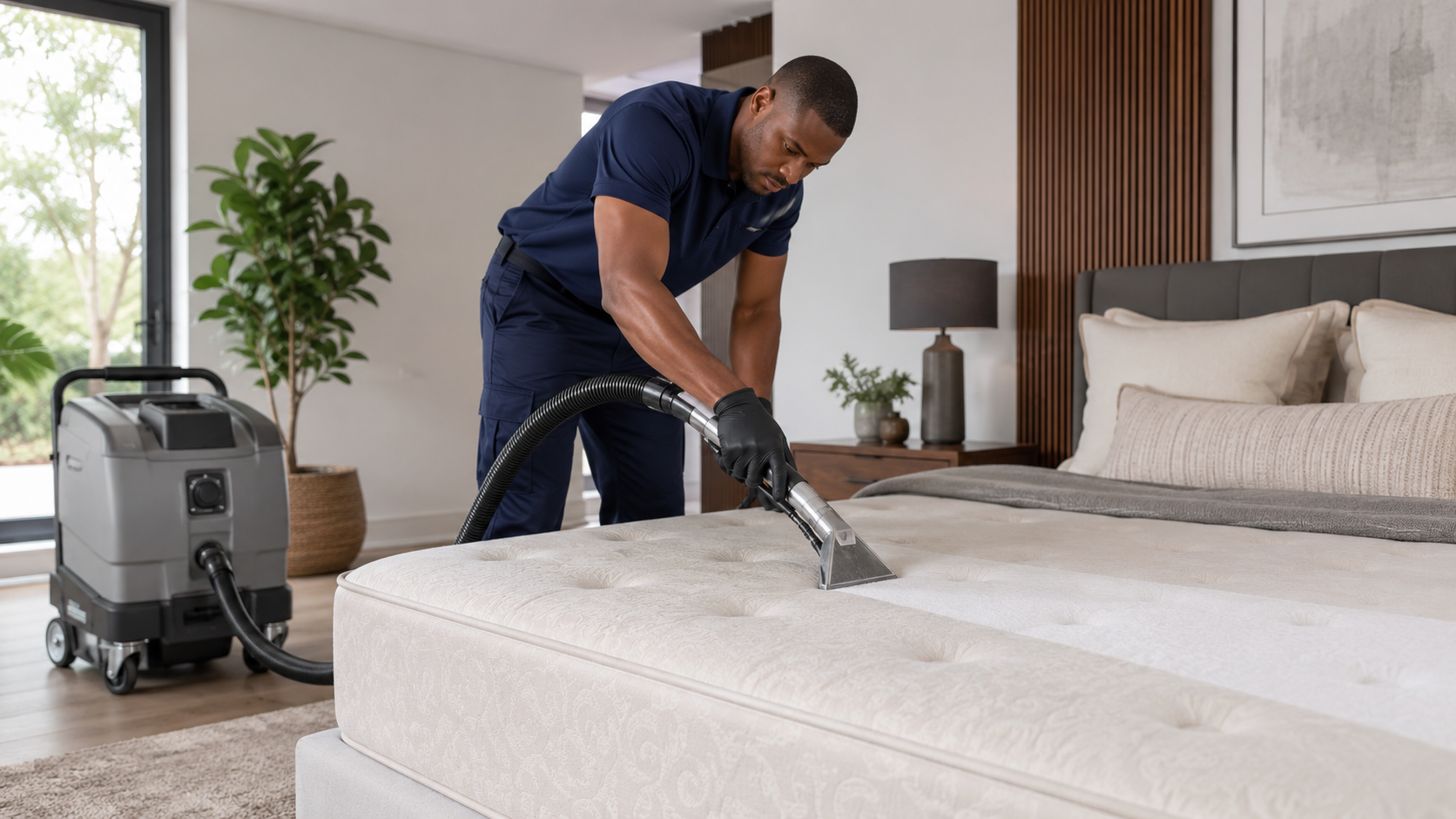
DIY cleaning mostly works on the surface. Professional mattress cleaning uses controlled moisture, suitable cleaning products and professional-grade extraction equipment to remove more embedded residue from the mattress surface and upper layers. That difference matters when a stain is linked to urine, sweat, body oils, food, drink, pet accidents or smells that keep returning.
If your mattress has visible stains or odours, CleanLab SA’s mattress stain and odour cleaning gives customers a structured way to arrange professional mattress cleaning through listed professionals.
Why mattress stains are difficult to remove
Mattresses are thick and absorbent. A stain may start on the surface, but the liquid or residue can move into the fabric, padding or foam below.
This is why mattress stains can be tricky:
- liquid can soak below the surface
- old stains can set into the fabric
- body oils can attract dust and discolour the mattress
- urine can leave both stains and odours
- sweat can cause yellow marks over time
- blood can bond with fabric if treated incorrectly
- too much water can spread the stain
- harsh DIY products can damage the mattress
- poor drying can cause stale or musty smells
A small surface mark is one thing. A stain with smell, liquid depth, old residue or repeated contamination is different. That is where professional cleaning becomes much stronger than home remedies.
Before trying to remove a mattress stain
Before cleaning a mattress stain, first check the situation.
Ask:
- What caused the stain?
- Is it fresh or old?
- Is there a smell?
- Is the mattress still damp?
- Has the stain spread?
- Has anyone already used vinegar, peroxide, bleach, soap or baking soda?
- Is the mattress fabric delicate?
- Is there mould, black spotting or a musty smell?
- Has the liquid soaked deeply?
The stain type matters. Urine, sweat, blood and food marks should not all be treated the same way.
Also check the mattress care label if available. Some mattresses are more sensitive to moisture and cleaning products.
General steps to remove mattress stains safely
For light, fresh surface stains, use a careful low-moisture method.
1. Remove bedding immediately
Take off sheets, mattress protectors, blankets and pillowcases. Wash them separately.
Do not put bedding back until the mattress is fully dry.
2. Blot, do not scrub
If the stain is fresh or wet, blot it with a clean dry cloth or paper towel.
Do not scrub. Scrubbing can spread the stain, damage the fabric and push residue deeper into the mattress.
Press gently but firmly and keep changing to a dry section of the cloth.
3. Vacuum the area
Once loose debris or dry particles are present, vacuum the area carefully.
This is especially useful for food crumbs, dust, dried residue, pet hair and baking soda.
4. Spot test first
Before using any cleaning solution, test a small hidden part of the mattress.
Check for:
- colour change
- water marks
- fabric texture changes
- product residue
- fading
- damage
If the fabric reacts badly, stop.
5. Use very little moisture
Use a lightly damp cloth, not a wet mattress.
A small amount of mild dishwashing liquid mixed with cool water can be used for some surface marks. Apply it to the cloth first, not directly to the mattress.
Blot the stain gently, then use another lightly damp cloth with plain water to reduce residue.
6. Blot dry
Use a clean dry towel to remove as much moisture as possible.
7. Dry the mattress completely
Open windows, use airflow and place a fan near the mattress if possible.
Do not cover the mattress until it is completely dry. Trapped moisture can make odours worse.
How to remove fresh mattress stains
Fresh stains are usually easier to improve than old stains.
For a fresh stain:
- Remove bedding.
- Blot the liquid immediately.
- Avoid rubbing.
- Use a small amount of moisture only if needed.
- Blot again with a dry towel.
- Dry the mattress fully.
Fresh stains have a better chance of strong improvement because the liquid has had less time to settle into the fabric and padding.
If the fresh stain is urine, blood, a large drink spill or pet-related, professional mattress cleaning is still often the stronger option. Early professional cleaning usually gives the best chance of removing or significantly reducing both the stain and the odour.
How to remove old mattress stains
Old mattress stains are harder because they may have dried, oxidised, bonded with the fabric or moved into deeper layers.
Old stains often come from:
- sweat
- body oils
- urine
- food spills
- drink spills
- blood
- pet accidents
- previous DIY cleaning
- moisture that dried unevenly
For old stains, avoid aggressive scrubbing and avoid soaking the mattress. Too much water can spread the mark and create a larger stain.
Professional mattress stain cleaning is usually the better route for old marks. In many treatable cases, professional cleaning can significantly improve old mattress stains, especially where the stain is mostly in the surface fabric or upper padding. Permanent colour changes, bleach marks and very old set stains may not fully disappear, but professional cleaning gives a much better chance of improvement than repeated DIY products.
How to remove urine stains from a mattress
Urine stains are a major mattress problem because they can leave both a visible mark and a strong smell. The surface may look better after DIY cleaning, but the odour can remain if urine has reached deeper layers.
For a fresh urine stain:
- remove bedding immediately
- blot as much liquid as possible
- avoid rubbing
- avoid soaking the mattress
- use a lightly damp cloth only on the surface
- dry the mattress properly
- use baking soda only once the area is mostly dry
- vacuum thoroughly afterwards
This can reduce the immediate stain, especially if the accident is fresh.
But urine is one of the strongest cases for professional cleaning. In most normal treatable cases, professional mattress cleaning can remove or significantly reduce urine stains and urine odours, especially when treated early and before repeated DIY products are used.
Professional cleaning uses controlled cleaning methods and professional-grade extraction equipment to remove more urine residue from the mattress surface and upper layers than DIY blotting, vinegar or baking soda can usually remove.
The main limits are severe long-term saturation, repeated urine accidents, pet urine that has soaked deeply and contamination inside the foam or inner layers.
How to remove sweat stains from a mattress
Sweat stains often appear as yellow marks or dull discolouration. They can also create stale odours over time because sweat mixes with body oils, dust and fabric residue.
For light sweat marks:
- vacuum the mattress
- spot clean gently with a lightly damp cloth
- avoid soaking
- dry completely
- use a mattress protector going forward
Baking soda can help with mild surface freshness, but it does not remove embedded sweat residue properly.
Professional mattress cleaning in most cases can remove or significantly reduce sweat odours, body-oil residue and visible yellowing where the issue is still treatable. This is because professional cleaning works beyond surface freshening by using suitable cleaning products and extraction equipment to lift more sweat and body-oil residue from the mattress surface and upper layers.
Older yellow stains may not always disappear completely, especially if the fabric has permanently discoloured. But professional cleaning is usually the best option before deciding that the stain is permanent.
How to remove blood stains from a mattress
Blood stains should be treated differently from ordinary marks. Avoid hot water because heat can make blood stains harder to remove.
For fresh blood stains:
- use cool water only
- blot gently
- avoid rubbing
- work from the outside of the mark inward
- use minimal moisture
- blot dry afterwards
Dried blood is harder to remove. Avoid scrubbing, because this can spread the stain and damage the mattress fabric.
Professional mattress cleaning can remove or significantly reduce many blood stains when they are treated early and have not permanently bonded with the fabric. Fresh blood marks usually respond better than old, heat-treated or heavily scrubbed stains.
How to remove food and drink stains from a mattress
Food and drink stains can leave colour, sugar, oil, dairy or smell behind.
For food or drink marks:
- Remove any solids carefully.
- Blot liquid immediately.
- Avoid rubbing.
- Use a lightly damp cloth with mild cleaning solution if needed.
- Blot with a clean damp cloth to reduce residue.
- Dry thoroughly.
Coffee, tea, juice, soft drinks, sauces, dairy and oily foods can be harder to remove than plain water spills.
For larger food or drink marks, professional mattress cleaning is usually more effective than repeated spot cleaning. Professional cleaning can remove more residue from the mattress surface and upper layers, which is important when the stain includes sugar, oils or colourants.
How to remove pet stains from a mattress
Pet stains may involve urine, saliva, muddy paws, hair, body oils or general pet odours.
For a small fresh pet mark:
- remove bedding
- blot moisture immediately
- vacuum hair or debris
- use minimal moisture
- dry the mattress fully
Pet urine is usually more difficult than ordinary surface stains. Cat urine and dog urine can leave strong odours, especially if the accident is not treated quickly.
Professional mattress cleaning is usually the best option for pet-related mattress stains and odours. In most normal treatable cases, professional cleaning can remove or significantly reduce pet marks, urine odours and stale pet smells, especially when the issue is not severe long-term saturation.
How to clean yellow stains from a mattress
Yellow stains are often caused by sweat, body oils, age, moisture, spills or previous cleaning attempts.
For light yellow marks:
- vacuum first
- use a lightly damp cloth with mild cleaning solution
- avoid soaking
- blot dry
- air the mattress well
Yellow marks can be difficult because they may reflect fabric discolouration rather than a removable surface stain.
Professional mattress cleaning in most cases can significantly improve yellow and sweat-related staining where the mark is still treatable. It gives a much better chance of improvement than surface deodorising or repeated DIY sprays.
Some yellow marks may remain if the fabric has permanently changed colour. That is a limitation of the material, not a failure of cleaning.
Can baking soda remove mattress stains?
Baking soda can help with light surface odours, but it is not a strong stain-removal method.
It can help with:
- mild stale smells
- surface freshness
- absorbing some surface moisture after blotting
It does not properly remove:
- urine stains
- blood stains
- sweat residue
- yellow marks
- deep odours
- pet urine
- old stains
- mould
- embedded residue
Baking soda sits on the surface. It does not extract the stain source. Professional mattress cleaning uses suitable cleaning methods and professional-grade extraction equipment to remove more residue from the mattress surface and upper layers.
Can vinegar remove mattress stains?
Vinegar is often suggested for mattress stains, but it should be used carefully.
The problem is moisture. Mattresses are absorbent, and vinegar can soak into the fabric and padding. If too much is used, it can leave a vinegar smell, moisture residue and a larger damp patch.
Vinegar can sometimes reduce light surface odours, but it is not the best answer for serious stains.
For urine, sweat, old stains, pet accidents and recurring odours, professional mattress cleaning is usually stronger and safer than repeated vinegar use. Professional cleaning removes more residue instead of simply adding more liquid to the mattress.
What not to use on mattress stains
Avoid:
- bleach
- harsh chemicals
- too much vinegar
- strong fragrances
- hot water on blood stains
- excessive water
- aggressive scrubbing
- coloured cloths that may transfer dye
- steam or heat if the mattress care instructions warn against it
- putting bedding back on a damp mattress
The wrong product can make a stain more permanent or harder to remove professionally later.
When DIY stain removal can work
DIY stain removal can work when:
- the stain is fresh
- the mark is small
- there is no strong smell
- the mattress dries quickly
- the fabric is not delicate
- the stain is surface-level
- no harsh products have already been used
DIY is best for light, fresh, low-risk marks.
It is not the strongest option for urine, sweat, yellow marks, blood, pet accidents, old stains or stains linked to odours.
When professional mattress stain cleaning is the better option
Professional mattress stain cleaning is usually the better option when there are:
- urine stains
- urine odours
- sweat stains
- yellow marks
- blood stains
- pet accidents
- old stains
- food or drink marks
- stale smells
- stains that return
- body-oil buildup
- DIY residue
- moisture marks
- rental or guest mattress stains
In most normal treatable cases, professional mattress cleaning can remove or significantly reduce visible marks and odours. It is especially useful when the stain is in the surface fabric or upper layers and has not caused permanent discolouration or deep internal contamination.
CleanLab SA helps customers arrange professional mattress stain cleaning through listed professionals. Customers can view available options, compare booking details and use Get Rates & Availability to select their location and secure a booking.
The main advantage is the method. Listed professionals use professional-grade extraction equipment, controlled moisture and suitable cleaning products to remove more embedded residue than household cloths, powders, vinegar or sprays can usually reach.
What professional cleaning may not fully remove
Professional mattress cleaning is the stronger option for serious mattress stains, but some marks may not fully come out.
Limits can include:
- permanent colour changes
- bleach marks
- very old set stains
- heat-treated blood stains
- severe urine saturation
- liquid deep inside the foam
- internal mould
- structural mattress damage
- torn fabric
- long-term contamination
- stains worsened by harsh DIY chemicals
This does not weaken the case for professional cleaning. It simply sets realistic expectations.
In most treatable cases, professional cleaning gives the mattress a much better chance of strong stain and odour improvement than DIY cleaning.
Should you clean or replace a stained mattress?
Cleaning is usually worth considering if the mattress is still:
- structurally sound
- comfortable
- not mouldy inside
- not severely saturated
- not torn or damaged
- affected mainly by surface or upper-layer stains
- affected by treatable odours
Replacement may be more realistic if the mattress has:
- deep mould
- severe long-term urine saturation
- internal foam contamination
- sagging
- permanent damage
- recurring smell after cleaning
- widespread old stains and odours
Many stained mattresses do not need to be replaced immediately. If the mattress is still in good condition, professional cleaning is often the practical first step.
How to prevent future mattress stains
Prevention helps after cleaning.
Useful steps include:
- use a waterproof or washable mattress protector
- wash bedding regularly
- deal with spills quickly
- avoid eating or drinking in bed
- keep pets off the mattress where possible
- clean urine accidents early
- air the mattress when possible
- keep the bedroom well ventilated
- avoid over-wetting the mattress during DIY cleaning
- let the mattress dry fully before covering it
A good mattress protector is one of the simplest ways to reduce future stains.
Why book mattress stain cleaning through CleanLab SA?
Booking through CleanLab SA gives customers a structured way to arrange mattress cleaning in South Africa.
CleanLab SA’s listed professionals are reviewed by customers and expected to meet clear standards. Customers can view available options, compare booking details and get support from booking to completion.
This is especially useful when mattress stains are linked to urine, sweat, blood, pets, food spills, yellow marks or old odours. Professional mattress cleaning is usually the stronger option because it uses proper cleaning methods and extraction equipment rather than only treating the surface.
Customers may need help with:
- urine stains
- sweat stains
- blood marks
- yellow marks
- food or drink stains
- pet accidents
- stale odours
- guest mattress stains
- rental property mattresses
- child bed accidents
- stains that did not improve with DIY cleaning
The value is in the full booking structure:
- reviewed listed professionals
- clear standards to remain listed
- customer review visibility during booking
- support from booking to completion
- a practical way to arrange mattress stain cleaning
- local booking options across major South African areas
You can also learn more from CleanLab SA’s Booking Protection and Professional Standards pages.
Find mattress stain cleaning in your area
If your mattress has urine stains, sweat marks, yellowing, blood stains, pet accidents, food marks or old odours, you can start with CleanLab SA’s mattress cleaning services page.
Main city pages include:
- Cape Town mattress cleaners
- Durban mattress cleaning
- Johannesburg mattress cleaners
- Pretoria mattress cleaning
- Randburg mattress cleaners
- Sandton mattress cleaning services
You can also browse the wider cleaning services hub or explore available cleaning service locations.
Final answer
To remove mattress stains safely, blot fresh liquid, avoid scrubbing, spot test first, use very little moisture and dry the mattress completely before putting bedding back.
DIY stain removal can work for small, fresh, surface-level marks. But for urine stains, sweat stains, yellow marks, blood, pet accidents, food spills, old stains and odours, professional mattress cleaning is usually the better option. In most normal treatable cases, professional mattress cleaning can remove or significantly reduce visible marks and related odours, especially when the mattress is still structurally sound and the stain has not caused permanent damage.
The difference is that DIY cleaning mostly treats the surface. Professional mattress cleaning uses suitable cleaning products, controlled moisture and professional-grade extraction equipment to remove more embedded residue from the mattress surface and upper layers.