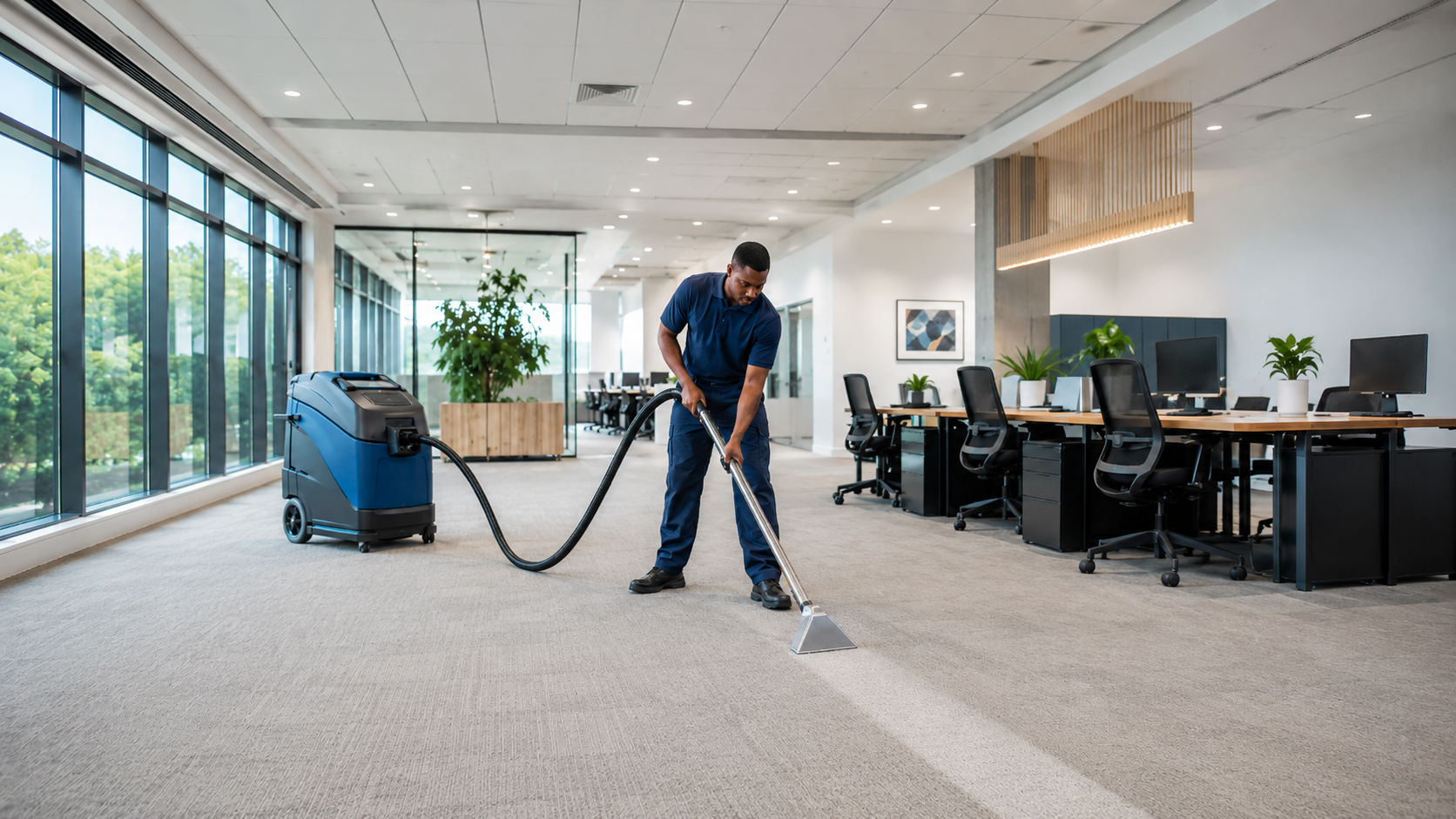
High-traffic office carpets often look dull faster because the same areas are walked over again and again every day.
Entrances, corridors, reception areas, walkways, boardrooms, printer areas, kitchen entrances and office chair zones usually receive more use than quieter rooms. These areas collect more dust, shoe residue, outdoor dirt, food crumbs, drink marks, body oils and general workplace buildup.
Over time, this repeated use can make office carpets look darker, flatter, less fresh or less professional, even when the office is cleaned regularly.
A dull office carpet does not always mean the carpet is permanently damaged. In many cases, professional carpet cleaning can help improve the appearance by removing built-up soil and residue from the carpet fibres. However, some traffic lanes may also be caused by permanent fibre wear, carpet age or long-term compression.
If your office carpets need professional cleaning, you can start with CleanLab SA’s carpet and upholstery cleaning page or choose your nearest local carpet-cleaning page.
What are high-traffic office carpet areas?
High-traffic office carpet areas are the parts of the carpet that receive the most repeated foot traffic or daily use.
These may include:
- entrances
- reception areas
- waiting rooms
- corridors
- walkways between desks
- boardroom entrances
- meeting-room entrances
- office chair zones
- printer areas
- kitchen entrances
- staff-room entrances
- lift lobbies
- stair landings
- customer-facing areas
These areas usually show dullness sooner because the carpet is exposed to repeated movement throughout the day.
In many offices, the carpet may still look clean in quiet corners but appear darker or flatter along the main walking paths.
Why do office carpet traffic lanes appear?
Office carpet traffic lanes usually appear where people walk over the same carpeted path repeatedly.
This repeated movement can push dirt, dust and shoe residue deeper into the carpet fibres. It can also flatten the pile, change how light reflects off the carpet and make the area look darker or more worn.
Traffic lanes may be caused by:
- repeated foot traffic
- outdoor dirt brought in on shoes
- dust from the surrounding area
- shoe residue
- food and drink spills
- body oils
- chair movement
- carpet fibre compression
- poor entrance matting
- delayed professional cleaning
- carpet age
- permanent wear in older carpets
Some traffic lanes are mostly removable soil. Others are partly permanent wear.
A professional technician can usually advise whether the dull area is likely to improve with cleaning or whether some of the appearance is caused by long-term fibre damage.
Why does office carpet look dirty even after vacuuming?
Office carpet may still look dirty after vacuuming because vacuuming mostly removes loose surface debris.
Vacuuming is important, but it does not fully remove:
- embedded soil
- sticky residue
- drink marks
- food residue
- traffic-lane buildup
- body oils
- deeper dust
- odours
- stains
- buildup inside carpet fibres
- marks from repeated office chair movement
A carpet can be vacuumed regularly and still look dull if residue has built up inside the fibres or if high-traffic areas have become flattened.
Professional carpet cleaning helps remove deeper buildup that normal vacuuming cannot fully address.
How shoe residue affects office carpets
Shoes are one of the main reasons office carpets become dull.
Staff, customers, suppliers and visitors may bring in:
- dust
- sand
- soil
- moisture
- outdoor dirt
- road residue
- pollen
- fine grit
- mud during wet weather
- general outside debris
Fine grit can act like an abrasive inside the carpet fibres. Over time, repeated walking can grind this grit into the carpet, making the fibres look dull or worn.
This is why entrances, reception areas and corridors often show dullness first.
Good entrance mats and regular vacuuming can help reduce this buildup, but they do not remove the need for periodic professional carpet cleaning.
Why reception carpets look dull quickly
Reception areas often look dull faster because they are both high-traffic and customer-facing.
A reception carpet may be used by:
- staff
- clients
- visitors
- suppliers
- delivery drivers
- tenants
- guests
- contractors
Reception carpets are also close to entrances, which means they often collect more outdoor dirt and shoe residue.
Even light carpet dullness in a reception area can affect how clean and professional the business feels. A carpet that would look acceptable in a back office may look tired in a customer-facing space.
For this reason, many businesses check and clean reception carpets more often than low-use rooms.
Why corridors and walkways show darker marks
Corridors and walkways usually show darker marks because people move through the same paths every day.
These areas often collect:
- shoe residue
- dust
- fine grit
- food crumbs
- drink marks
- moisture from wet shoes
- dirt from outside areas
- general traffic-lane buildup
Walkways can also become flattened because the fibres are compressed repeatedly.
This can make the carpet look darker even after loose dirt has been removed.
Professional cleaning may improve the appearance if the darkness is caused by removable soil. If the carpet fibres are worn or permanently damaged, cleaning may improve freshness but may not fully restore the original appearance.
Why office chair areas become dull or marked
Office chair areas often become dull because chairs move over the same carpet repeatedly.
The area under and around desks may show:
- flattened carpet fibres
- circular chair movement marks
- darker areas from repeated use
- food crumbs
- dust
- hair
- body oils
- shoe marks
- friction from chair wheels
- general desk-area buildup
Chair wheels can compress the carpet pile and make the area look different from the surrounding carpet.
In some offices, chair mats may help protect carpeted areas under desks. However, they are not always practical or suitable for every office layout.
Professional carpet cleaning can help remove buildup around desk and chair areas, but long-term compression may not always be fully reversible.
Why light-coloured office carpets look dull faster
Light-coloured office carpets often show dullness faster than darker carpets.
This does not always mean they are dirtier. It often means marks, dust, traffic lanes and shoe residue are more visible.
Light carpets may show:
- grey traffic lanes
- darker walkways
- coffee marks
- tea marks
- shoe residue
- dust buildup
- chair marks
- dull patches around entrances
- general colour change in busy areas
For offices with light neutral carpets, more regular inspection may be needed. Cleaning before the carpet looks heavily soiled can help maintain a fresher, more professional appearance.
Why carpet fibres flatten in busy office areas
Carpet fibres can flatten when they are walked over repeatedly.
This is common in:
- corridors
- entrances
- reception areas
- boardrooms
- open-plan office walkways
- desk areas
- printer stations
- waiting rooms
When fibres flatten, the carpet may reflect light differently. This can make the area look darker, duller or more worn, even if some of the soil has been removed.
Cleaning may help lift and refresh the fibres, depending on the carpet type and condition. However, if the fibres are permanently crushed or worn, cleaning may not fully restore the original texture.
This is why regular maintenance is usually better than waiting until high-traffic areas look heavily worn.
What is the difference between soil buildup and carpet wear?
This is an important distinction.
Soil buildup is removable dirt, dust, residue, oils and debris sitting in or on the carpet fibres.
Carpet wear is physical damage, fibre flattening, pile distortion or long-term changes caused by repeated use.
Professional carpet cleaning can often improve soil buildup.
It may not fully reverse permanent wear.
A dull office carpet may have both issues at the same time. For example, a corridor may have removable soil and also permanent fibre compression from years of foot traffic.
This is why expectations should be realistic. Cleaning can make high-traffic carpet areas look fresher and cleaner, but it cannot always make old or worn carpets look brand new.
Why waiting too long can make carpets look worse
Waiting too long between professional carpet cleans can make high-traffic areas harder to refresh.
Over time, soil and residue can build up deeper in the carpet fibres. Fine grit may cause abrasion. Drink marks and food residue may become more noticeable. Traffic lanes may look darker and more permanent.
Delaying carpet cleaning can lead to:
- stronger traffic lanes
- duller carpet colour
- stale odours
- more visible marks
- deeper embedded soil
- more difficult cleaning
- lower freshness
- poorer customer-facing presentation
- more permanent-looking wear
Professional cleaning before carpets look heavily soiled can help maintain appearance and freshness.
How often should high-traffic office carpets be checked?
High-traffic office carpets should be checked more often than low-use areas.
As a general guide:
| Office Area | Traffic Level | Suggested Evaluation Period | What to Look For |
|---|---|---|---|
| Entrances | Very high | Monthly to every 3 months | Shoe residue, darker pathways, moisture marks and outdoor dirt. |
| Reception areas | High | Every 1–3 months | Dullness, stale odours, visible marks and first-impression issues. |
| Corridors and walkways | Very high | Monthly to every 3 months | Traffic lanes, flattened fibres and darker walk paths. |
| Open-plan office walkways | Medium to high | Every 3–6 months | Repeated desk-to-desk traffic, dull areas and general buildup. |
| Office chair zones | Medium to high | Every 3–6 months | Chair wheel marks, flattened fibres and dust around desks. |
| Boardrooms and meeting rooms | Medium | Every 3–6 months | Coffee marks, chair marks, food crumbs and client-facing presentation. |
| Printer or staff areas | Medium to high | Every 3–6 months | Dust, repeated standing areas and general workplace buildup. |
| Waiting rooms | High | Every 1–3 months | Visitor traffic, food or drink marks, stale odours and presentation. |
These are only general guidelines.
The best decider is what the carpet actually looks, feels and smells like. If high-traffic areas look darker, duller, flatter, stale or less professional, it may be time to arrange professional carpet cleaning.
How can businesses reduce dull carpet in high-traffic areas?
Businesses can reduce dullness by improving daily carpet maintenance.
Useful steps include:
- vacuum high-traffic areas regularly
- use entrance mats
- clean spills quickly
- keep food and drink away from carpeted areas where possible
- manage dust near entrances
- empty bins regularly
- clean staff kitchen areas
- use chair mats where suitable
- avoid dragging furniture
- keep walkways clear
- schedule periodic professional carpet cleaning
- inspect customer-facing areas more often
- clean before traffic lanes become severe
Good maintenance can slow down dullness, but it will not prevent all wear.
Office carpets are used daily, and high-traffic areas naturally need more attention over time.
Can professional cleaning fix dull office carpets?
Professional carpet cleaning can often improve dull office carpets, especially when the dullness is caused by soil, dust, residue, odours or general buildup.
It may help with:
- darker traffic lanes
- embedded soil
- shoe residue
- stale odours
- food and drink marks
- general workplace buildup
- dusty carpets
- dull-looking reception areas
- carpet freshness
- high-use walkways
However, results depend on:
- carpet age
- carpet fibre
- carpet colour
- carpet condition
- stain age
- amount of foot traffic
- whether the carpet is worn
- whether the fibres are permanently flattened
- previous cleaning attempts
- how long buildup has been present
If the dullness is caused by removable soil, professional cleaning may make a noticeable difference.
If the dullness is caused by permanent wear, cleaning may improve freshness but may not fully restore the carpet’s original appearance.
Why professional carpet cleaning is useful for offices
Professional carpet cleaning is useful for offices because office carpets often need more than surface vacuuming.
A technician can consider:
- carpet type
- carpet condition
- traffic levels
- customer-facing areas
- office layout
- high-use walkways
- desk and chair zones
- drying conditions
- business schedule
- whether cleaning should happen in sections
- whether related upholstery cleaning is needed
This is especially useful for commercial spaces where presentation matters.
Clean carpets can help an office feel fresher, more organised and more professional for staff, visitors and customers.
Should businesses clean carpets before traffic lanes become obvious?
In many cases, yes.
Waiting until traffic lanes are very dark can make the carpets harder to refresh.
Cleaning earlier may help maintain:
- better appearance
- fresher smell
- cleaner customer-facing spaces
- better reception presentation
- less visible buildup
- better workplace freshness
- easier carpet maintenance
This does not mean carpets need constant cleaning. It means businesses should inspect high-traffic areas regularly and clean when the carpet starts showing signs of buildup.
The right schedule depends on the business, carpet type and traffic level.
Should office upholstery be cleaned too?
Office carpets are not the only surfaces that collect buildup.
Fabric office chairs, reception chairs, waiting-room seating, boardroom chairs and couches can also become dull or stale over time.
Office upholstery may collect:
- dust
- body oils
- hair
- food crumbs
- drink marks
- general workplace buildup
- odours from daily use
If the office carpet looks dull, it may also be worth checking office chairs and reception seating.
Booking carpet and upholstery cleaning together can be practical when a business wants to refresh several soft surfaces in one appointment.
CleanLab SA’s carpet and upholstery cleaning category includes carpets, rugs, couches, sofas, lounge suites, armchairs, dining chairs, office chairs, ottomans, upholstered headboards and other fabric-covered furniture.
Why book office carpet cleaning through CleanLab SA?
Booking through CleanLab SA gives businesses a structured way to arrange carpet and upholstery cleaning in South Africa.
CleanLab SA’s listed professionals are reviewed by customers and expected to meet clear standards. Customers can view available options, compare booking details and get support from booking to completion.
This can be useful for office and business customers because commercial carpet cleaning often needs more planning than a simple home appointment.
Businesses may need help with:
- selecting the right service
- understanding what is included
- arranging suitable timing
- preparing the space
- clarifying access details
- managing expectations around drying
- understanding what may or may not be practical
- arranging related upholstery cleaning where needed
The value is in the full booking structure:
- reviewed listed professionals
- clear standards to remain listed
- customer review visibility during booking
- support from booking to completion
- a clearer place to ask follow-up questions
- a practical way to arrange carpet and upholstery cleaning
- local booking options across major South African areas
You can also learn more from CleanLab SA’s Booking Protection and Professional Standards pages.
Find carpet and upholstery cleaning in your area
If your office carpets need professional cleaning, you can start with CleanLab SA’s carpet and upholstery cleaning page.
Main city pages include:
- Cape Town carpet cleaners
- Durban carpet cleaners
- Johannesburg carpet cleaners
- Pretoria carpet cleaners
- Randburg carpet cleaners
- Sandton carpet cleaners
You can also browse the wider cleaning services hub or explore available locations.
Final answer: why do high-traffic office carpets look dull faster?
High-traffic office carpets look dull faster because the same areas are walked over and used repeatedly. Entrances, reception areas, corridors, walkways, office chair zones, meeting rooms and customer-facing areas collect more dust, shoe residue, outdoor dirt, food crumbs, drink marks and general workplace buildup.
Repeated traffic can also flatten carpet fibres, create darker-looking traffic lanes and change how the carpet reflects light.
Professional carpet cleaning can often improve dull office carpets when the dullness is caused by removable soil, residue, odours or general buildup. However, if the dullness is caused by permanent wear or fibre damage, cleaning may improve freshness but may not fully restore the original appearance.
The best approach is to inspect high-traffic areas regularly and arrange professional carpet cleaning when carpets look darker, duller, stale, marked or less presentable.
For professional carpet and upholstery cleaning, review CleanLab SA’s carpet and upholstery cleaning page and use Get Rates & Availability to view prices, select your location and secure your booking.