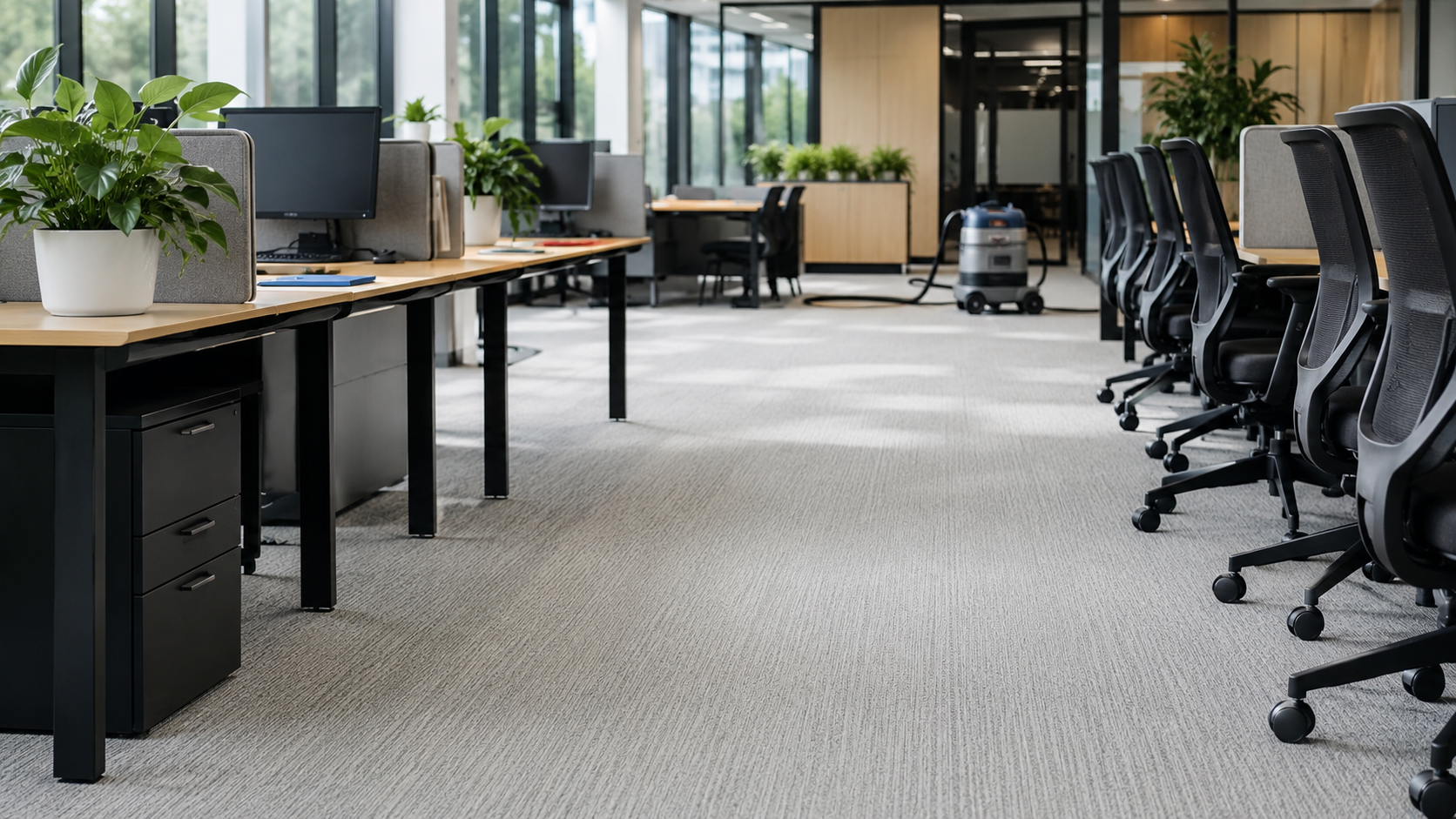
Preparing an office for carpet cleaning helps the appointment run more smoothly, reduces disruption, and gives the technician better access to the areas that need attention.
Office carpet cleaning is different from cleaning carpets in a home. Offices often have desks, chairs, cables, filing cabinets, printers, reception furniture, meeting rooms, staff areas and high-traffic walkways. Some items may be easy to move, while others may need to stay in place.
The goal is not to empty the entire office. In most cases, the goal is to clear what is practical, protect fragile or important items, identify the priority carpeted areas, and allow enough time for the carpets to dry before normal use resumes.
If your office carpets need professional cleaning, you can start with CleanLab SA’s carpet and upholstery cleaning page or choose your nearest local carpet-cleaning page.
Why office preparation matters before carpet cleaning
Good preparation helps the carpet-cleaning technician work more efficiently.
It can also help avoid delays, confusion, and unnecessary movement of office items on the day of the appointment.
Preparing the office can help with:
- easier access to carpeted areas
- better cleaning around desks and chairs
- safer movement through the office
- fewer delays on arrival
- clearer expectations around furniture
- better planning around drying time
- less disruption for staff
- fewer loose items on the floor
- less risk around cables, electronics and fragile items
Office carpet cleaning is usually most effective when the technician can access the main carpeted areas without having to spend too much time clearing small items, paperwork, bins or cables.
Office carpet cleaning checklist before the technician arrives
Before the carpet-cleaning appointment, businesses should try to:
- clear loose items from the floor
- remove small bins
- move light chairs where practical
- lift or secure cables where possible
- remove paperwork from the floor
- move personal items from under desks
- secure fragile items
- remove items from low shelves if needed
- identify stains, marks or high-traffic areas
- confirm which rooms or sections need cleaning
- advise if any furniture cannot be moved
- confirm parking, lift or access details
- allow enough drying time after the appointment
This does not mean every desk, cabinet or heavy item must be moved.
The technician can usually clean accessible carpeted areas and work around larger fixed or heavy office furniture where needed.
What furniture should be moved before office carpet cleaning?
Light and easy-to-move items should be moved where practical.
This may include:
- loose office chairs
- visitor chairs
- small bins
- small side tables
- lightweight reception chairs
- floor mats
- magazine stands
- loose boxes
- small décor items
- portable display items
Moving these items gives the technician better access and helps avoid cleaning around unnecessary obstacles.
However, large or heavy office furniture may not be practical to move.
This may include:
- heavy desks
- boardroom tables
- filing cabinets
- storage units
- large printers
- computer stations
- built-in counters
- display units
- server equipment
- large reception furniture
If these items cannot be moved, the technician can normally clean the accessible carpet around them.
Should desks and filing cabinets be moved?
In most offices, heavy desks and filing cabinets do not need to be moved.
These items can be difficult, risky or impractical to move, especially if they are full, connected to cables, or positioned as part of a working office layout.
Before the appointment, it is better to clear around these areas rather than trying to move everything.
Useful preparation includes:
- removing loose items from under desks
- lifting loose cables where possible
- moving office chairs
- clearing small bins
- removing boxes from the floor
- making walkways accessible
- pointing out priority areas to the technician
If a specific area under or behind furniture must be cleaned, this should be discussed before the appointment so expectations are clear.
What should be done with office cables?
Cables are one of the most important preparation points for office carpet cleaning.
Offices often have computer cables, printer cables, extension cords, chargers, network cables and power strips around desks and workstations.
Before cleaning, businesses should try to:
- lift loose cables off the carpet where possible
- secure cables safely
- unplug non-essential items if needed
- move extension cords from walkways
- avoid leaving chargers on the floor
- protect computer equipment
- keep power strips away from damp areas
- advise the technician about sensitive equipment
This helps reduce risk and makes it easier to clean around desk areas.
Technicians should not be expected to disconnect computers, move complex wiring, or manage sensitive electronics unless this has been clearly arranged.
Should staff remove personal items?
Yes, staff should remove or lift personal items from the floor before the appointment.
This may include:
- bags
- shoes
- boxes
- paperwork
- files
- chargers
- food containers
- small bins
- personal heaters
- floor plants
- loose stationery
- items stored under desks
This makes the appointment easier and helps prevent personal items from being moved, misplaced or exposed to damp carpet.
A simple staff reminder before the appointment can help avoid delays.
How should reception areas be prepared?
Reception areas often matter because they are customer-facing.
Before cleaning, businesses should clear:
- loose chairs
- floor mats
- magazine stands
- brochure holders
- small tables
- bins
- loose décor
- cables
- signage stands
- small plants
Reception carpets often collect more dirt because visitors enter from outside areas. Entrances and waiting areas may need special attention because of repeated foot traffic.
If the reception area must be used soon after cleaning, the business should plan around drying time and airflow.
How should boardrooms and meeting rooms be prepared?
Boardrooms and meeting rooms are usually easier to prepare than open-plan office areas, but furniture can still be heavy.
Before cleaning, businesses can:
- move light chairs away from the table
- clear items from the floor
- remove bins
- lift cables
- remove presentation equipment from the floor
- clear food or drink items
- identify any marks under chairs or near the table
Large boardroom tables may not be practical to move.
The technician can usually clean the accessible carpeted areas around the table and chairs.
How should open-plan offices be prepared?
Open-plan offices can take longer to prepare because there are more desks, chairs, cables and personal items.
The best approach is usually to prepare section by section.
Businesses should:
- notify staff in advance
- ask staff to clear floor areas
- move loose chairs where practical
- lift cables where possible
- remove bins and boxes
- clear main walkways
- identify priority zones
- decide whether cleaning will happen section by section
- allow time for drying before staff return
If the office is large, cleaning may be arranged in phases to reduce disruption.
Should office chairs be cleaned too?
Office chairs may also need cleaning, especially if they are fabric-covered.
Office chairs can collect:
- dust
- body oils
- hair
- food crumbs
- drink marks
- general workplace buildup
- odours from daily use
If the chairs are fabric, upholstery cleaning may be useful at the same time as carpet cleaning.
This can be practical for offices that want to refresh carpets, reception seating, boardroom chairs and staff chairs in one appointment.
CleanLab SA’s carpet and upholstery cleaning category includes carpets, rugs, couches, sofas, lounge suites, armchairs, dining chairs, office chairs, ottomans, upholstered headboards and other fabric-covered furniture.
Which office carpet areas need the most attention?
Not all carpeted areas wear evenly.
High-traffic areas usually need the most attention.
These may include:
- entrances
- reception areas
- corridors
- walkways
- boardrooms
- meeting rooms
- office chair areas
- printer areas
- staff-room entrances
- kitchen entrances
- waiting areas
- lift lobbies
- stair landings
These areas often collect more dust, shoe residue, drink marks, food crumbs and general buildup.
Some darker areas may improve with cleaning. Other areas may be affected by permanent wear, fibre damage or long-term traffic patterns. A technician can usually advise what improvement is realistic.
Should the office be vacuumed before carpet cleaning?
In many cases, professional carpet-cleaning technicians will handle the cleaning process, but basic preparation still helps.
Businesses do not usually need to deep-clean before the technician arrives.
However, it may help to:
- remove loose debris
- clear large crumbs
- pick up paper clips or staples
- remove small objects from the floor
- clear dust-heavy areas where practical
- make the floor accessible
The main preparation is clearing access, not pre-cleaning the carpet.
What should businesses tell the technician before cleaning?
Before the appointment, it helps to mention anything that may affect the cleaning.
This may include:
- high-traffic areas
- coffee or tea marks
- food spills
- stale odours
- water marks
- office chair marks
- areas that must be dry quickly
- rooms with poor airflow
- sensitive equipment
- access restrictions
- security requirements
- parking limitations
- lift access
- stairs
- areas that should not be cleaned
- furniture that cannot be moved
The more practical information the technician has, the easier it is to plan the appointment properly.
How can businesses reduce disruption during office carpet cleaning?
To reduce disruption, businesses can plan the appointment around the office schedule.
Options may include:
- after-hours cleaning
- weekend cleaning
- cleaning during quiet periods
- cleaning room by room
- cleaning section by section
- cleaning before a public holiday
- cleaning before staff return
- cleaning after closing
- cleaning between tenants
- cleaning after office renovations or moving
Businesses should also plan for drying time.
If staff need to return the next morning, airflow and ventilation become more important.
How long do office carpets take to dry?
Drying time depends on several factors.
These include:
- carpet thickness
- carpet fibre
- cleaning method
- amount of moisture used
- airflow
- ventilation
- humidity
- room temperature
- whether windows can open
- whether fans or air movers are used
- whether furniture is placed back too soon
Office carpets may dry faster in well-ventilated rooms with good airflow.
They may take longer in closed offices, humid weather, thick carpets, cold rooms, or spaces with limited ventilation.
Businesses should avoid heavy foot traffic while carpets are still damp where possible.
Should furniture be placed back immediately?
Heavy furniture should not be placed back too soon if the carpet is still damp.
Replacing heavy items too early can slow drying and may leave marks or affect airflow.
Where possible:
- wait until the carpet has dried
- avoid dragging furniture across damp carpet
- use caution with heavy items
- keep airflow moving through the room
- avoid blocking freshly cleaned areas
- ask the technician for practical guidance
Light chairs and movable items may be returned when appropriate, but the timing depends on the carpet condition and drying progress.
Can office carpet cleaning happen while staff are working?
Sometimes, but it depends on the office layout and the areas being cleaned.
Cleaning during working hours may be possible if:
- the office is quiet
- only one section is being cleaned
- staff can move to another area
- walkways can be controlled
- noise will not disrupt work
- wet areas can be avoided
- drying time is manageable
However, many businesses prefer after-hours or weekend cleaning to avoid disruption.
This is especially useful for reception areas, open-plan offices, boardrooms, call centres and customer-facing spaces.
How often should offices clean carpets?
The right frequency depends on the office.
A small office with low foot traffic may need cleaning less often than a busy office, reception area, clinic, showroom or call centre.
Office carpets may need more regular cleaning when there is:
- high foot traffic
- customer movement
- staff movement
- food and drink use
- dusty surroundings
- carpet near entrances
- light-coloured carpet
- reception seating
- shared workspaces
- office chair marks
- regular visitors
- carpets that show marks quickly
Some businesses arrange carpet cleaning seasonally. Others book before inspections, after events, during quiet periods, or as part of scheduled maintenance.
Why professional office carpet cleaning is better than guessing
Professional office carpet cleaning is usually better than relying only on vacuuming or random spot cleaning.
Vacuuming helps with loose surface dust, but it does not fully address deeper buildup, traffic lanes, common marks, stale odours or residue inside carpet fibres.
Professional carpet cleaning can help with:
- deeper soil removal
- traffic-lane improvement
- common marks
- general odours
- dust and buildup
- fresher appearance
- customer-facing presentation
- workplace freshness
- better maintenance planning
- suitable methods for different carpet types
- guidance around drying and preparation
A technician can consider the carpet type, level of use, office layout, drying conditions, access limits and business schedule before choosing a suitable cleaning approach.
Why book office carpet cleaning through CleanLab SA?
Booking through CleanLab SA gives businesses a structured way to arrange carpet and upholstery cleaning in South Africa.
CleanLab SA’s listed professionals are reviewed by customers and expected to meet clear standards. Customers can view available options, compare booking details and get support from booking to completion.
This can be useful for office and business customers because commercial cleaning often needs more planning than a simple home appointment.
Businesses may need help with:
- selecting the right service
- understanding what is included
- arranging suitable timing
- preparing the space
- clarifying access details
- managing expectations around drying
- understanding what may or may not be practical
- arranging related upholstery cleaning where needed
The value is in the full booking structure:
- reviewed listed professionals
- clear standards to remain listed
- customer review visibility during booking
- support from booking to completion
- a clearer place to ask follow-up questions
- a practical way to arrange carpet and upholstery cleaning
- local booking options across major South African areas
You can also learn more from CleanLab SA’s Booking Protection and Professional Standards pages.
Find carpet and upholstery cleaning in your area
If your office needs carpet cleaning, you can start with CleanLab SA’s carpet and upholstery cleaning page.
Main city pages include:
- Cape Town carpet cleaners
- Durban carpet cleaners
- Johannesburg carpet cleaners
- Pretoria carpet cleaners
- Randburg carpet cleaners
You can also browse the wider cleaning services hub or explore available locations.
Final answer: how should you prepare an office for carpet cleaning?
To prepare an office for carpet cleaning, clear loose items from the floor, move light chairs where practical, lift cables where possible, remove bins and paperwork, secure fragile items, identify high-traffic areas, confirm access details and allow enough time for the carpets to dry.
Heavy desks, filing cabinets, built-in units and sensitive electronics usually do not need to be moved unless this has been arranged in advance. The technician can normally clean the accessible carpeted areas around larger office furniture.
Good preparation helps the appointment run more smoothly, reduces disruption and gives the technician better access to the areas that need attention.
For professional carpet and upholstery cleaning, review CleanLab SA’s carpet and upholstery cleaning page and use Get Rates & Availability to view prices, select your location and secure your booking.