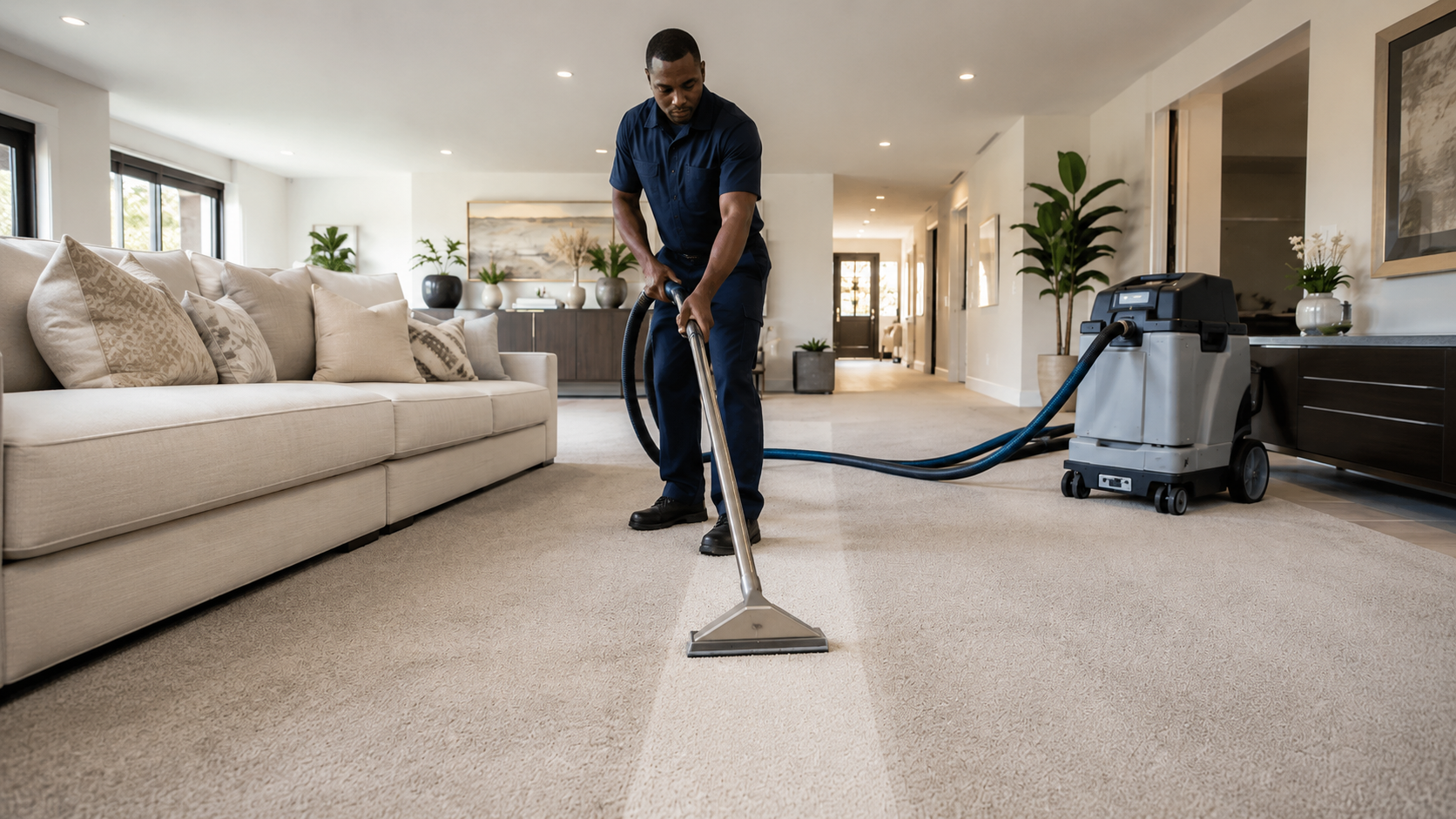
High-traffic carpet areas are usually the first parts of a home to look dull, smell stale, or feel less fresh underfoot.
These are the areas people walk over every day: passages, lounge walkways, bedroom entrances, routes to bathrooms, spaces around couches, and areas near sliding doors or entrances.
The carpet may not look badly dirty at first. But over time, high-traffic carpet areas can collect dust, body oils, pet hair, shoe residue, fine soil, spills, odours, and flattened carpet fibres.
That is why a room can still look tidy while the carpet itself feels tired.
The short answer is: high-traffic carpet areas look dull and smell stale because repeated walking pushes dirt, oils, dust, and everyday residue deeper into the carpet fibres. Vacuuming helps, but it does not always remove the buildup that causes traffic marks, stale odours, and a flat or worn-looking appearance.
If you are comparing options, you can review CleanLab SA’s carpet and upholstery cleaning page or browse the wider cleaning services hub.
What are high-traffic carpet areas?
High-traffic carpet areas are the parts of the carpet that receive the most daily use.
In homes, these usually include:
- passages
- lounge walkways
- bedroom entrances
- routes to bathrooms
- areas around couches
- areas around beds
- spaces near sliding doors
- carpet near entrances
- TV room walkways
- children’s play areas
- pet-used areas
- home office chair areas
These areas often start to look different from the rest of the carpet.
They may appear:
- darker
- flatter
- duller
- slightly grey
- less soft
- more worn
- less fresh
- more marked than surrounding areas
This does not always mean the carpet is ruined.
In many cases, the issue is a buildup of everyday dirt and residue. Professional carpet cleaning can often improve the look, smell, and feel of these areas.
Why do high-traffic carpet areas look dull?
High-traffic carpet areas look dull because they are exposed to repeated friction, pressure, and residue.
Every time someone walks across the same part of the carpet, the fibres are pressed down. At the same time, small particles from shoes, socks, pets, skin, and the surrounding room can settle into the pile.
Over time, this can make the carpet look less bright and less fresh.
Common causes include:
- dust
- fine soil
- shoe residue
- sock fibres
- pet hair
- body oils
- skin particles
- food crumbs
- drink residue
- flattened carpet pile
- dirt from repeated foot movement
The result is often a dull walkway or darker-looking path through the room.
A lounge may still look neat overall, but the route between the couch, kitchen, passage, or patio door may look more tired than the rest of the carpet.
Why do high-traffic carpet areas smell stale?
High-traffic carpet areas can smell stale because carpets naturally absorb everyday odours and residues.
Carpet fibres can hold:
- body oils
- sweat residue
- pet dander
- pet smells
- food particles
- drink spills
- outdoor dirt
- dust
- moisture from minor spills
- stale indoor odours
These small residues can build up gradually.
The smell is not always obvious immediately. Many homeowners only notice it when they enter the room after being outside, when the room has been closed up, or when the weather is warm or humid.
A stale carpet smell does not always mean there is one obvious stain. Sometimes the issue is the combined effect of daily living.
That is why high-use lounges, bedrooms, passages, and pet-used rooms can lose freshness even when the home is cleaned regularly.
Why vacuuming does not always solve the problem
Vacuuming is important, but it mainly removes loose surface dirt.
It is very useful for:
- dust
- crumbs
- pet hair
- loose grit
- surface debris
- everyday maintenance
But vacuuming does not always remove deeper buildup from high-traffic carpet areas.
Some residues cling to the carpet fibres or sit deeper in the pile. Body oils, sticky residue, drink marks, pet odours, and fine soil can be harder to remove with normal vacuuming alone.
This is why a carpet can still look dull after vacuuming.
The loose debris may be gone, but the carpet fibres may still be holding residue that affects the look, feel, and smell of the room.
Why traffic lanes appear on carpets
Traffic lanes are the darker or flatter-looking paths that appear where people walk repeatedly.
They often show up in:
- passages
- bedroom entrances
- lounge walkways
- routes between rooms
- areas near couches
- areas near beds
- home office spaces
- carpet near sliding doors or entrances
Traffic lanes can be caused by two different things:
| Cause | Can cleaning help? |
|---|---|
| Dirt, oils, dust, and residue | Yes, often visibly improves |
| Permanent fibre wear or crushing | Cleaning may improve freshness, but cannot reverse fibre damage |
This distinction matters.
If the carpet looks darker because it is holding dirt and residue, professional cleaning can often make a noticeable difference.
If the carpet fibres are physically worn down, cleaning can still freshen the carpet and improve appearance, but it cannot rebuild damaged fibres.
For most homes, cleaning is the sensible first step before assuming the carpet needs replacing.
Why high-traffic areas trap more dirt than other areas
High-traffic carpet areas trap more dirt because the same fibres are repeatedly used.
When people walk through the same area every day, they bring in and spread small amounts of dirt, dust, and residue.
This can come from:
- shoes
- socks
- pets
- garden areas
- driveways
- tiled floors
- kitchen areas
- bathroom routes
- patios
- outdoor entrances
Even if people remove shoes indoors, carpets still collect dust, skin particles, sock residue, pet hair, and indoor debris.
The issue is not one dramatic event. It is slow buildup.
This is why high-traffic carpet areas often become dull gradually. Homeowners may only notice the difference when furniture is moved and the protected carpet underneath looks brighter than the walkway.
Why carpet near couches often looks worse
Carpet around couches and lounge seating often gets heavy use.
People sit, stand, eat, drink, walk, rest their feet, and spend long periods in these areas.
That means the carpet near couches may collect:
- food crumbs
- drink spills
- pet hair
- foot residue
- body oils
- dust
- odours
- flattened pile
- marks from repeated walking
This is especially common in family TV rooms and lounges.
The couch itself may also collect body oils, pet hair, odours, and stains, which is why many customers book carpet and upholstery cleaning together.
You can learn more from CleanLab SA’s carpet and upholstery cleaning page.
Why pet-used carpet areas smell faster
Homes with pets often notice stale smells sooner in high-traffic carpet areas.
Pets may:
- lie in the same spots
- walk through the same passages
- bring in outdoor dirt
- shed hair and dander
- leave saliva marks
- leave muddy paw marks
- have small accidents
- transfer odours to carpet fibres
Pet-used carpet areas are not always visibly dirty, but they can lose freshness faster.
Common pet-related areas include:
- lounges
- passages
- bedroom carpets
- carpet near doors
- pet sleeping spots
- areas around couches
- rugs where pets rest
- routes between garden and indoor spaces
Professional carpet cleaning can help reduce common pet smells, lift everyday dirt, and freshen areas where pets spend time.
Very old urine, repeated saturation, or contamination beneath the carpet may be more difficult, but many normal pet-used carpet areas can be improved.
Why children’s rooms and family spaces get dull quickly
Children’s rooms, play areas, lounges, and family rooms often develop high-traffic marks because they are used in many different ways.
Carpets in these rooms may collect:
- snack crumbs
- drink spills
- muddy marks
- craft residue
- toy dust
- pet hair
- foot traffic
- general household odours
These areas may need more regular cleaning than a guest room or formal lounge that is rarely used.
A carpet can look “fine” from a distance but still feel less fresh when children sit, play, or lie on it.
For families, professional carpet cleaning can help reset the feel of high-use spaces and make the room more comfortable again.
Can professional carpet cleaning improve dull high-traffic areas?
Yes, professional carpet cleaning can often improve dull high-traffic areas, especially when the dullness is caused by dirt, residue, and everyday buildup.
Professional cleaning can help with:
- traffic marks
- stale odours
- pet smells
- muddy marks
- food and drink residue
- dusty carpet fibres
- flattened-looking areas
- dull lounge carpets
- dirty passage carpets
- high-use family spaces
The result depends on the carpet age, fibre type, level of soiling, previous cleaning attempts, and whether there is permanent wear.
If the carpet fibres are worn down, cleaning cannot make them new again. But even then, cleaning can often improve freshness and make the area feel better.
When high-traffic marks may not fully disappear
Some high-traffic marks are not only dirt.
Sometimes the carpet fibres have been physically worn, crushed, or damaged by repeated use.
This is more likely when:
- the carpet is old
- the same walkway has been used for years
- the pile is flattened
- fibres have lost texture
- there is permanent discolouration
- the carpet has been exposed to repeated dirt or moisture
- previous cleaning attempts damaged the fibres
In these cases, professional cleaning can still help, but the customer should have realistic expectations.
The carpet may look cleaner and smell fresher, but permanent wear may still be visible.
That does not mean cleaning was not useful. It means the carpet has both soiling and wear.
How often should high-traffic carpet areas be cleaned?
There is no single rule for every home.
High-traffic carpet areas may need more frequent cleaning than low-use rooms.
You may want to consider professional carpet cleaning more often if:
- pets use the room
- children play on the carpet
- the lounge is used daily
- walkways look darker
- carpets smell stale
- there are visible traffic lanes
- guests often visit
- shoes are worn indoors
- the home has recently had renovations
- carpets no longer feel fresh underfoot
A quiet guest room may not need frequent attention, but a busy lounge, TV room, passage, or bedroom walkway may need cleaning sooner.
The best approach is to clean before carpets become heavily soiled.
Waiting too long can make traffic marks, odours, and stains harder to improve.
How to reduce dirt buildup in high-traffic carpet areas
You cannot stop carpets from being used, but you can slow down the buildup.
Helpful habits include:
- vacuum high-use areas regularly
- use entrance mats
- clean spills quickly
- keep pet bedding clean
- brush or groom pets regularly
- avoid walking outdoor dirt through the house
- move small furniture occasionally where practical
- rotate rugs where possible
- clean under and around couches
- book professional cleaning before carpets become heavily soiled
These steps help maintain the carpet between professional cleans.
They are especially useful in lounges, passages, bedrooms, and pet-used rooms.
Should you clean only the high-traffic area?
Sometimes customers only want the visible traffic lane cleaned.
In practice, it is often better to clean the full room or logical carpeted area rather than only one narrow path.
There are two reasons for this.
First, cleaning only the traffic lane may leave a visible contrast between the cleaned area and the surrounding carpet.
Second, surrounding carpet fibres may also hold dust, odours, and everyday residue, even if they look better than the walkway.
A full-room clean usually gives a more even and natural result.
When booking, customers should think about the whole space rather than only the darkest mark.
Is high-traffic carpet cleaning useful before guests or events?
Yes, high-traffic carpet cleaning can be useful before guests, family gatherings, holidays, events, or moving into a fresh season.
This is especially true for:
- lounges
- TV rooms
- passages
- guest bedrooms
- children’s rooms
- pet-used rooms
- carpet near entrances
- spaces where people gather
High-traffic areas affect how the whole room feels.
Even if the rest of the home is tidy, dull or stale carpet can make the room feel less fresh.
Professional carpet cleaning can help the space feel cleaner, more comfortable, and better maintained before people arrive.
What should customers expect from the result?
Customers should expect high-traffic carpet areas to look cleaner, smell fresher, and feel more comfortable where the issue is mainly dirt and residue.
Professional carpet cleaning can often improve:
- dull carpet
- stale smells
- pet odours
- traffic lanes
- muddy marks
- dusty carpet fibres
- food and drink residue
- high-use walkways
- family lounge carpets
- bedroom and passage carpets
The final result depends on the carpet’s condition.
Cleaning can improve soiling, odours, and general freshness. It cannot reverse permanent fibre damage, sun fading, colour loss, or heavy wear.
For many homes, though, the improvement can be noticeable enough to make the room feel fresher and better maintained.
Why book carpet cleaning through CleanLab SA?
Booking carpet and upholstery cleaning through CleanLab SA gives customers a structured way to arrange professional cleaning services.
CleanLab SA’s listed professionals are reviewed by customers and expected to meet clear standards. Customers also get support from booking to completion.
That means the value is not only in the cleaning itself, but also in the booking structure around it:
- reviewed listed professionals
- clear standards to remain listed
- customer review visibility during booking
- support from booking to completion
- a clearer path for booking-related assistance where needed
- a practical way to compare service options before booking
For high-traffic carpet areas, this matters because customers often want clearer expectations. They want to know whether dullness, odours, pet marks, and traffic lanes can improve, and they want a practical route from concern to booking.
You can learn more from CleanLab SA’s Booking Protection and Professional Standards pages.
Find carpet cleaning in your area
If your carpets look dull, smell stale, or show high-traffic marks, you can start with CleanLab SA’s main carpet and upholstery cleaning page.
You can also browse the wider cleaning services hub or explore available locations.
Main city pages include:
- Cape Town carpet cleaners
- Durban carpet cleaners
- Johannesburg carpet cleaners
- Pretoria carpet cleaners
- Randburg carpet cleaners
That helps customers move from carpet-cleaning research into the correct local booking path.
Final answer: why high-traffic carpet areas smell, look dull and trap dirt
High-traffic carpet areas smell stale, look dull, and trap dirt because the same parts of the carpet are used repeatedly every day.
Dust, shoe residue, pet hair, body oils, food particles, spills, and everyday odours can build up in the carpet fibres. Over time, those areas may look darker, flatter, and less fresh than the rest of the room.
Vacuuming helps with loose surface dirt, but it does not always remove deeper residue or stale odours.
Professional carpet cleaning can often improve high-traffic carpet areas by lifting embedded dirt, freshening the fibres, reducing odours, and improving the overall feel of the room.
If you are ready to book, review CleanLab SA’s carpet and upholstery cleaning page and use Get Rates & Availability to view prices, select your location, and secure your booking.