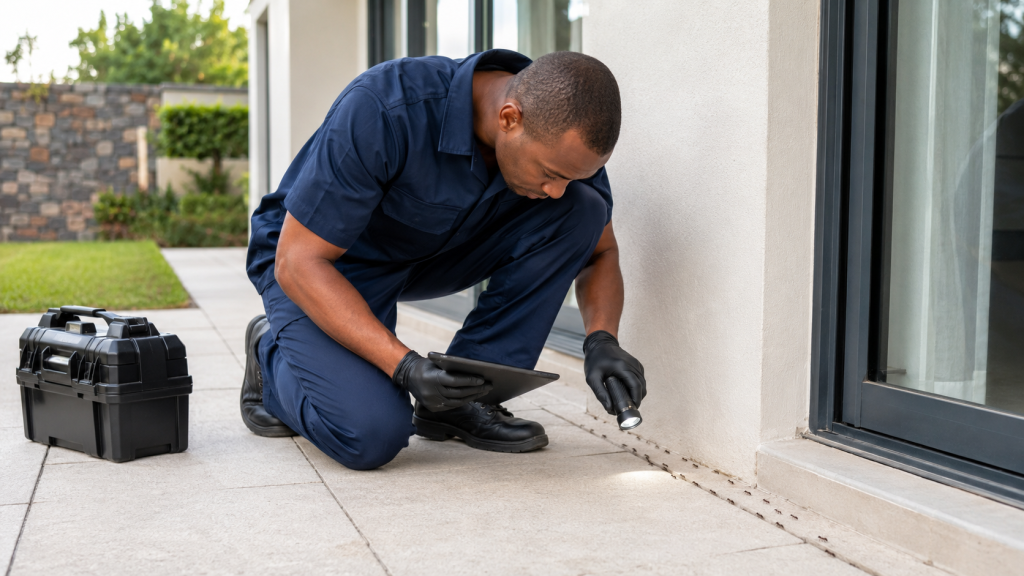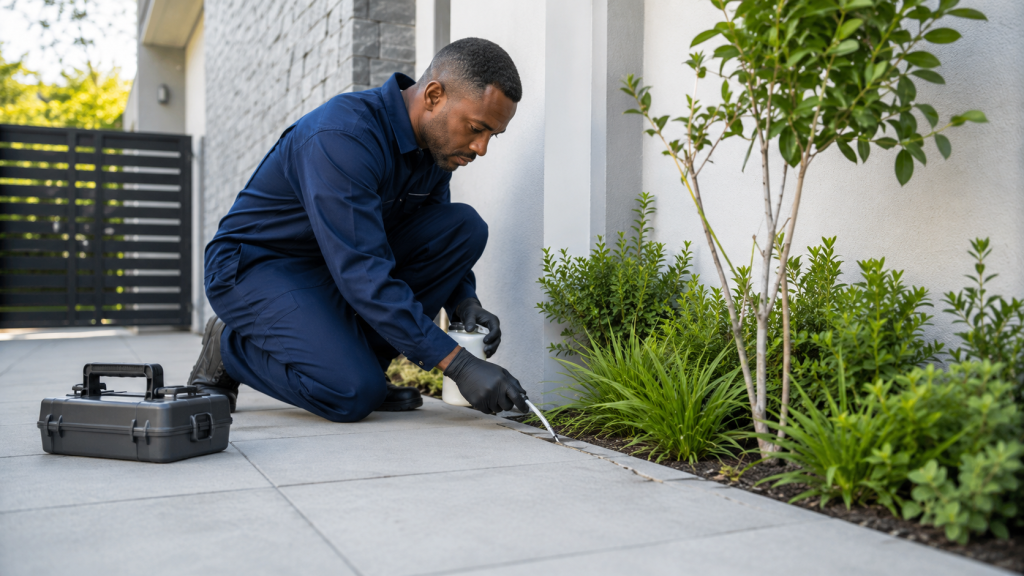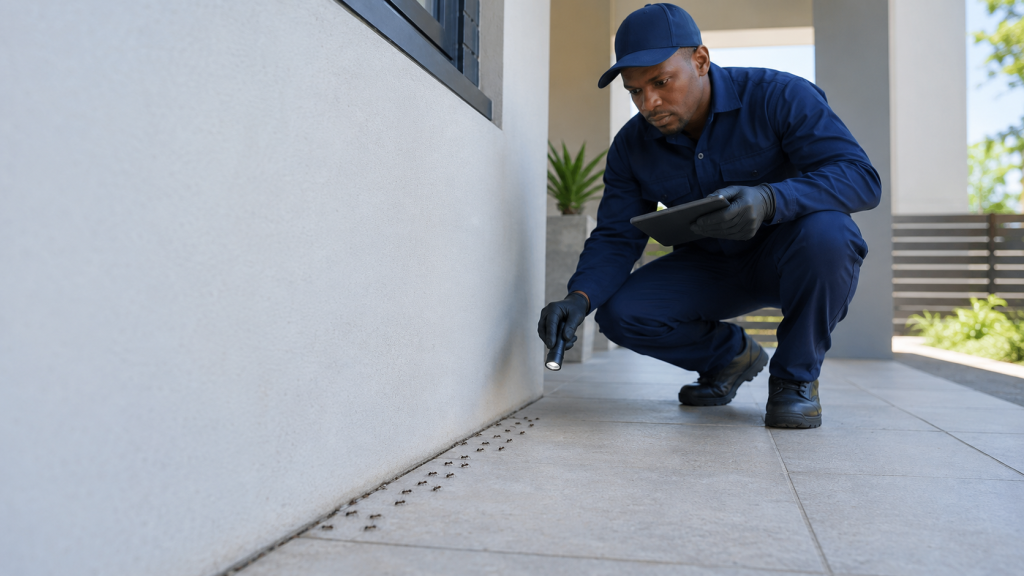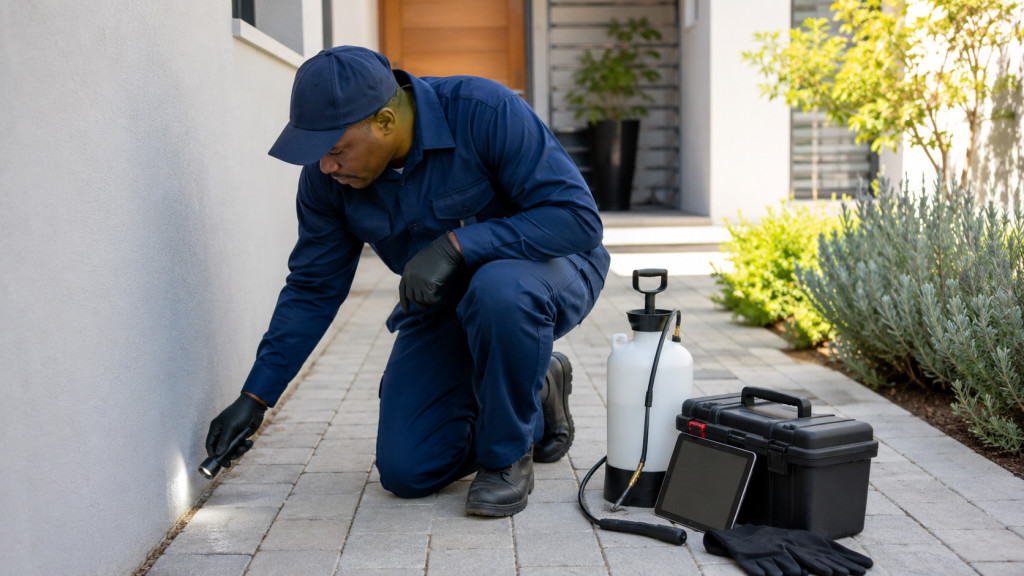
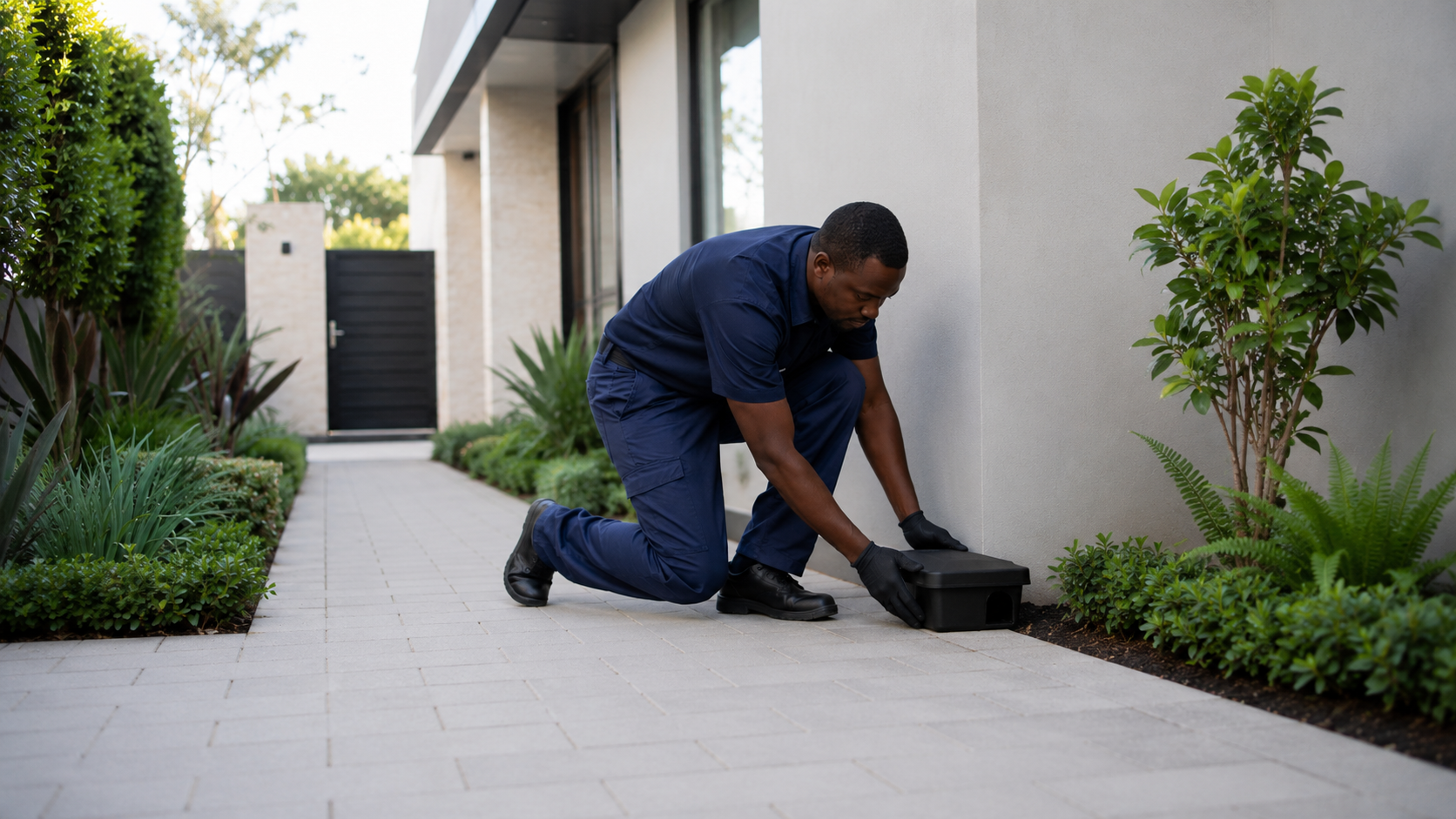
The most effective rodent control is not one trap, one repellent, one poison, or one device.
The most effective rodent control is a complete plan that deals with:
- the rodents already active in the property
- how they are getting in
- where they are nesting or travelling
- what food or water is attracting them
- what gaps, drains, ceilings, pipes, doors or walls are giving them access
- what needs to be corrected so the problem does not keep returning
The short answer is: the most effective rodent control is professional rodent pest control combined with source control and proofing advice. Traps and repellents may help in some situations, but they often fail when used alone because they do not always identify entry points, nesting areas, food sources, roof activity, wall gaps, drains, pipe routes, or the wider reason rodents are active. Professional treatment is usually the stronger option for an active or recurring rodent problem because the technician can assess the property, place suitable control measures, and advise on weak points that may be allowing rodents to survive or return.
Many people search for this problem in different ways, including:
- what is the most effective rodent control?
- what is the most effective mouse control?
- what is the most effective mouse repellent?
- what is the most effective mice repellent?
- what is the most effective mouse trap?
- what is the most effective mice trap?
- what is the most effective rat repellent?
- what is the most effective rat trap?
- what is the most effective way to catch a rat?
- what is the most effective way to kill mice?
- what is the most effective way to kill rats?
- what is rodent pest control?
- how do I get rid of rodents permanently?
- will a mouse go near a sleeping human at night?
These questions all point to the same concern:
What actually works when rats or mice are active in a home or business?
If you are dealing with rodent activity, you can start with CleanLab SA’s rodent pest control page or browse the wider pest control services hub.
Main rodent pest control city pages include:
- Cape Town rodent pest control
- Durban rodent pest control
- Johannesburg rodent pest control
- Pretoria rodent pest control
- Randburg rodent pest control
You can also check CleanLab SA’s available locations to find service areas.
What is rodent control?
Rodent control means managing rats and mice so they are removed, reduced, blocked, or prevented from continuing to live in or around a property.
A proper rodent control plan may involve:
- inspection
- identifying rodent signs
- finding entry points
- identifying travel routes
- locating food sources
- checking roof, ceiling, wall and pipe areas
- placing traps or bait stations where suitable
- advising on proofing and sealing gaps
- reducing food, waste and clutter
- monitoring activity
- arranging further action where needed
Rodent control should not only focus on catching one mouse or rat.
If the entry point remains open, more rodents may enter.
If food and shelter remain available, the problem may continue.
That is why the most effective rodent control focuses on the whole situation, not just the rodent you see.
Why rodents are difficult to control
Rodents are difficult to control because they are good at hiding, travelling through small gaps, and staying active when people are asleep.
They may move through:
- ceilings
- roof spaces
- wall gaps
- cupboards
- garages
- drains
- pipe openings
- door gaps
- wall cracks
- kitchens
- storerooms
- bin areas
- gardens
- boundary walls
- neighbouring properties
Rodents are also cautious. They may avoid new objects at first, travel along walls, and use the same hidden routes repeatedly.
This is why random trap placement often fails.
A trap can be effective if it is placed correctly, but weak if it is placed in the wrong area.
The same applies to repellents and devices.
The problem is not only the product. It is the assessment and placement.
What is the most effective rodent control?
The most effective rodent control usually combines five things:
- Inspection
- Correct identification of the rodent problem
- Suitable control measures
- Food, waste and clutter reduction
- Entry-point reduction or proofing where practical
Professional rodent pest control is often the best route because a technician can assess the property and decide what approach is most suitable.
That may include checking:
- droppings
- gnaw marks
- scratching noises
- roof or ceiling activity
- wall gaps
- pipe openings
- drains
- garage doors
- kitchen food areas
- pet food
- bin areas
- garden access points
- neighbouring or shared-property pressure
The goal is not only to remove the current rodents.
The goal is to understand why they are there and how to reduce the chance of the problem returning.
Why traps alone may not solve a rodent problem
Traps can catch rodents.
But traps alone may not solve the full rodent problem if the source remains active.
For example, traps may fail if:
- they are placed in the wrong area
- rodents are travelling through a different route
- there are multiple entry points
- food sources are still available
- rodents are nesting in the ceiling or walls
- the trap type is not suitable
- rodents avoid the trap
- more rodents keep entering from outside
- neighbouring properties or shared areas are involved
A trap catches an individual rodent.
It does not automatically close the hole, remove the nesting area, clean up food sources, or stop other rodents from entering.
That is why traps are only one part of effective rodent control.
What is the most effective mouse control?
The most effective mouse control is a plan that identifies how mice are entering, where they are travelling, and what is attracting them.
Mice may enter through very small openings and can move through wall gaps, cupboards, roof spaces, pipe routes, kitchens, garages and storage areas.
Effective mouse control may include:
- checking for droppings
- identifying entry points
- checking cupboard and kitchen areas
- checking garage and storage spaces
- reducing food sources
- sealing food properly
- reducing clutter and cardboard
- placing traps or control measures correctly
- advising on proofing where practical
DIY mouse traps may catch one mouse, but if the entry route stays open, the problem may continue.
Professional mouse control is usually stronger when the activity is repeated, hidden, or connected to roof spaces, walls, drains, garages, kitchens or neighbouring areas.
What is the most effective rat control?
The most effective rat control focuses on access, food, shelter and correct placement of control measures.
Rats are often linked to:
- drains
- gardens
- bins
- roof spaces
- garages
- walls
- ceiling spaces
- outside storage
- pet food
- compost areas
- boundary walls
- neighbouring properties
- building gaps
Rat control can be harder than simply placing a trap.
A rat problem may involve outdoor movement, structural gaps, roof access, waste management, or nearby food sources.
Professional rat control is usually best when rats are being heard in the ceiling, seen around the property, linked to drains or waste areas, or repeatedly returning after DIY attempts.
The technician can assess the likely routes and advise on the practical weak points that need attention.
What is the most effective mouse trap?
The most effective mouse trap depends on the situation, placement, and rodent behaviour.
A trap that works in one home may fail in another if it is placed badly or used without understanding where mice are travelling.
Mouse traps are usually more effective when placed:
- along walls
- near travel routes
- near droppings
- near cupboards or storage areas where activity is seen
- away from competing food sources
- where children and pets are protected from access
- according to safety guidance
The issue is that most customers do not know the travel routes.
That is where professional assessment helps.
A technician can inspect signs of activity and place suitable control measures in more relevant locations.
What is the most effective mice trap?
“Mice trap” and “mouse trap” usually refer to the same search intent.
The important point is that a trap is only as good as:
- where it is placed
- whether the rodent is actually travelling there
- whether food sources are competing with it
- whether the entry point is still open
- whether there are multiple mice
- whether the wider environment is supporting activity
If mice are active in a property, the goal should not only be to catch one mouse.
The goal should be to understand how mice entered and what needs to change to stop the problem continuing.
What is the most effective rat trap?
The most effective rat trap depends on the type of rat activity, where the rats are travelling, and whether the trap can be placed safely and correctly.
Rat traps may fail when:
- rats are avoiding the trap
- the wrong bait is used
- the trap is placed away from travel routes
- there are easier food sources nearby
- rats are entering from drains, roof gaps or outside areas
- there are multiple access points
- the property has wider sanitation or waste issues
A rat trap can be useful, but it is not a complete rodent control plan by itself.
If rats are being seen repeatedly, heard in the ceiling, or linked to drains, bins, gardens or building gaps, professional rodent pest control is usually the stronger approach.
What is the most effective way to catch a rat?
The most effective way to catch a rat is to understand where the rat is travelling, then place suitable control measures in the correct location.
Random placement is one of the main reasons rat control fails.
Rats often move along edges, walls, dark routes and familiar paths.
They may avoid new objects at first, especially if the placement feels exposed or unnatural.
To catch rats more effectively, you need to consider:
- where droppings are found
- where gnaw marks appear
- where scratching is heard
- where food is being accessed
- whether the activity is indoors or outdoors
- whether roof, drain, wall or garage access is involved
- whether waste or pet food is attracting activity
- whether entry points are still open
Professional rodent control is useful because the technician can assess the signs and avoid relying on guesswork.
What is the most effective mouse repellent?
Mouse repellents may discourage some activity in small areas, but they are usually weak as a complete mouse-control solution.
Repellents may include:
- strong smells
- peppermint-type products
- ultrasonic devices
- DIY scent methods
- deterrent sprays
- store-bought repellent products
These may make an area less attractive, but they do not necessarily remove mice already nesting, travelling, or entering through gaps.
A mouse may avoid one scented area while continuing to move through another route.
The most effective mouse control is usually not repellent alone.
It is:
- finding access points
- reducing food sources
- placing control measures correctly
- reducing clutter and nesting areas
- proofing where practical
- arranging professional treatment when activity continues
What is the most effective mice repellent?
The most effective mice repellent is still limited if used alone.
Mice are usually not in a property only because they like the smell.
They are there because the property gives them:
- food
- warmth
- shelter
- nesting space
- access through gaps
- safe travel routes
- nearby water or waste
- clutter or storage areas
A repellent may discourage them from one spot, but it does not fix the entry point or remove the wider reason they are active.
For repeated mouse activity, professional rodent control is usually stronger than relying on repellents.
What is the most effective rat repellent?
Rat repellents may discourage some rats from certain areas, but they are not the strongest solution for a real rat problem.
Rats are often driven by food, shelter, waste, drains, roof access and safe travel routes.
A repellent may help in a limited area, but it may not solve:
- drain-related activity
- roof access
- garden movement
- bin access
- food sources
- wall or ceiling activity
- neighbouring-property pressure
- nesting sites
- open entry points
If rats are active, especially indoors, around bins, in the roof, or near drains, professional rodent pest control is usually the better option.
The goal should be to control the activity and identify why rats are entering or returning.
Do ultrasonic pest repellers work for rodents?
Ultrasonic pest repellers are often marketed as an easy rodent solution.
Some customers try them because they want a clean, simple, non-contact option.
The problem is that ultrasonic devices are not usually enough for an active rodent problem.
They may be limited because:
- sound may not travel through walls, furniture or closed spaces effectively
- rodents may avoid one area but remain active elsewhere
- food and shelter may be more attractive than the discomfort
- entry points remain open
- nesting areas remain active
- the device does not remove droppings, gnawing or access routes
- the device does not catch or remove rodents already active in the property
Ultrasonic devices may be considered a support measure, but they should not replace proper rodent control when rats or mice are active.
What is the most effective way to kill mice or rats?
Many people search for the fastest or most effective way to kill mice or rats because they want the problem gone immediately.
That is understandable.
Rodents can create stress, noise, damage, droppings, food contamination concerns, and fear at night.
But the strongest answer is not simply one killing method.
The most effective solution is to control the rodent problem properly.
That means:
- assessing the property
- identifying the rodent type
- locating entry points
- using suitable control measures
- reducing food and nesting areas
- advising on proofing where practical
- monitoring or reviewing activity where needed
Trying to kill individual rodents without addressing entry points and attractants often leads to repeat activity.
Professional rodent pest control is usually better for active or recurring problems because it focuses on the wider situation, not only one rodent.
How do I get rid of rodents permanently?
To get rid of rodents permanently, you need to remove the rodents and reduce the reasons they are entering or surviving.
A permanent rodent solution usually involves:
- professional rodent control
- identifying entry points
- blocking or proofing obvious access where practical
- reducing food sources
- managing waste and bins
- sealing pet food
- clearing clutter and nesting material
- checking roof and ceiling access
- checking garages and storage spaces
- checking drains and pipe routes
- monitoring whether activity continues
The most important part is entry control.
If rodents can still get in, they can return.
That is why professional assessment matters. A technician can help identify weak points that customers often miss.
Why rodents keep coming back
Rodents keep coming back when the property still gives them access, food, shelter or safe travel routes.
Common causes include:
| Reason rodents return | What it means |
|---|---|
| Entry points remain open | Rodents can keep entering through gaps, drains, doors, pipes or roof spaces |
| Food is available | Pet food, crumbs, bins, stored goods or waste can attract rodents |
| Clutter provides shelter | Cardboard, storage rooms and garages can create nesting areas |
| Roof or ceiling access remains | Rodents may continue moving above living areas |
| Drain or pipe routes are involved | Rats may travel through plumbing or service areas |
| Neighbouring properties contribute | Activity may come from nearby homes, gardens, businesses or waste areas |
| Traps were placed incorrectly | One or two traps may not address the main route |
| Repellents were relied on alone | Repellents may move activity without solving the source |
| Waste management is weak | Open bins or waste areas can support rodent activity |
This is why the most effective rodent control is a plan, not a single product.
What are the signs of a rodent problem?
Common signs of rats or mice include:
- droppings
- scratching in the ceiling or walls
- gnaw marks
- damaged food packaging
- chewed wires or materials
- nesting material
- unusual smells
- night-time noises
- movement near cupboards or storage areas
- pet behaviour around certain walls or cupboards
- grease marks along walls or edges
- sightings of rats or mice
If you hear scratching at night, see droppings, or find damaged food packaging, it is worth acting quickly.
Rodent problems can grow if entry points and food sources remain available.
Will a mouse go near a sleeping human at night?
A mouse may come near a sleeping human at night if it is searching for food, shelter, warmth, or a safe travel route.
Mice are usually cautious and prefer to avoid people, but they are also active at night and may move through bedrooms, cupboards, ceilings, floors or wall gaps if that is part of their route.
This question usually comes from fear, and it is understandable.
If there are signs of mice in bedrooms or living areas, the issue should be handled properly.
Focus on:
- sealing food
- removing crumbs
- checking gaps around doors or walls
- checking cupboards and storage areas
- looking for droppings
- arranging professional rodent control if activity is confirmed or recurring
A mouse near sleeping areas is a strong reason to take action rather than relying only on repellents or one trap.
What should you do if you hear scratching at night?
Scratching at night may suggest rodent activity in the ceiling, roof, walls, cupboards or hidden spaces.
Do not ignore it, especially if it happens repeatedly.
You can check for:
- droppings
- gnaw marks
- food packaging damage
- ceiling access points
- roof gaps
- garage entry points
- pipe openings
- bin areas
- pet food
- nesting material
If scratching continues, professional rodent pest control is usually the better route.
The technician can assess likely activity areas and advise on the most suitable next steps.
Why professional rodent control is usually best
Professional rodent control is usually best for active or recurring rodent problems because it is based on assessment, not guessing.
A technician can help identify:
- whether the issue appears to be rats or mice
- where activity is likely happening
- where rodents may be entering
- whether the roof, ceiling, drains or walls are involved
- what food or waste sources may be contributing
- where traps or control measures should be placed
- what proofing or repairs may help
- whether ongoing monitoring or further action may be needed
This is the biggest difference between DIY and professional rodent control.
DIY often asks, “What product should I buy?”
Professional control asks, “Why are rodents active here, and what needs to change?”
That is why professional treatment is usually the stronger option when rodents keep returning.
DIY vs professional rodent control
| Issue | DIY approach | Professional approach |
| Traps | Often placed by guesswork | Placed based on signs and travel routes |
| Repellents | May discourage limited activity | Not relied on as the main solution |
| Entry points | Often missed | Weak points can be identified |
| Roof or ceiling activity | Hard for customers to assess | Can be considered during inspection |
| Food sources | May be partly addressed | Can be linked to the activity pattern |
| Recurring rodents | Customer keeps trying products | Source and access routes can be reviewed |
| Long-term control | Often inconsistent | Treatment, prevention and proofing advice work together |
DIY methods may help with light activity or prevention.
But if rodents are active indoors, heard at night, damaging packaging, leaving droppings, or returning after DIY attempts, professional rodent control is usually the better option.
Why book rodent pest control through CleanLab SA?
Booking through CleanLab SA gives customers a structured way to arrange rodent pest control services in South Africa.
CleanLab SA’s listed professionals are reviewed by customers and expected to meet clear standards. Customers also get support from booking to completion.
That means the value is not only in the pest control service itself, but also in the booking structure around it:
- reviewed listed professionals
- clear standards to remain listed
- customer review visibility during booking
- support from booking to completion
- a clearer path for booking-related assistance where needed
- a structured way to book help for active or recurring rodent problems
For rodent problems, this matters because customers often want more than a trap or repellent. They want the issue assessed, the likely access routes considered, suitable control measures used, and clear guidance on weak points that may be allowing rodents to return.
Professional input can also help identify practical property issues such as gaps, food sources, waste areas, roof access, garage entry, drains, pipe routes or clutter.
You can learn more from CleanLab SA’s Booking Protection and Professional Standards pages.
Find rodent pest control in your area
If you need help with rats or mice, start with CleanLab SA’s rodent pest control page.
You can also browse the main rodent pest control city pages below:
- Rodent pest control in Cape Town
- Rodent pest control in Durban
- Rodent pest control in Johannesburg
- Rodent pest control in Pretoria
- Rodent pest control in Randburg
These are useful starting points for major service areas, but customers can also use the locations page to check whether their suburb or area is available.
You can also browse the wider pest control services hub if you want to compare other pest control services.
Final answer: what is the most effective rodent control?
The most effective rodent control is a complete plan, not one trap or repellent.
Traps may catch individual rodents. Repellents may discourage some activity. Ultrasonic devices may feel like an easy option.
But long-term rodent control usually depends on identifying the source of the problem.
That means understanding how rodents are entering, where they are travelling, what is attracting them, and what proofing or prevention steps are needed.
Professional rodent pest control is usually the strongest option for active or recurring problems because the technician can assess the property, place suitable control measures, and advise on weak points that may be allowing rodents to survive or return.
For the best chance of lasting control, combine professional treatment with food control, waste management, clutter reduction, entry-point proofing where practical, and clear communication if activity continues.