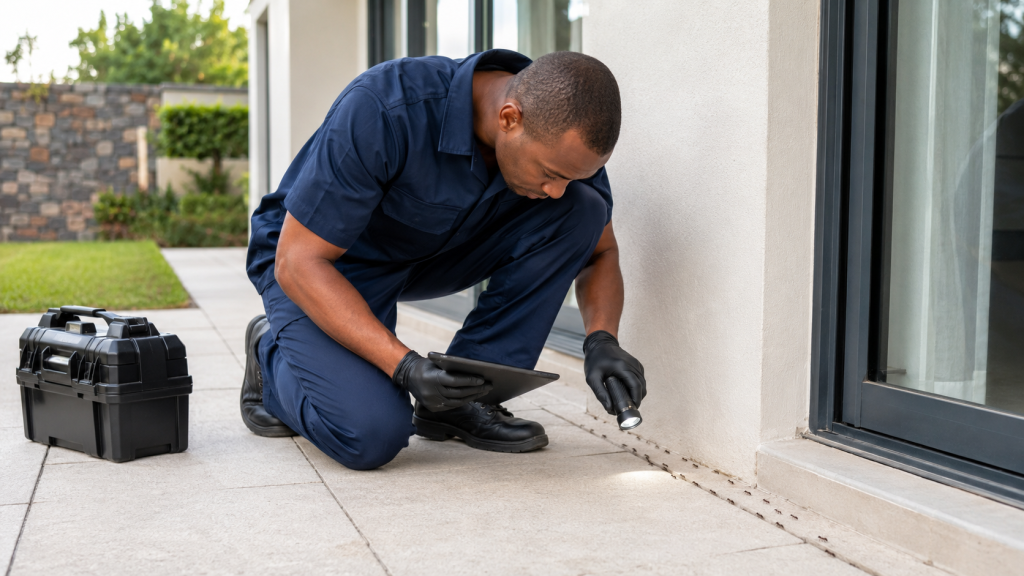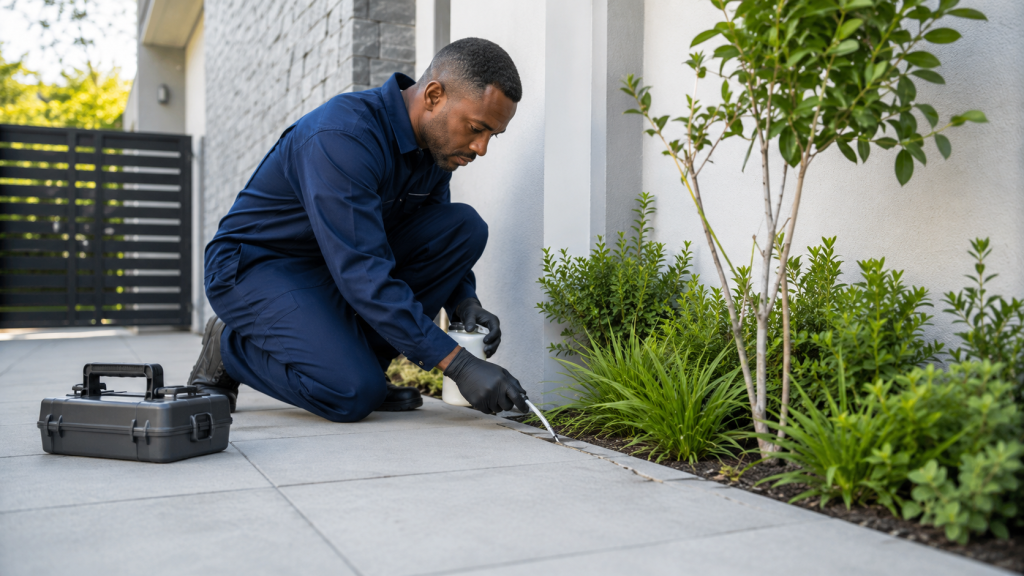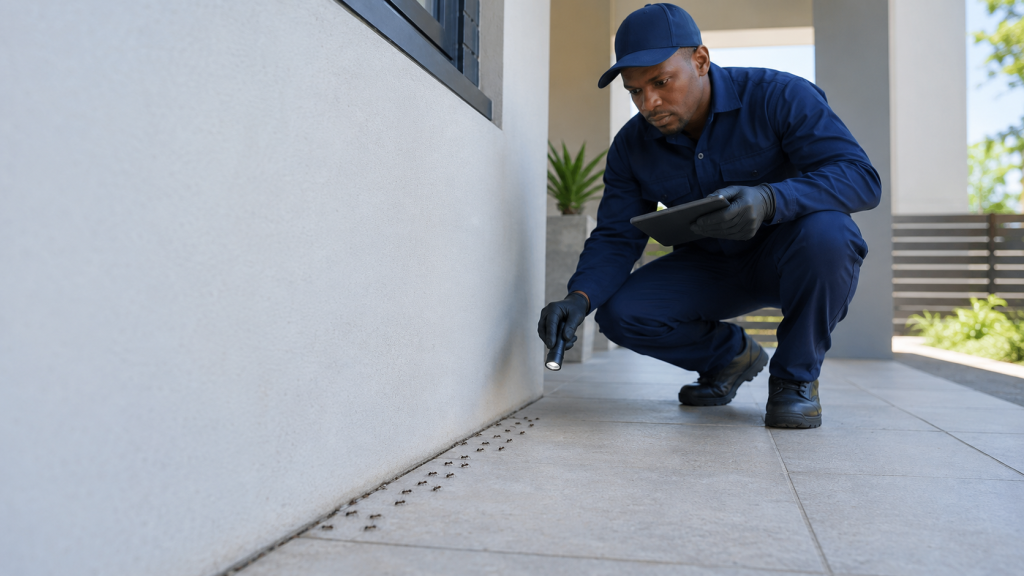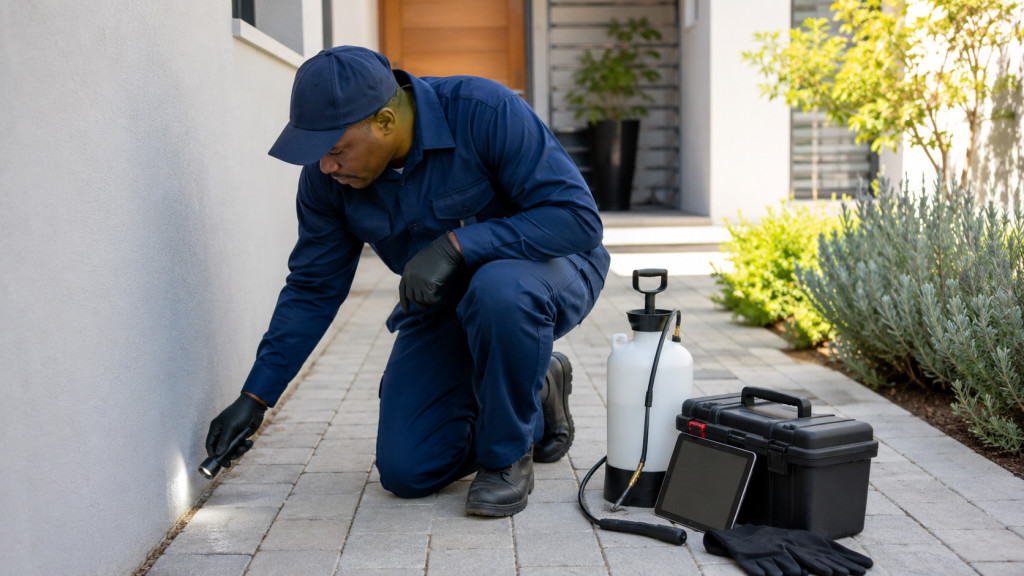
To permanently get rid of cockroaches in your home, you need to treat the active infestation and remove the conditions that allow roaches to survive, hide, breed, and return.
That means the solution is not only about killing the cockroaches you see.
It is about dealing with:
- hidden cockroach harbourage areas
- food sources
- water and moisture
- cracks and gaps
- appliance areas
- drains and pipe routes
- bathrooms and kitchens
- bins and food waste
- cardboard and clutter
- baby cockroaches
- recurring entry points
- neighbouring-unit or shared-building activity
The short answer is: the best way to permanently get rid of cockroaches in your home is to combine professional cockroach pest control with proper source control. Professional treatment is usually the best option for an active infestation because a technician can assess where cockroaches are hiding, treat the relevant areas, and advise on weak points in the property that may be allowing the problem to continue. DIY methods may kill visible roaches, but they often miss the hidden source of the infestation.
Many people search for this problem in different ways, including:
- how to permanently get rid of cockroaches
- how to permanently get rid of roaches
- how do you permanently get rid of roaches?
- how do you get rid of cockroaches permanently?
- how to get rid of cockroaches in house permanently
- how to get rid of roaches in an apartment permanently
- how to get rid of small cockroaches permanently
- how to get rid of roaches fast permanently
This guide focuses on the whole home. If the problem is mainly in the kitchen, read the more specific guide on how to get rid of cockroaches in the kitchen permanently.
If you are ready to arrange help, you can start with CleanLab SA’s cockroach pest control page or browse the wider pest control services hub.
Main cockroach pest control city pages include:
- Cape Town cockroach pest control
- Durban cockroach pest control
- Johannesburg cockroach pest control
- Pretoria cockroach pest control
- Randburg cockroach pest control
You can also check CleanLab SA’s available locations to find service areas.
Can you permanently get rid of cockroaches?
Yes, many cockroach problems can be brought under control effectively.
But permanent control depends on treating the infestation properly and removing the conditions that attract cockroaches back into the property.
Cockroaches usually survive because they have access to:
- food
- water
- warmth
- hiding places
- dark gaps
- clutter
- cracks
- drains
- appliance areas
- pipe routes
- neighbouring sources
If those conditions remain, cockroaches can return.
That is why a permanent cockroach solution usually needs two parts:
- Professional treatment of the active infestation
- Practical changes that make the home harder for cockroaches to survive in
DIY products often focus on the cockroach you can see. Professional pest control is better suited to assessing the wider property and targeting the likely source areas.
Why cockroaches keep coming back
Cockroaches keep coming back when the home still gives them what they need to survive.
Common reasons include:
| Reason cockroaches return | What it means |
|---|---|
| Food is available | Crumbs, grease, pet food, dirty dishes and open packets can support activity |
| Water is available | Leaks, damp cupboards, bathrooms and drains can keep cockroaches alive |
| Hidden harbourage remains | Cockroaches may still be hiding behind appliances, cupboards, skirting boards or wall gaps |
| Baby cockroaches are present | Small roaches can indicate breeding nearby |
| Gaps are not sealed | Cockroaches may move through cracks, drains, pipes or shared walls |
| DIY products scatter them | Some products may push cockroaches deeper into hiding places |
| Neighbouring units are involved | Flats, complexes and shared buildings can have wider pest pressure |
| Clutter remains | Cardboard, boxes and stored items create hiding places |
| Bins are accessible | Waste areas can attract and support cockroach activity |
| The source was never found | Visible roaches were killed, but the hidden source stayed active |
This is why permanent cockroach control should not be treated as a one-step surface problem.
The goal is to find and address the source.
DIY vs professional cockroach pest control
One of the biggest questions is whether DIY methods can permanently get rid of cockroaches.
The honest answer is: DIY can help with cleaning and prevention, but it is often not enough for an active or recurring cockroach infestation.
DIY methods may include:
- supermarket sprays
- traps
- vinegar cleaning
- baking soda mixtures
- essential oils
- lemon
- bay leaves
- store-bought bait
- powders
- repeated deep cleaning
Some of these can kill visible cockroaches or make the home less attractive to pests.
But they often fail because they do not properly deal with:
- hidden cockroach harbourage areas
- baby cockroaches
- egg cases
- cracks and gaps
- pipe openings
- drains
- wall voids
- appliance areas
- under-sink spaces
- neighbouring-unit pressure
- the full reason cockroaches are surviving
Professional cockroach pest control gives the problem a better chance of being handled properly because the technician can assess the property, identify likely weak points, and apply a suitable treatment approach.
| Issue | DIY approach | Professional approach |
| Visible roaches | Often kills only what is seen | Looks for where cockroaches are likely hiding |
| Hidden activity | Often missed | Harbourage areas can be assessed |
| Product choice | Customer guesses | Technician chooses a suitable method |
| Application | Often random or excessive | Treatment can be targeted |
| Food areas | Customer may be unsure what is safe | Technician can give aftercare guidance |
| Recurring roaches | Customer keeps trying new products | Source areas and weak points can be reviewed |
| Whole-home control | Usually inconsistent | Treatment and prevention can be planned together |
The biggest value of professional pest control is not only the treatment product.
It is the assessment.
A technician can look at the home more holistically and help identify why cockroaches are surviving.
That may include:
- kitchen weak points
- damp under-sink cupboards
- bathroom moisture
- drain activity
- appliance harbourage
- cracks around skirting boards
- pipe openings
- bin areas
- pet food areas
- garage or storage clutter
- cardboard packaging
- shared walls in flats or complexes
- entry routes from outside or neighbouring units
That gives you a clearer plan instead of guessing from product to product.
How to permanently get rid of cockroaches in your house
A house-wide cockroach problem needs a full-property approach.
Cockroaches may be most visible in the kitchen, but they can also move through:
- bathrooms
- sculleries
- pantries
- bedrooms
- garages
- laundry areas
- bin areas
- drains
- roof or wall gaps
- cupboards
- appliance areas
- storage rooms
To get rid of cockroaches in a house permanently, focus on both treatment and the property conditions.
Step 1: Treat the active infestation
If cockroaches are being seen regularly, professional pest control is usually the right starting point.
This is especially true if:
- cockroaches are appearing often
- you see baby cockroaches
- DIY products have not worked
- cockroaches appear during the day
- more than one room is affected
- the problem keeps returning
- you are seeing activity near food or water areas
- cockroaches are hiding behind appliances or inside cupboards
- you live in a complex, flat, townhouse or shared property
The technician will use the method they consider most suitable for the situation.
In many cockroach cases, this may include gel bait or targeted treatment around cracks, gaps, cupboards, appliances, drains, pipe routes and other harbourage areas.
The goal is to treat the active problem and help identify what may be allowing it to continue.
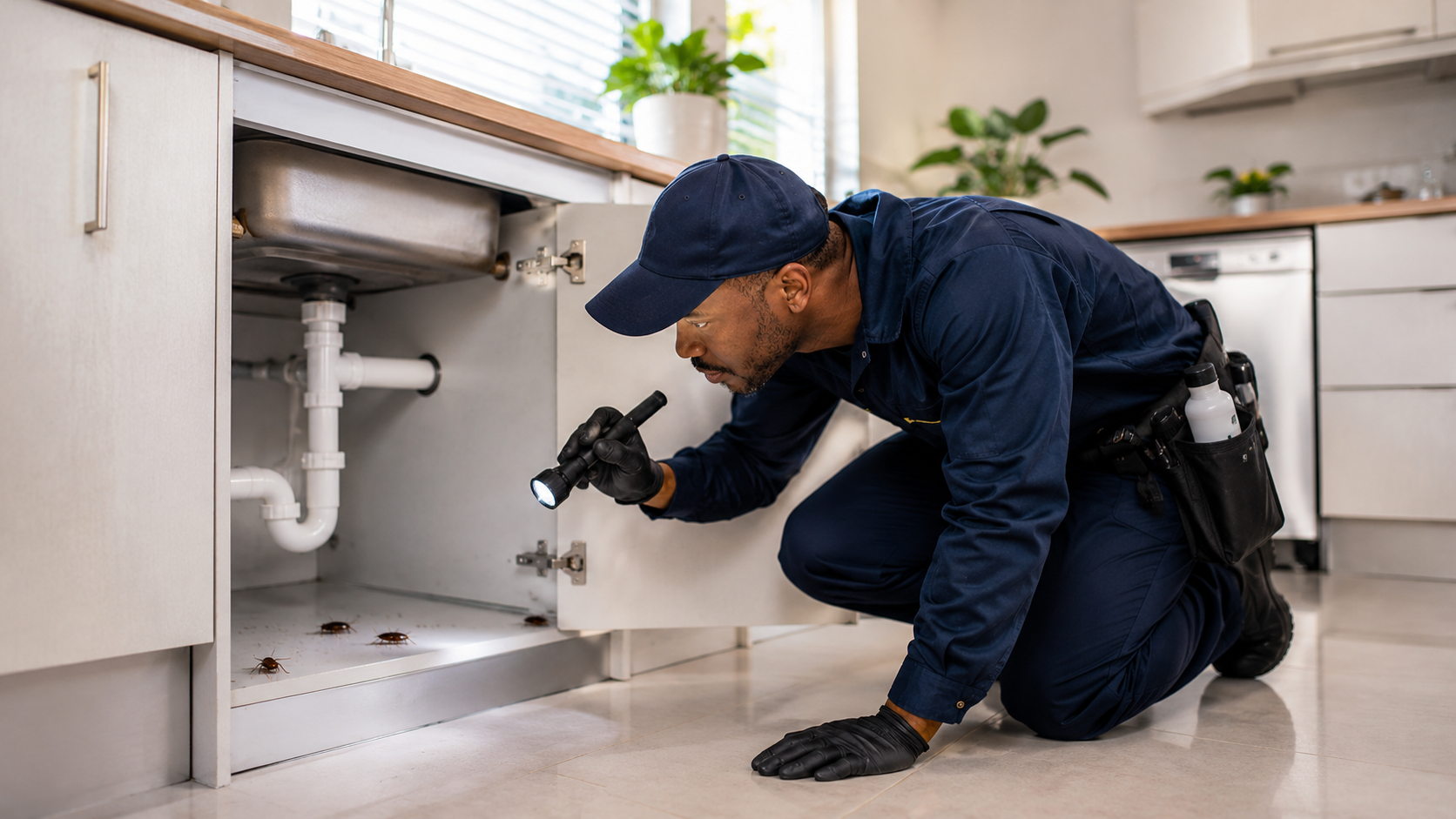
Step 2: Identify where cockroaches are hiding
Cockroaches like warm, dark, protected spaces.
Common hiding places include:
- behind fridges
- behind stoves
- under sinks
- under cupboards
- inside cupboard hinges
- behind kickboards
- around skirting boards
- near drains
- around pipe openings
- behind dishwashers
- inside pantry areas
- under small appliances
- near bins
- inside cardboard boxes
- wall gaps
- bathroom cupboards
- laundry areas
- garage storage areas
A few visible roaches can be a sign of a larger hidden problem.
That is why professional assessment can be valuable. The issue may not be where the customer first sees the cockroach.
Step 3: Remove food sources
Cockroaches need very little food to survive.
To reduce cockroach survival, remove food access as much as possible.
Focus on:
- sealing dry foods
- cleaning crumbs
- wiping counters
- cleaning under appliances
- closing food packets
- storing pet food properly
- not leaving dirty dishes overnight
- wiping spills
- cleaning grease
- emptying bins regularly
- keeping bin lids closed
- cleaning pantry shelves
- removing old food packaging
Food control helps reduce the chance of cockroaches staying active after treatment.
Step 4: Remove water and moisture
Water is one of the biggest reasons cockroaches survive indoors.
Check:
- leaking pipes
- dripping taps
- damp under-sink cupboards
- bathroom moisture
- wet cloths
- standing water
- mop buckets
- fridge drip trays
- dishwasher leaks
- damp laundry areas
- water around pet bowls
- condensation or damp corners
Even a small water source can support cockroach activity.
If water and moisture remain available, cockroaches have a better chance of surviving and returning.
Step 5: Reduce hiding places and clutter
Cockroaches use clutter as shelter.
Reduce:
- old cardboard boxes
- unused packaging
- paper bags
- cluttered cupboards
- piles of stored items
- unused containers
- messy under-sink areas
- cluttered garage storage
- items stacked against walls
- old newspapers or paper piles
Cardboard is especially important because cockroaches can hide in it and may be introduced through packaging.
A cleaner, more organised home gives cockroaches fewer places to hide.
Step 6: Seal obvious gaps where practical
Cockroaches can move through small gaps.
Common entry and movement points include:
- pipe openings
- wall gaps
- skirting-board gaps
- cracks near cupboards
- drain areas
- door gaps
- window gaps
- gaps behind appliances
- shared walls
- holes around plumbing
- ceiling or service voids
Where practical, seal or repair obvious gaps.
This does not replace pest control, but it helps reduce movement and re-entry.
Step 7: Follow aftercare instructions
After professional treatment, follow the technician’s aftercare instructions carefully.
This may include guidance about:
- when to clean treated areas
- where not to wipe too soon
- whether bait placements should be left undisturbed
- whether extra DIY products should be avoided
- how to manage food areas after treatment
- when to communicate if activity continues
Do not apply multiple DIY products over treated areas unless advised.
Random sprays, powders, oils or cleaning chemicals can sometimes interfere with the treatment or move cockroaches into different hiding places.
If unsure, ask for guidance.
How to get rid of roaches in an apartment permanently
Apartments, flats and complexes can be more complicated because cockroaches may move through shared structures.
In apartments, cockroaches may come from:
- neighbouring units
- shared drains
- pipe routes
- waste areas
- common kitchens
- shared walls
- ceilings
- service shafts
- gaps around doors
- building-level sanitation issues
This does not mean your unit is dirty.
A clean apartment can still receive cockroach pressure from nearby units or shared areas.
To get rid of roaches in an apartment permanently, you may need:
- professional treatment inside the unit
- food and moisture control
- gaps around pipes or cupboards addressed where practical
- drain and under-sink areas checked
- building management involved if there is wider activity
- neighbours or shared areas treated where necessary
- ongoing communication if activity keeps returning from outside the unit
Professional treatment is especially useful in apartments because the technician can help identify whether the issue appears internal, neighbouring, or linked to shared building routes.
How to get rid of small cockroaches permanently
Small cockroaches are usually baby cockroaches, called nymphs.
Seeing small cockroaches is important because it can suggest breeding nearby.
Baby cockroaches may appear near:
- kitchen cupboards
- bathrooms
- under sinks
- appliance areas
- cracks
- gaps
- drains
- pantry spaces
- skirting boards
- wall openings
To get rid of small cockroaches permanently, do not only target the babies you see.
You need to deal with the wider infestation.
That usually means:
- professional cockroach treatment
- hidden harbourage areas addressed
- food sources reduced
- moisture corrected
- appliance and under-sink areas checked
- clutter reduced
- obvious gaps sealed where practical
- follow-up advice requested if activity continues
Baby cockroaches should not be ignored because they often indicate that the problem is established.
How to get rid of roaches fast and permanently
Many people want to get rid of roaches fast and permanently.
That is understandable.
Cockroaches are unpleasant, embarrassing, and especially concerning near food areas.
But the fastest proper solution is usually not to keep trying random DIY products.
The better route is:
- arrange professional cockroach pest control
- identify likely hiding areas
- remove food and water sources
- follow aftercare instructions
- avoid disrupting treatment with random products
- correct obvious weak points in the home
Quick visible kills can feel satisfying, but they do not always equal lasting control.
The goal should be to treat the infestation properly, not only kill the cockroach in front of you.
Can home remedies permanently get rid of cockroaches?
Home remedies may help with cleaning and prevention, but they are usually weak for an established infestation.
They may reduce attraction factors, but they often do not reach hidden cockroaches.
Common home remedies include:
- vinegar
- baking soda
- essential oils
- lemon
- bay leaves
- DIY bait mixtures
- traps
- supermarket sprays
These may help in limited ways, but they usually do not properly solve:
- hidden infestations
- breeding activity
- baby cockroaches
- appliance harbourage
- drain or pipe activity
- wall gaps
- neighbouring sources
- wider property weak points
For recurring cockroaches, professional treatment is usually the smarter option.
Should you spray cockroaches yourself?
Spraying cockroaches yourself may kill some visible roaches, but it can also create problems.
DIY spraying may:
- only kill exposed cockroaches
- miss hidden harbourage
- push cockroaches into new areas
- contaminate areas if used incorrectly
- interfere with bait or targeted treatment
- give a false sense that the problem is solved
- encourage repeated product use without fixing the source
A cockroach infestation is not only a spray problem.
It is a source problem.
That is why professional assessment and targeted treatment are usually better for recurring or established activity.
What if cockroaches keep coming back after professional treatment?
In most normal household cases, professional cockroach treatment should be effective when the infestation and supporting conditions are properly addressed.
In a few cases, however, further advice, additional treatment, or a revisit may be needed.
This is more likely when:
- the infestation was heavy
- baby cockroaches keep appearing
- multiple rooms are affected
- cockroaches are hiding deep inside appliances, cupboards, cracks or drains
- moisture problems remain
- food or water sources are still supporting activity
- neighbouring units or shared building spaces are involved
- preparation or access was limited
- DIY products interfered with treatment
- the property is a restaurant, shop, flat, complex or high-risk food area
If cockroach activity continues after treatment, communicate with the technician or booking support.
The situation can be reviewed, and where further action is needed, the appropriate next step or revisit can be arranged.
For more detail on what can be normal after treatment, read CleanLab SA’s guide: Is It Normal to See Cockroaches After Pest Control?.
Why book cockroach pest control through CleanLab SA?
Booking through CleanLab SA gives customers a structured way to arrange cockroach pest control services in South Africa.
CleanLab SA’s listed professionals are reviewed by customers and expected to meet clear standards. Customers also get support from booking to completion.
That means the value is not only in the pest control service itself, but also in the booking structure around it:
- reviewed listed professionals
- clear standards to remain listed
- customer review visibility during booking
- support from booking to completion
- a clearer path for booking-related assistance where needed
- a structured way to book help for recurring cockroach issues
For cockroach problems, this matters because customers often want more than a quick visit. They want the issue assessed, the relevant areas treated, clear aftercare guidance, and a way to communicate if activity continues after treatment.
Professional input can also help identify weak points in the home that may be allowing cockroaches to survive or return.
You can learn more from CleanLab SA’s Booking Protection and Professional Standards pages.
Find cockroach pest control in your area
If you need help with cockroaches in your home, start by checking CleanLab SA’s available locations.
You can also browse the main cockroach pest control city pages below:
- Cockroach pest control in Cape Town
- Cockroach pest control in Durban
- Cockroach pest control in Johannesburg
- Cockroach pest control in Pretoria
- Cockroach pest control in Randburg
These are useful starting points for major service areas, but customers can also use the locations page to check whether their suburb or area is available.
You can also browse the main cockroach pest control page or the wider pest control services hub if you want to compare other pest control services.
Final answer: how to permanently get rid of cockroaches in your home
To permanently get rid of cockroaches in your home, you need to treat the active infestation and remove the conditions that allow cockroaches to survive.
That means dealing with food, water, warmth, hiding places, cracks, gaps, drains, appliance areas, clutter and possible entry points.
DIY methods may help with cleaning and prevention, but they often fail to deal with hidden cockroach activity.
Professional cockroach pest control is usually the best option for an active or recurring infestation because the technician can assess the property, treat the relevant areas, and help identify the weak points that may be allowing the problem to continue.
For the strongest chance of long-term control, combine professional treatment with proper food sealing, moisture control, clutter reduction, cleaning behind appliances where practical, and sealing obvious gaps where possible.