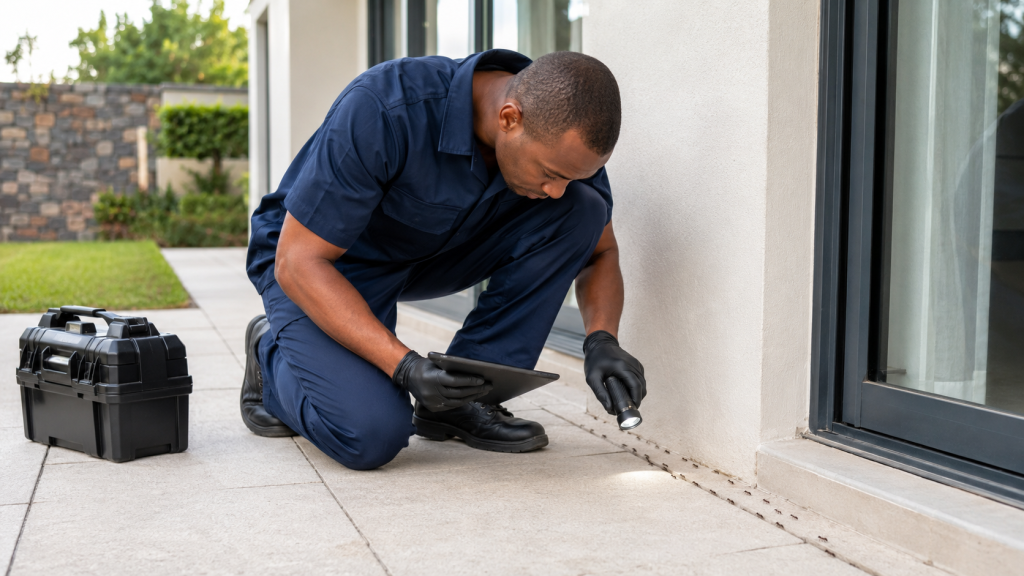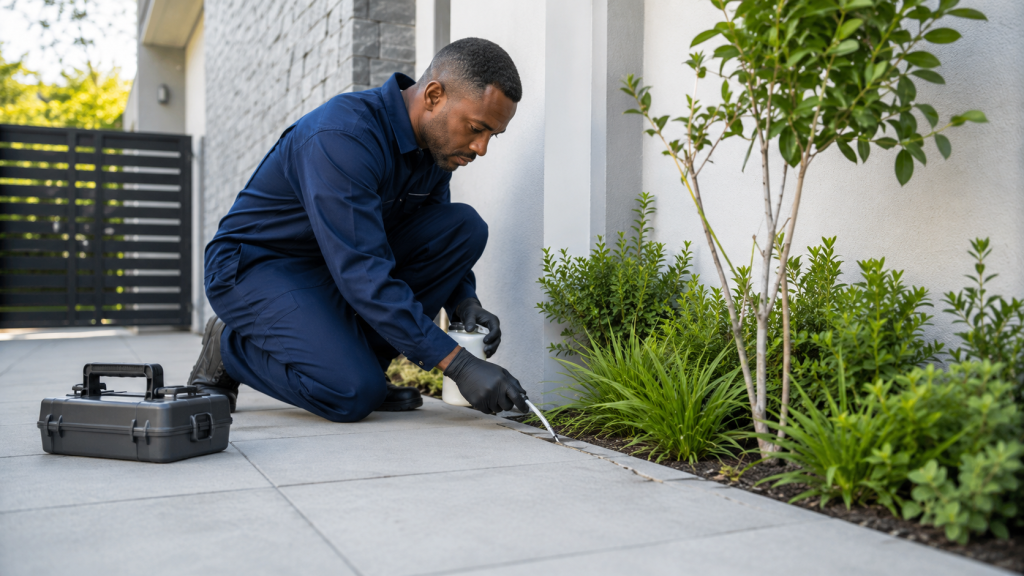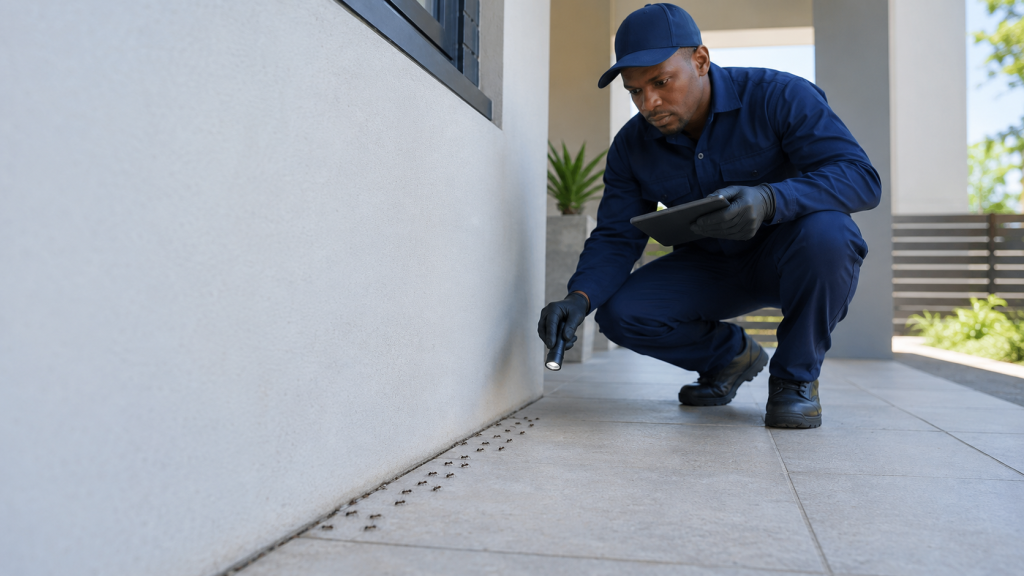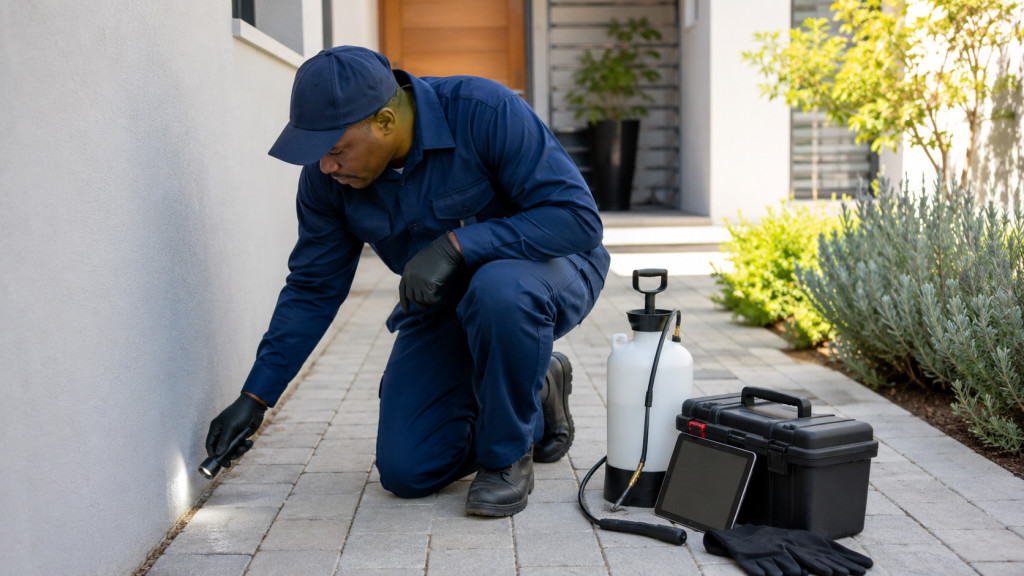
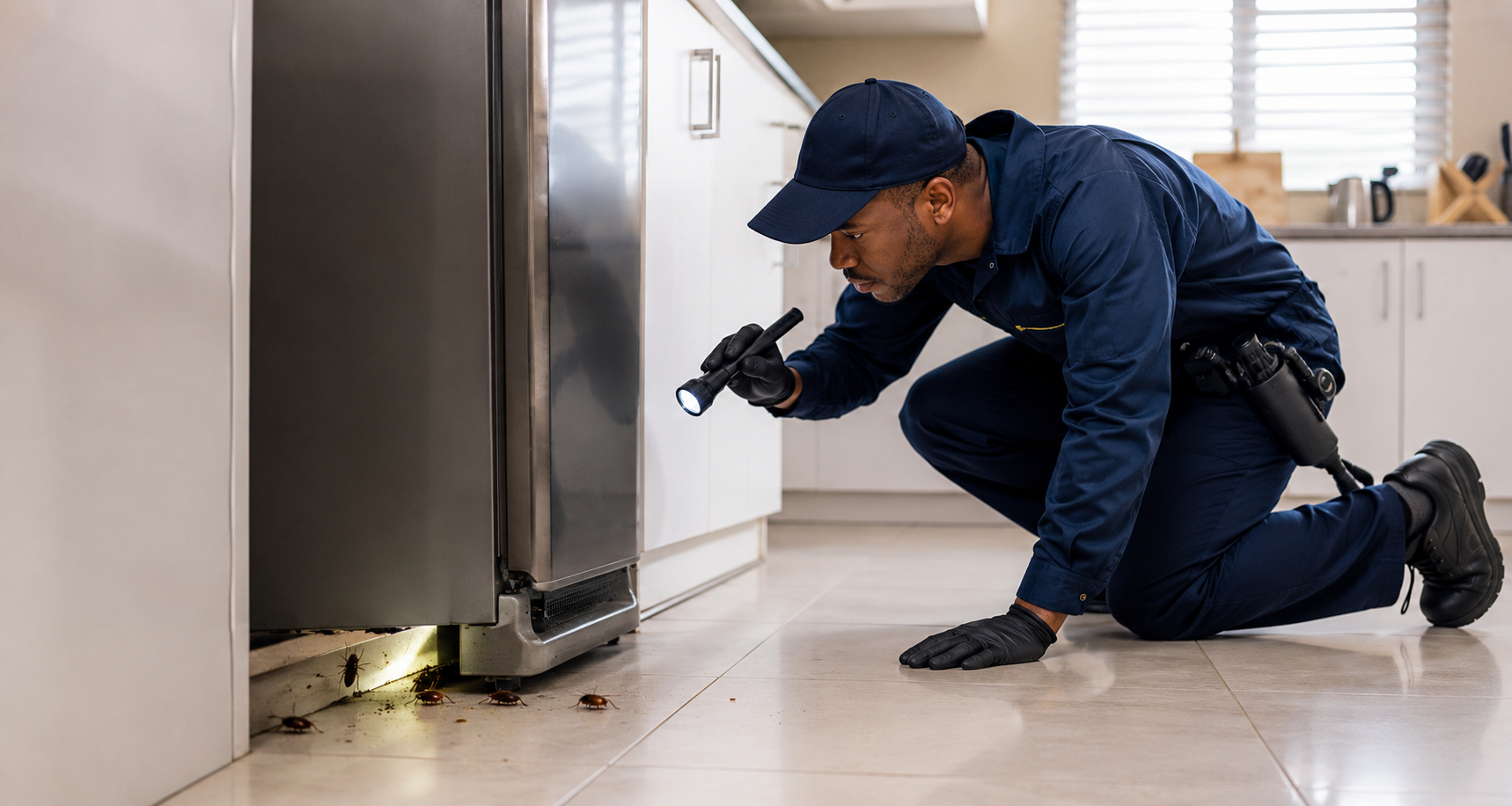
To get rid of cockroaches in the kitchen permanently, you need to treat the infestation properly and remove the conditions that allow cockroaches to keep surviving.
This is where many kitchen cockroach problems go wrong.
Customers often try sprays, traps, vinegar, baking soda, essential oils, cleaning products, supermarket bait, or other DIY remedies. These may kill some visible cockroaches, but they often do not solve the real problem.
Kitchen cockroach infestations are rarely only about the cockroaches you can see.
They are usually linked to hidden activity around:
- cupboards
- sinks
- drains
- pipe openings
- appliances
- fridge motors
- stove areas
- skirting boards
- pantry shelves
- bins
- damp under-sink spaces
- cracks and gaps
- cardboard packaging
- neighbouring units or shared building areas
The short answer is: the best way to get rid of cockroaches in the kitchen permanently is to combine professional cockroach pest control with proper kitchen source control. Professional treatment is usually the best option for an active kitchen infestation because the technician can assess the kitchen, identify likely hiding places, treat the relevant cockroach activity, and advise on weak points that may be allowing the problem to continue. DIY methods may kill visible cockroaches, but they often miss the hidden source of the infestation.
Long-term cockroach control depends on treating the pest problem and improving the kitchen conditions that support it.
If you are dealing with cockroaches, you can start by checking CleanLab SA’s available service locations to find your area.
You can also browse the main cockroach pest control page or the wider pest control services hub.
Main cockroach pest control city pages include:
- Cape Town cockroach pest control
- Durban cockroach pest control
- Johannesburg cockroach pest control
- Pretoria cockroach pest control
- Randburg cockroach pest control
These are useful starting points for major service areas, but they are not the only areas CleanLab SA may cover. Use the locations page to check available service areas.
Why cockroaches are so hard to remove from kitchens
Cockroaches are difficult to remove from kitchens because kitchens give them almost everything they need.
A kitchen can provide:
- food
- water
- warmth
- grease
- dark hiding spaces
- cracks and gaps
- under-sink moisture
- bin access
- appliance heat
- pantry storage
- pipe routes
- drain access
- cardboard hiding areas
Even when a kitchen looks clean, cockroaches may still survive behind appliances, inside cupboard gaps, around pipes, near drains, or under kickboards.
That is why many people clean the kitchen, spray a few cockroaches, and still see more later.
The visible cockroach is often only the sign of the problem.
The real issue may be hidden.
Why DIY often fails for kitchen cockroaches
DIY cockroach methods often fail because they focus on the visible cockroach, not the full infestation.
A customer may spray the cockroach on the floor and feel like the problem is being handled. But the hidden cockroaches may still be active behind the fridge, under the sink, inside cracks, or around appliance areas.
DIY methods can also fail because:
- they may not reach hidden harbourage areas
- they may not deal with baby cockroaches
- they may not affect egg cases already hidden in the kitchen
- they may be applied in the wrong places
- they may scatter cockroaches into new hiding spots
- they may interfere with professional treatment later
- they may only kill exposed cockroaches
- they may not address food, water and moisture sources
- they may create a false sense of progress
- they may not solve neighbouring or shared-building pest pressure
This does not mean every DIY action is useless.
Cleaning, sealing food, removing crumbs, reducing moisture and clearing clutter are all useful.
But for an active cockroach infestation in the kitchen, DIY alone is often not enough.
DIY vs professional cockroach pest control
The key difference is that DIY usually treats symptoms, while professional cockroach pest control is better suited to treating the infestation and the conditions around it.
| Issue | DIY approach | Professional approach |
|---|---|---|
| Visible cockroaches | Usually targets what can be seen | Looks for where cockroaches are likely hiding |
| Kitchen hotspots | Often missed or treated randomly | Kitchen areas can be assessed more systematically |
| Product choice | Customer guesses what to use | Technician chooses a suitable treatment method |
| Application | Often applied too broadly or in the wrong areas | Treatment can be targeted around relevant harbourage areas |
| Safety around food areas | Customer may be unsure what is suitable | Technician can advise on aftercare and treated zones |
| Recurring activity | Customer keeps buying more products | Source areas and weak points can be reviewed |
| Hidden causes | Often missed | Food, water, moisture, gaps and clutter can be identified |
| Long-term control | Usually inconsistent | Better chance when treatment and prevention are combined |
The strongest reason to book professional cockroach pest control is not only the product used.
It is the assessment.
A technician can look at the kitchen as a whole and help identify why the cockroaches are there in the first place.
That may include:
- moisture under the sink
- gaps around pipes
- food residue behind appliances
- grease near the stove
- bin placement
- pantry storage issues
- cardboard clutter
- entry points
- shared-wall or drain-related activity
- appliance harbourage areas
- areas where DIY products may have pushed cockroaches deeper
That is what makes professional treatment more holistic.
It is not only about killing cockroaches. It is about understanding why the kitchen is supporting them.
Can you permanently get rid of cockroaches in the kitchen?
Yes, many kitchen cockroach problems can be brought under control effectively.
But “permanently” depends on whether the full problem is addressed.
You need two things working together:
- Treatment of the active cockroach infestation
- Correction of the kitchen conditions that allow cockroaches to survive
Professional cockroach treatment helps deal with the infestation.
Kitchen source control helps stop the space from remaining attractive to cockroaches.
That means dealing with:
- food access
- water access
- grease
- moisture
- hiding places
- appliance areas
- under-sink spaces
- obvious gaps
- bins
- pantry storage
- clutter
- old cardboard
- recurring kitchen hotspots
If only one side is handled, the problem can continue.
For example, if you only spray visible cockroaches but leave damp cupboards, crumbs, grease and gaps, cockroaches can return.
If you only clean the kitchen but do not treat an established infestation, hidden cockroaches may continue breeding.
The best result usually comes from combining professional treatment with practical kitchen improvements.
Why cockroaches love kitchens
Cockroaches are drawn to kitchens because kitchens provide food, water, warmth and shelter.
Common kitchen attractants include:
- crumbs under appliances
- grease around stoves
- food residue in cupboards
- open food packets
- bins and food waste
- pet food
- sticky spills
- leaking pipes
- damp under-sink cupboards
- water around sinks
- warm fridge motors
- dark gaps behind appliances
- cardboard boxes and packaging
This is why surface cleaning alone often does not solve the problem.
A kitchen can look tidy while cockroaches are still hiding behind appliances, under cupboards, inside cracks, near drains, or around pipe openings.
To get lasting control, you need to remove what attracts them and treat where they hide.
Where do cockroaches hide in the kitchen?
Cockroaches hide in dark, warm, protected places close to food and water.
Common kitchen hiding places include:
- behind fridges
- behind stoves
- under sinks
- inside cupboard hinges
- around pantry shelves
- behind kickboards
- under skirting boards
- inside wall gaps
- around pipe openings
- near drains
- behind dishwashers
- under small appliances
- inside cardboard boxes
- around bin areas
Customers often only see cockroaches when they come out at night.
The larger problem may be hidden behind appliances, inside gaps, under cupboards, or around warm and damp areas.
That is why a proper cockroach solution should focus on the hiding places, not only the visible cockroach walking across the kitchen floor.
Why cockroaches keep coming back in the kitchen
Cockroaches may keep coming back because the kitchen is still giving them access to food, water, shelter, or entry routes.
Common reasons include:
| Reason cockroaches return | What it means |
| Food crumbs remain | Even small crumbs can support activity |
| Grease is hidden | Grease behind stoves or appliances can attract cockroaches |
| Water is available | Leaks, damp cupboards and sink areas can keep them alive |
| Appliances provide warmth | Fridges, stoves and dishwashers can be ideal hiding spots |
| Egg cases are hidden | Baby cockroaches may appear later |
| Gaps remain open | Cockroaches may move through cracks, drains, pipes or walls |
| DIY products scatter them | Some products may move activity into new hiding areas |
| Neighbouring units are involved | Flats and complexes may have shared pest pressure |
| Bins are accessible | Food waste attracts cockroaches |
| Cardboard clutter remains | Cockroaches can hide in packaging and stored boxes |
If the underlying food, moisture and hiding conditions remain, cockroaches can return even after some visible activity has been reduced.
How to get rid of cockroaches in the kitchen permanently
The best approach is to combine professional treatment with practical kitchen changes.
This gives the best chance of removing the current infestation and reducing the risk of it returning.
Step 1: Book professional cockroach pest control
If cockroaches are appearing in the kitchen, professional cockroach pest control is usually the best starting point.
This is especially true if:
- you see cockroaches regularly
- you see baby cockroaches
- cockroaches appear during the day
- DIY products have not worked
- cockroaches are near food areas
- the issue keeps returning
- the kitchen has multiple hotspots
- you live in a flat or complex
- cockroaches are behind appliances or inside cupboards
The technician will use the method they consider most suitable for the situation.
In many cockroach cases, this may include gel bait or targeted treatment around cracks, gaps, cupboards, appliances, drains, and other harbourage areas.
The value of professional treatment is not only the treatment itself.
It is also the ability to assess the kitchen and help identify the weak points that may be allowing cockroaches to survive.
These weak points may include:
- moisture under the sink
- leaking pipes
- food residue behind appliances
- open pantry goods
- grease buildup
- bin placement
- cardboard clutter
- gaps around plumbing
- appliance harbourage areas
- drain-related activity
- neighbouring-unit pressure
- places where cockroaches may be entering or hiding
This gives the customer a clearer plan.
Instead of only reacting to cockroaches as they appear, the kitchen can be addressed more holistically.
Step 2: Follow the technician’s aftercare instructions
After treatment, follow the technician’s aftercare instructions carefully.
This matters because cleaning or applying extra products too soon can sometimes interfere with the treatment.
You may be advised to avoid:
- wiping treated areas too soon
- removing gel bait
- cleaning cracks and gaps immediately
- applying extra DIY products over treated areas
- moving items back too quickly
- washing away treatment zones
- disturbing bait or targeted placements
This does not mean the kitchen should be left dirty.
Food preparation surfaces may need to be cleaned before use, and normal hygiene remains important.
The key is to understand which areas should be cleaned normally and which areas should be left undisturbed so the treatment can work properly.
Step 3: Remove food sources
Cockroaches need very little food to survive.
To reduce the chance of cockroaches returning, remove food access as much as possible.
Focus on:
- wiping counters
- cleaning crumbs
- cleaning grease near the stove
- sealing dry goods
- closing cereal, rice, flour and sugar packets
- storing pet food properly
- not leaving dishes overnight
- cleaning under small appliances
- cleaning around the toaster
- cleaning behind the microwave where practical
- wiping sticky spills
- emptying kitchen bins regularly
Food control is especially important after treatment because it helps support the professional work already done.
Step 4: Fix water and moisture problems
Water is one of the biggest reasons cockroaches remain active in kitchens.
Check for:
- leaking pipes
- dripping taps
- damp under-sink cupboards
- wet cloths left overnight
- standing water near the sink
- fridge drip-tray issues
- dishwasher leaks
- damp mop areas
- moisture around bins
- water around pet bowls
Even small moisture sources can help cockroaches survive.
If the kitchen stays damp, cockroaches have a better chance of returning.
Step 5: Clean hidden grease and appliance areas
Cockroaches often hide where customers do not normally clean.
Important areas include:
- behind the fridge
- behind the stove
- under the stove
- around the dishwasher
- under small appliances
- around the toaster
- behind the microwave
- inside cupboard corners
- around kickboards
- near bin areas
- under-sink spaces
Do not disturb treated areas too soon if the technician advised you to leave them.
But once it is appropriate to clean, hidden grease and crumbs should be removed where practical.
Step 6: Reduce hiding places
Cockroaches like clutter because it gives them places to hide.
Reduce:
- old cardboard boxes
- unused packaging
- paper bags
- cluttered pantry items
- open food packets
- unused plastic containers
- items stored under the sink
- piles of bags near the kitchen
Cardboard is especially worth reducing because cockroaches can hide in it and may be introduced through packaging.
A cleaner, more organised kitchen gives cockroaches fewer places to hide.
Step 7: Seal obvious entry points where practical
Cockroaches can move through small gaps and access points.
Common kitchen entry points include:
- pipe openings
- wall gaps
- cracks near skirting boards
- gaps behind appliances
- door gaps
- window gaps
- gaps around cupboards
- drain areas
- shared walls in flats or complexes
Where practical, obvious gaps should be sealed or repaired.
This does not replace pest control, but it helps reduce the chance of cockroaches moving back into the kitchen.
Step 8: Avoid mixing too many DIY products after treatment
Once professional treatment has been done, avoid applying multiple DIY products over the treated areas unless the technician advises otherwise.
This matters because some DIY products can interfere with bait, disturb treated zones, or push cockroaches into different hiding areas.
Avoid layering:
- supermarket sprays
- strong cleaning chemicals over treatment zones
- DIY bait products
- essential oils
- powders
- home remedies
- random products inside cracks or cupboards
If you are unsure what can be cleaned or used after treatment, ask for guidance.
A proper treatment plan works better when it is not disrupted by random product use.
Step 9: Communicate if cockroach activity continues
If cockroach activity continues after treatment, communicate with the technician or booking support rather than starting again with random DIY products.
Helpful details include:
- where cockroaches are being seen
- whether they are adults or baby cockroaches
- whether they appear near drains, cupboards or appliances
- whether they appear mostly at night or during the day
- whether activity is in the same place or spreading
- whether any extra DIY products were used after treatment
- whether there are leaks, damp areas or neighbouring-unit issues
This helps the situation be reviewed properly.
If further action is needed, the appropriate next step or revisit can be arranged.
Can home remedies permanently get rid of cockroaches in the kitchen?
Home remedies may help with cleaning or prevention, but they are usually not enough for an established kitchen infestation.
Common home remedies include:
- vinegar cleaning
- baking soda mixtures
- essential oils
- lemon
- bay leaves
- store-bought traps
- DIY gels or baits
- supermarket products
These may kill some visible cockroaches or make the kitchen less attractive, but they often fail to reach:
- hidden cockroaches
- egg cases
- baby cockroaches
- appliance areas
- cracks and gaps
- drains
- wall voids
- under-sink spaces
- neighbouring sources
- deep harbourage areas
This is why a customer can keep trying home remedies but still see cockroaches again.
For a light, one-off sighting, cleaning and prevention may help.
But if cockroaches are appearing regularly, especially in the kitchen, professional cockroach pest control is usually the better option.
Are supermarket cockroach sprays enough?
Supermarket sprays may kill visible cockroaches, but they are usually a weak strategy for a kitchen infestation.
They often fail because they:
- only target cockroaches that are exposed
- may not reach hiding areas
- may scatter cockroaches deeper into cracks
- may be used in unsafe or unsuitable places
- may leave the source of the infestation untouched
- may not address food, water or moisture problems
- may interfere with bait-based treatment if used afterwards
Spraying one cockroach on the floor may feel satisfying, but it does not mean the infestation has been dealt with.
A kitchen infestation needs a more complete approach.
How do you get rid of small cockroaches in the kitchen?
Small cockroaches are usually baby cockroaches, called nymphs.
Seeing baby cockroaches in the kitchen can be a sign that the infestation is established and breeding nearby.
Baby cockroaches may appear near:
- cupboards
- under sinks
- appliance areas
- cracks and gaps
- drains
- pantry spaces
- fridge motors
- stove areas
- skirting boards
To get rid of small cockroaches in the kitchen, you need to deal with the wider infestation, not only the small cockroaches you see.
That usually means:
- professional cockroach treatment
- aftercare instructions followed
- food sources reduced
- moisture corrected
- hidden appliance areas checked
- clutter reduced
- ongoing activity reported if it continues after treatment
Baby cockroaches should not be ignored because they often indicate that the problem is more than one or two adults entering from outside.
How do you stop cockroaches from coming back after treatment?
To stop cockroaches from coming back after treatment, focus on prevention and source control.
Helpful steps include:
- keep food sealed
- wipe counters every night
- clean crumbs and grease
- empty bins regularly
- keep bin lids closed
- avoid leaving dirty dishes overnight
- remove pet food overnight
- fix leaks
- dry damp cupboard areas
- reduce cardboard clutter
- clean behind appliances where practical
- seal obvious gaps where practical
- follow aftercare instructions
- avoid using extra DIY products without advice
- communicate if activity continues after treatment
Cockroach control works best when treatment and prevention support each other.
Professional treatment deals with the infestation. Prevention helps stop the kitchen from becoming attractive again.
Can cockroaches come from drains?
Cockroaches may appear near drains because drains and plumbing areas provide moisture, access routes and dark hiding spaces.
Kitchen drain or pipe areas may support cockroach activity through:
- moisture
- food residue
- pipe openings
- under-sink gaps
- damp cupboards
- wall gaps
- plumbing routes
- shared building systems
This does not mean every cockroach is coming directly from the drain.
But drains and pipe areas can be part of the problem, especially in flats, complexes and properties with shared plumbing or waste areas.
If cockroaches are appearing near the sink, drain, or under-sink cupboard, tell the technician clearly.
Can cockroaches come from neighbouring units?
Yes, cockroaches can sometimes move from neighbouring units or shared areas, especially in flats, apartments, complexes and multi-unit buildings.
This can happen through:
- shared walls
- drains
- pipe routes
- ceilings
- waste areas
- shared kitchens
- neighbouring infestations
- gaps around doors or windows
- common service areas
In these cases, your kitchen may be clean and still receive cockroach pressure from nearby spaces.
Professional treatment can still help, but long-term control may also depend on building conditions, neighbouring activity, sanitation, waste control and entry-point reduction.
What if cockroaches keep coming back after professional treatment?
In most normal household cases, professional cockroach treatment should be effective when the kitchen infestation and supporting conditions are properly addressed.
In a few cases, however, further advice, additional treatment, or a revisit may be needed.
This is more likely when:
- the infestation was heavy
- baby cockroaches keep appearing
- multiple kitchen hotspots were affected
- cockroaches are hiding deep inside appliances, cupboards, cracks or drains
- moisture problems remain
- food or water sources are still supporting activity
- neighbouring units or shared building spaces are involved
- preparation or access was limited
- the property is a restaurant, shop, flat, complex or high-risk food area
This does not mean the original treatment was ineffective.
It may simply mean the infestation needs additional attention because the source, harbourage areas, or surrounding conditions are more complicated.
If cockroach activity continues after treatment, communicate with the technician or booking support.
The situation can be reviewed, and where further action is needed, the appropriate next step or revisit can be arranged.
Why book cockroach pest control through CleanLab SA?
Booking through CleanLab SA gives customers a structured way to arrange cockroach pest control services in South Africa.
CleanLab SA’s listed professionals are reviewed by customers and expected to meet clear standards. Customers also get support from booking to completion.
That means the value is not only in the pest control service itself, but also in the booking structure around it:
- reviewed listed professionals
- clear standards to remain listed
- customer review visibility during booking
- support from booking to completion
- a clearer path for booking-related assistance where needed
- a structured way to book help for recurring cockroach issues
For kitchen cockroach problems, this matters because customers often want more than a quick visit. They want the issue properly assessed, clear aftercare guidance, and a way to communicate if activity continues after treatment.
A kitchen cockroach problem is not only about removing visible pests. It is also about understanding the weak points in the kitchen that may be allowing the problem to continue.
Professional input can help identify those weak points and give the customer a clearer plan for long-term control.
You can learn more from CleanLab SA’s Booking Protection and Professional Standards pages.
Find cockroach pest control in your area
If you need help with cockroaches in the kitchen, start by checking CleanLab SA’s available locations.
You can also browse the main cockroach pest control city pages below:
- Cockroach pest control in Cape Town
- Cockroach pest control in Durban
- Cockroach pest control in Johannesburg
- Cockroach pest control in Pretoria
- Cockroach pest control in Randburg
These are useful starting points for major service areas, but customers can also use the locations page to check whether their suburb or area is available.
You can also browse the main cockroach pest control page or the wider pest control services hub if you want to compare other pest control services.
Final answer: how to get rid of cockroaches in the kitchen permanently
To get rid of cockroaches in the kitchen permanently, you need more than a quick spray or a few DIY remedies.
You need to treat the active infestation and address the kitchen conditions that allow cockroaches to survive.
That means dealing with:
- food
- water
- grease
- warmth
- hiding places
- appliance areas
- drains
- under-sink spaces
- cracks and gaps
- pantry storage
- bins
- clutter
- possible entry points
Professional cockroach pest control is usually the best option for an active kitchen infestation because the technician can assess the kitchen, treat the relevant cockroach activity, and help identify weak points that need attention.
DIY methods may help with cleaning and prevention, but they often fail to deal with the hidden infestation.
For the strongest chance of long-term control, combine professional cockroach treatment with proper food sealing, moisture control, grease removal, clutter reduction, gap sealing where practical, and clear communication if activity continues after treatment.