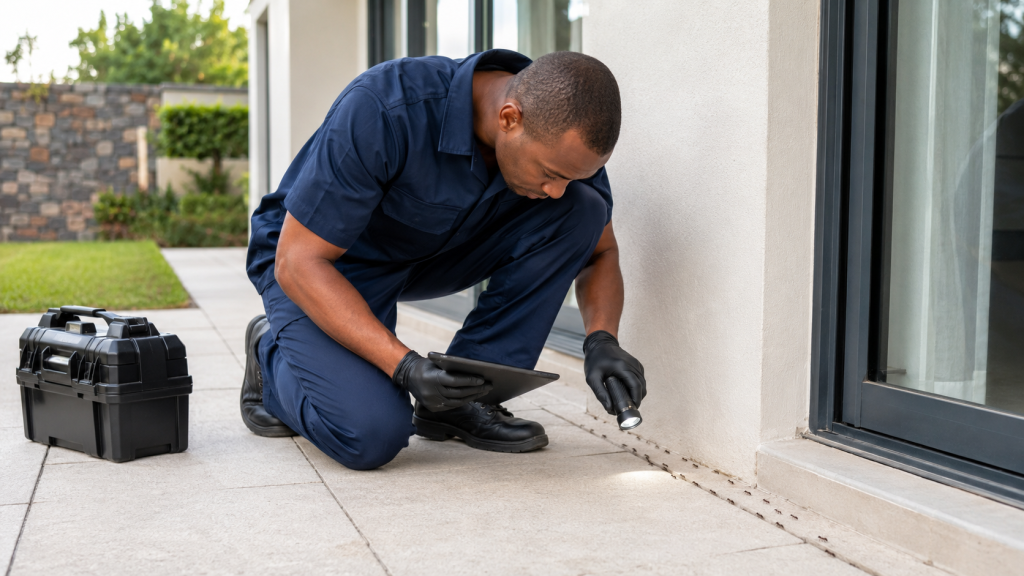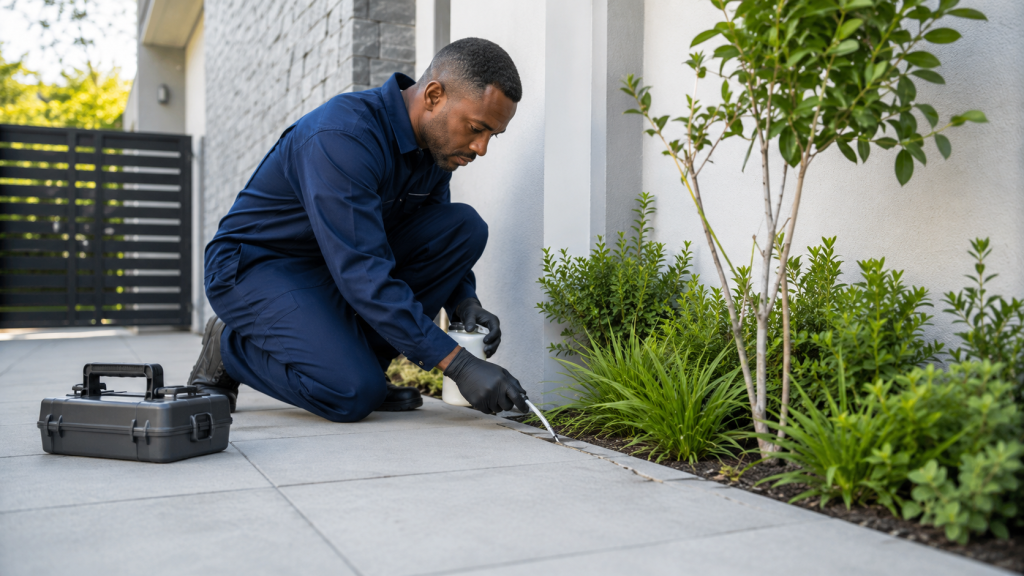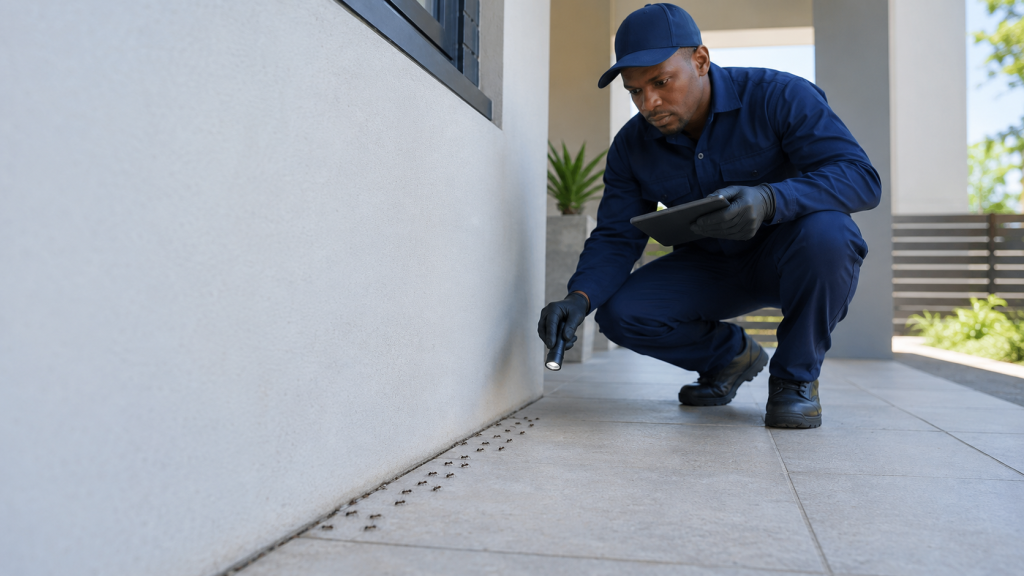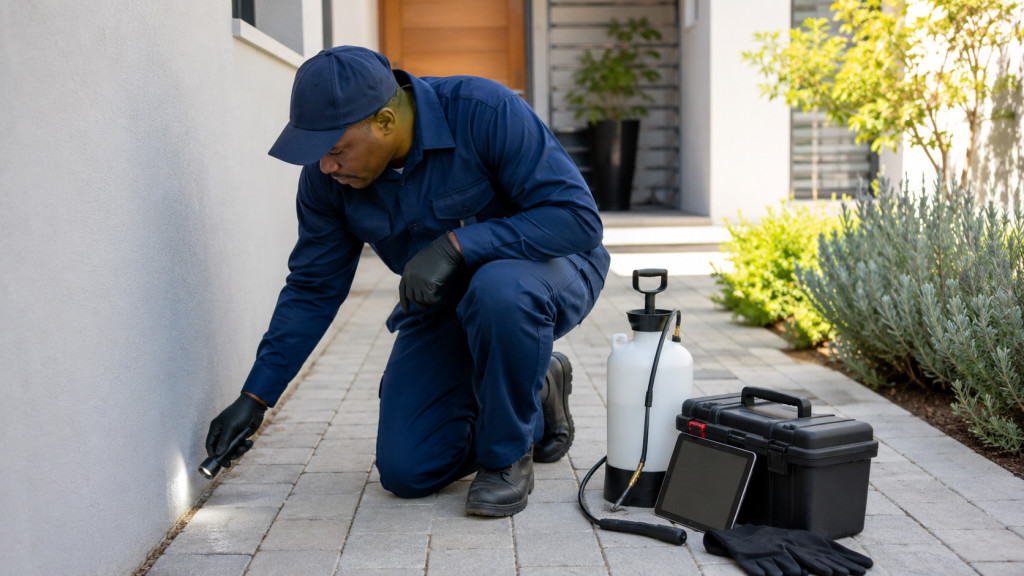
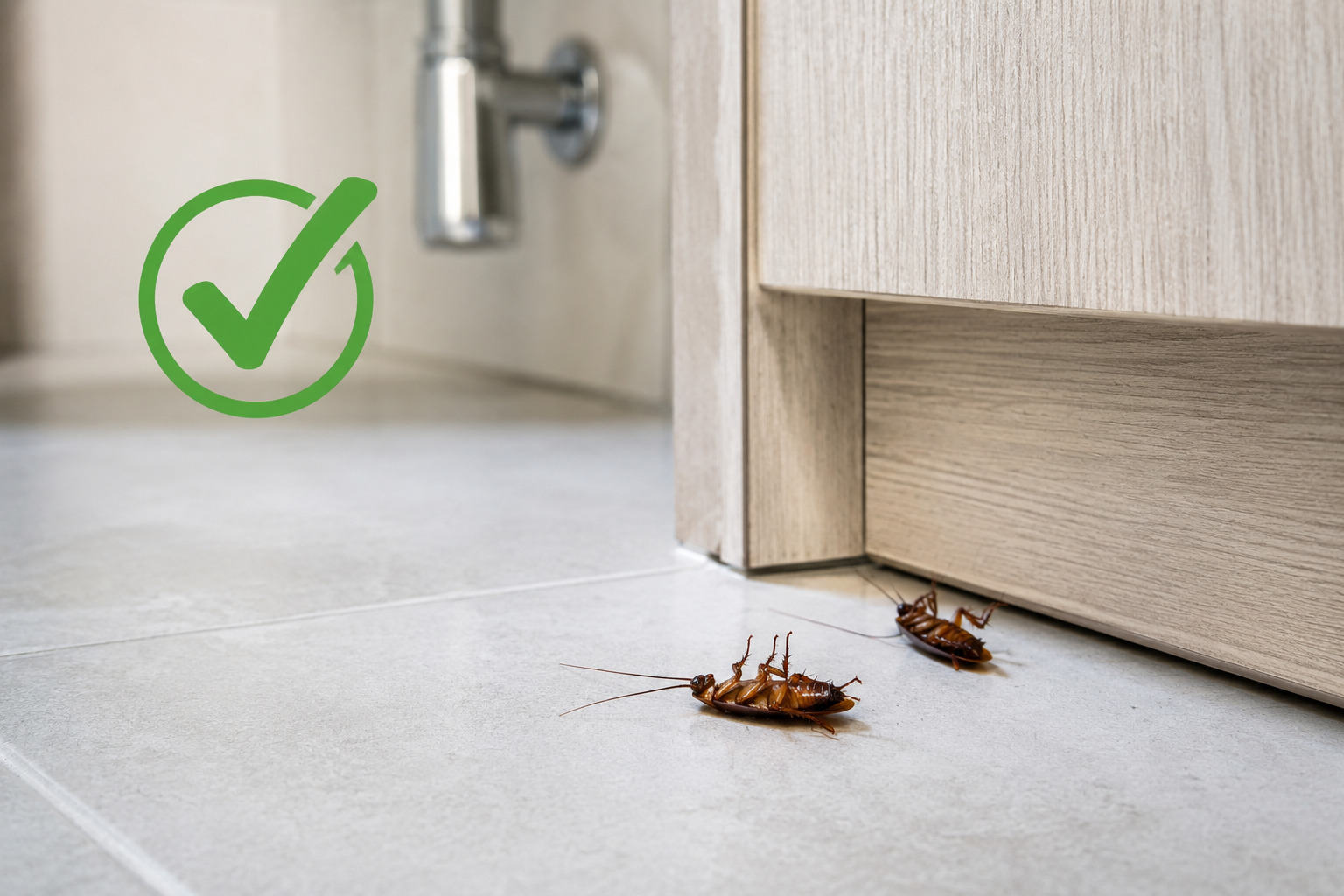
Yes, it can be normal to see cockroaches shortly after pest control.
Seeing cockroaches soon after treatment does not automatically mean the treatment failed.
Cockroach pest control can take time because an infestation is not always made up of only the visible adult cockroaches you see walking around. There may also be hidden adults, younger cockroaches called nymphs, and egg cases tucked away in cracks, cupboards, drains, appliance areas, wall gaps, skirting boards, and damp hidden spaces.
The short answer is: yes, it can be normal to see some cockroaches during the early treatment window. This can happen while the treatment works through hidden cockroaches, nymphs, and newly hatched cockroaches that were already part of the infestation. In most normal household cases, professional cockroach treatment should show strong improvement within the first 1–2 weeks and may already be effective by then. Around the 3-week mark is a sensible point to assess the result properly, because by this stage the treatment should have had enough time to work through the main stages of the infestation. If cockroaches are still being seen regularly around that stage, baby cockroaches keep appearing, or the same hotspots remain active, contact the technician or booking support so the situation can be reviewed and the appropriate next step or revisit can be arranged where needed.
Many customers search for this in different ways, including:
- is it normal to see cockroaches after pest control?
- why am I still seeing roaches after extermination?
- why am I still seeing roaches after treatment?
- why am I still seeing cockroaches after pest control?
Cockroach pest control is not always instant because the treatment needs time to affect cockroaches across different life stages and hiding areas.
The technician will use the method they consider most suitable for the situation. In many cockroach cases, this may include gel bait or targeted treatment around cracks, gaps, cupboards, appliances, drains and other harbourage areas.
If you are dealing with cockroaches, you can start by checking CleanLab SA’s available service locations to find your area.
You can also browse the main cockroach pest control page or the wider pest control services hub.
Main cockroach pest control city pages include:
- Cape Town cockroach pest control
- Durban cockroach pest control
- Johannesburg cockroach pest control
- Pretoria cockroach pest control
- Randburg cockroach pest control
These are useful starting points for major service areas, but they are not the only areas CleanLab SA may cover. Use the locations page to check available service areas.
Why can cockroaches still appear after pest control?
Cockroaches can still appear after pest control because the treatment may need time to affect the full infestation.
A cockroach problem may include:
- visible adult cockroaches
- hidden adult cockroaches
- baby cockroaches, called nymphs
- egg cases hidden in protected areas
- cockroaches inside cracks and gaps
- cockroaches behind appliances
- cockroaches near drains, pipes or damp cupboards
- cockroaches in wall gaps, skirting boards or cupboard hinges
- cockroach activity linked to neighbouring units or shared spaces
When treatment is applied, the visible adults may be affected first.
Hidden cockroaches may come out later.
Egg cases that were already present before treatment may also hatch later, which is why small cockroaches may still appear after the first visible activity has reduced.
This is why customers should not judge the full result only by one or two sightings shortly after the appointment.
In most normal household cases, the treatment should begin showing strong improvement within the first 1–2 weeks. Around the 3-week mark, the treatment should usually have had enough time to be effective.
Cockroach life cycle: why treatment can take time
Cockroaches do not have a larva stage like some insects.
Their life cycle is:
| Stage | What it means after treatment |
|---|---|
| Egg / egg case | Egg cases may be hidden and may hatch later |
| Nymph | Baby cockroaches may appear after treatment as the life cycle continues |
| Adult | Adult cockroaches are often more visible and may be affected first |
This matters because a treatment may affect the visible adult cockroaches first, while younger cockroaches or newly hatched cockroaches may still appear later.
That does not automatically mean the treatment failed.
It often means the treatment is working through different stages of the infestation.
The expected result is that the treatment becomes increasingly effective as it works through visible adults, hidden cockroaches, nymphs, and newly hatched cockroaches.
Why eggs and baby cockroaches matter after treatment
Cockroach egg cases can be hidden in protected areas where customers may not see them.
They may be found in or around:
- cupboard corners
- cracks and gaps
- behind appliances
- under sinks
- wall voids
- skirting boards
- drain areas
- warm motor areas
- cardboard or clutter
- food-storage areas
If egg cases were already present before the treatment, baby cockroaches may still appear later.
This is one reason customers may still see small cockroaches after treatment.
Early sightings can be part of the normal treatment window. But around the 3-week mark, in most normal household cases, the treatment should have had enough time to be effective. If baby cockroaches keep appearing regularly around that stage, contact the technician or booking support so the situation can be reviewed.
Which cockroaches are usually affected first?
Adult cockroaches and cockroaches moving through treated areas are usually the ones customers notice first.
After treatment, you may see:
- adult cockroaches moving slowly
- cockroaches out in the open
- cockroaches appearing during the day
- dead or dying cockroaches
- cockroaches leaving hidden areas
- fewer cockroaches in the original hotspots
This can be part of the treatment process.
Cockroaches hidden deeper inside cracks, appliances, drains, cupboards or wall gaps may not all appear at the same time.
Egg cases may also hatch later, which is why the full effect may take time to show.
Is it normal to see cockroaches in the first few days after treatment?
Yes, it can be normal to see cockroaches in the first few days after treatment.
This may happen because:
- hidden cockroaches are being disturbed
- cockroaches are moving through treated areas
- affected cockroaches are coming out into the open
- adults and nymphs are leaving harbourage areas
- the treatment is still taking effect
During this early period, customers should not panic over every sighting.
Encouraging signs may include:
- slower cockroach movement
- dead or dying cockroaches
- fewer cockroaches in the main hotspots
- fewer cockroaches at night
- less activity around cupboards, drains or appliances
- fewer new sightings as time passes
Seeing cockroaches shortly after treatment is not automatically a reason to worry.
The early window is for the treatment to begin working through the infestation.
Is it normal to see cockroaches 1–2 weeks after treatment?
Yes, it can still be possible to see some cockroaches 1–2 weeks after treatment, especially if the infestation was established, egg cases were present, or cockroaches were hiding deep in harbourage areas.
This is often the period when customers become nervous.
In most normal household cases, however, the treatment should already be showing strong improvement during this period and may already be effective by then.
You may still see an occasional cockroach, especially where hidden activity or newly hatched nymphs are still being affected, but the situation should generally feel noticeably better than before treatment.
During this stage, look at the overall pattern:
| What you see | What it may mean |
| Strong improvement compared with before | Treatment is likely progressing well |
| Occasional slow or dying cockroaches | Treatment may still be taking effect |
| Occasional baby cockroaches | Egg cases or nymphs may still be part of the treatment window |
| Same heavy activity as before | The issue should be reported for review |
| More rooms becoming active | The issue should be reported |
| Many baby cockroaches repeatedly | The infestation may need further attention |
Some activity at 1–2 weeks can still happen, especially in established infestations.
But if the problem feels unchanged, heavy, or worse, do not wait in silence. Communicate with the technician or booking support so the situation can be understood properly.
What should happen by around 3 weeks?
By around 3 weeks, professional cockroach treatment should have had enough time to be effective in most normal household cases.
The reason customers are advised to allow a fair treatment window is because cockroach control may need time to work through hidden adults, nymphs, and newly hatched cockroaches that were already part of the infestation before treatment.
In many cases, customers should notice strong improvement within the first 1–2 weeks. Around the 3-week mark is a sensible point to assess the result properly.
By this point, in most normal household cases, the expectation is that the cockroach problem should be under control.
If cockroaches are still being seen regularly around this stage, if baby cockroaches keep appearing, or if the same problem areas are still active, the customer should contact the technician or booking support.
The situation can then be reviewed, and where further action is needed, the appropriate next step or revisit can be arranged.
The customer should not feel left alone after treatment. The purpose of allowing the treatment window is to give the treatment enough time to work properly through the cockroach life cycle.
How long should I wait before asking for support?
You do not need to panic because of one or two cockroaches shortly after treatment.
Cockroach control needs time to affect adults, hidden cockroaches, nymphs, and newly hatched cockroaches.
But you also do not need to feel abandoned if the problem is not coming under control.
A practical way to think about it is:
| Time after treatment | What to understand |
| First few days | Some cockroach activity can still appear as hidden areas are disturbed and the treatment begins working |
| 1–2 weeks | In most normal household cases, the treatment should already be showing strong improvement and may already be effective, although occasional sightings can still happen while hidden activity and newly hatched nymphs are affected |
| Around 3 weeks | In most normal household cases, the treatment should have had enough time to be effective and the cockroach problem should be under control |
The exact waiting period depends on the technician’s advice and the severity of the infestation.
The main point is this: early sightings do not automatically mean failure, but regular sightings around the 3-week mark should be raised so the technician or booking support can help review what is happening.
Why am I still seeing roaches after extermination?
You may still be seeing roaches after extermination because the treatment is still working through the infestation, hidden cockroaches are being exposed, or egg cases and nymphs are still part of the life cycle.
Common reasons include:
| Reason | What it means |
| Hidden cockroaches were disturbed | Treatment may bring cockroaches out of cracks and gaps |
| Infestation was established | Larger infestations often take longer to settle |
| Egg cases were present | Small cockroaches may appear later as eggs hatch |
| Nymphs were hidden | Baby cockroaches may move out after treatment |
| Food sources remain | Crumbs, grease and open food can support activity |
| Water remains | Leaks, drains and damp cupboards can help cockroaches survive |
| Appliances provide shelter | Fridges, stoves and warm motors are common hiding areas |
| Extra DIY products were used | Some products can interfere with professional treatment |
| Neighbouring units are involved | Flats and complexes may have shared-source problems |
Some customers use the word “extermination,” but the practical issue is the same: cockroach control may take time because the entire infestation is not always exposed at once.
Why am I still seeing roaches after treatment?
You may still be seeing roaches after treatment because cockroach control needs a fair treatment window to work through hidden cockroaches, nymphs, and newly hatched cockroaches that were already part of the infestation.
Some cockroaches may have been hidden:
- deep inside cracks
- inside cupboard hinges
- behind appliances
- near drains
- under sinks
- inside wall gaps
- in cluttered storage areas
- near moisture sources
- in neighbouring units or shared areas
This is why early sightings do not automatically mean the treatment has failed.
In most normal household cases, professional cockroach treatment should show strong improvement within the first 1–2 weeks and may already be effective by then. Around the 3-week mark, the treatment should have had enough time to work through the main stages of the infestation.
If cockroaches are still being seen regularly around that stage, baby cockroaches keep appearing, or the same hotspots remain active, communicate with the technician or booking support so the situation can be reviewed and the appropriate next step can be arranged where needed.
What if gel bait or targeted treatment was used?
If gel bait or targeted treatment was used, it can still be normal to see cockroaches for a period afterwards.
Gel bait is not designed to make every cockroach disappear the moment it is applied.
Cockroaches may need to find and feed on bait, return to hiding areas, or be affected through the treatment process. Hidden cockroaches and newly hatched nymphs may also continue appearing for a while as the infestation is brought under control.
Customers should avoid wiping away bait placements, cleaning treated target zones too soon, or applying extra products over treated areas unless instructed.
If you are unsure what was applied, ask the technician which areas should be left undisturbed and what level of activity is expected.
Why are cockroaches still in my kitchen after treatment?
Cockroaches may still be in the kitchen after treatment because kitchens provide food, water, warmth and hiding places.
Kitchens are one of the most common cockroach areas because they contain:
- crumbs
- grease
- bins
- food packaging
- pet food
- water sources
- under-sink spaces
- drains
- appliance warmth
- cupboard gaps
- skirting boards
- dark corners
Even a clean kitchen can have hidden food residue or moisture behind appliances, under cabinets or near pipes.
If cockroaches are still appearing in the kitchen, check whether there are still:
- leaking pipes
- damp cupboards
- open food packets
- crumbs behind appliances
- dirty bin areas
- blocked access to treatment zones
- cluttered cupboards
- pet food left out overnight
Cockroach pest control works best when treatment and prevention work together.
Why are cockroaches still coming from drains or bathrooms?
Cockroaches may still appear near drains or bathrooms because these areas provide moisture, access routes and dark hiding spaces.
Bathrooms and drains may support cockroach activity through:
- damp areas
- leaking pipes
- floor drains
- shower drains
- basin pipes
- wall gaps
- plumbing routes
- moisture under cupboards
- cracks around tiles
- shared building drainage areas
This does not mean every cockroach is coming directly from the drain.
But drains and plumbing areas can be part of the problem, especially in flats, complexes and properties with shared systems.
If cockroaches keep appearing around drains, tell the technician clearly. This helps them understand the likely hotspots and give better advice.
Can cleaning too soon affect cockroach treatment?
Yes, cleaning treated areas too soon can sometimes reduce the effectiveness of cockroach treatment.
After treatment, customers should follow the technician’s aftercare instructions.
You may be told to avoid:
- mopping treated floors too soon
- wiping treated skirting boards
- cleaning cracks and gaps
- removing gel bait
- applying extra products over treated areas
- moving items back too quickly
- washing away products from target zones
- disturbing bait or treatment placements
This does not mean the home should be left dirty.
Food surfaces may need to be cleaned before use, and general hygiene is still important.
The key is to ask which areas can be cleaned normally and which areas should be left undisturbed for the treatment to work properly.
Can using extra DIY products after pest control affect the result?
Yes, using extra DIY products after professional cockroach pest control can sometimes interfere with the treatment or move cockroaches into other hiding areas.
Customers often panic when they see cockroaches after treatment and try to add more products immediately.
That can be understandable, but it may not always help.
Extra DIY products may:
- disturb treated areas
- affect bait or targeted placements
- move cockroaches away from treatment zones
- make it harder to judge whether the treatment is working
- reduce the effectiveness of certain products
- create unnecessary chemical exposure
If you see cockroaches after treatment, rather ask the technician or booking support what to do before applying extra products.
Does seeing cockroaches after treatment mean the infestation is bigger?
Seeing cockroaches after treatment can sometimes mean the infestation was bigger or better hidden than expected, but not always.
It may simply mean hidden cockroaches are being disturbed.
However, a larger infestation may be more likely if:
- cockroaches are seen during the day
- baby cockroaches are common
- multiple rooms are affected
- there is activity behind appliances
- there are droppings or egg cases
- activity continues after treatment
- there are strong kitchen, drain or cupboard hotspots
- neighbouring units may be involved
If the infestation is larger, a one-off treatment may still help, but follow-up, better preparation, sanitation, moisture control or ongoing pest control may be needed.
What should I do if I still see cockroaches after pest control?
If you still see cockroaches after pest control, monitor the pattern and follow the technician’s aftercare instructions before assuming the treatment failed.
Helpful steps include:
- note where cockroaches are seen
- note whether they are adult or baby cockroaches
- check whether sightings are settling
- avoid applying extra products without advice
- do not clean treated areas too soon
- reduce food sources
- keep bins closed
- clean crumbs and grease
- fix leaks or damp areas where possible
- keep pet food away overnight
- report repeated activity if it continues
If activity is still strong around the point where the treatment should be clearly effective, follow up with the technician or booking support.
The more specific you are, the easier it is to advise. For example:
- “I am still seeing cockroaches under the sink.”
- “I am seeing baby cockroaches near the fridge.”
- “They are coming from the bathroom drain.”
- “The kitchen is better, but the pantry still has activity.”
- “We saw fewer cockroaches at first, but now activity is increasing again.”
That information is more useful than simply saying “the cockroaches are back.”
Should I communicate with the technician if I still see cockroaches?
Yes, you should communicate with the technician or booking support if you are unsure whether the activity you are seeing is normal.
This is especially useful if:
- you are still seeing strong cockroach activity around the 3-week mark
- the number of sightings is not settling
- baby cockroaches keep appearing
- the same hotspots remain active
- activity is spreading to new rooms
- you are unsure whether to clean or leave treated areas
- you used DIY products after treatment
- you have pets, children or food-area concerns
- you are worried the treatment has not worked
In many cases, customers feel much better once they understand the expected timeline.
If the pattern is normal, the technician can reassure you.
If the pattern suggests the issue still needs attention, the situation can be reviewed and the appropriate next step can be arranged where needed.
Is a second cockroach treatment sometimes needed?
In most normal household cases, professional cockroach treatment should be effective within the expected treatment window.
In a few cases, however, additional treatment, further advice, or a revisit may be needed.
This is more likely when:
- the infestation was heavy
- baby cockroaches keep appearing after the expected treatment window
- multiple rooms were affected
- cockroaches are hiding deep inside appliances, cupboards, cracks or drains
- moisture problems remain
- food or water sources are still supporting activity
- neighbouring units or shared building spaces are involved
- preparation or access was limited
- the property is a restaurant, shop, flat, complex or high-risk food area
This does not mean the original treatment was ineffective. It may simply mean the infestation needs additional attention because the source, harbourage areas, or surrounding conditions are more complicated.
If cockroach activity is still being seen regularly around the point where the treatment should be effective, communicate with the technician or booking support. The situation can be reviewed, and where further action is needed, the appropriate next step or revisit can be arranged.
Can cockroaches come back after treatment?
Yes, cockroaches can come back after treatment if food, water, warmth, entry routes or hiding spaces remain available.
Cockroaches may return because of:
- crumbs and grease
- leaking pipes
- damp cupboards
- open food packaging
- appliance hiding spaces
- clutter
- drains
- gaps and cracks
- neighbouring units
- shared waste areas
- poor sanitation
- repeated reintroduction from packaging or deliveries
Cockroach pest control reduces the current issue, but prevention matters too.
If the property keeps attracting cockroaches, they may return even after a good treatment.
How can I reduce cockroaches after treatment?
You can help reduce cockroaches after treatment by removing the things that allow them to survive.
Helpful steps include:
- keep food sealed
- clean crumbs and grease
- empty bins regularly
- keep bin lids closed
- avoid leaving dirty dishes overnight
- remove pet food overnight
- fix leaks where possible
- dry damp cupboard areas
- reduce cardboard clutter
- clean behind appliances where practical
- follow aftercare instructions
- avoid cleaning treated areas too soon
- avoid using extra DIY products without advice
- report continued hotspots
These steps support the treatment.
They do not replace professional pest control when the problem is established, but they can help reduce the chance of ongoing activity.
What if I used another company and still see cockroaches?
If you used another pest control company and still see cockroaches, it does not automatically mean the previous treatment was poor.
Cockroach problems can be complicated, especially where there are hidden harbourage areas, moisture, drains, appliances, shared walls, neighbouring units, or heavy infestations.
However, you may want a structured cockroach pest control booking if:
- the problem has not improved
- you were not given clear aftercare instructions
- no one explained what to expect after treatment
- cockroaches are still active around the same hotspots
- baby cockroaches keep appearing
- the issue keeps returning
- you are unsure what was treated
- you need clearer guidance on the next step
When booking through CleanLab SA, customers get a structured way to arrange cockroach pest control with listed professionals who are reviewed by customers and expected to meet clear standards.
The aim is not for customers to feel left on their own after treatment. If there is still activity after the fair treatment window, the situation should be communicated clearly so it can be reviewed and the appropriate next step can be arranged where needed.
Should I book cockroach pest control again?
You should consider booking cockroach pest control if cockroaches keep appearing, baby cockroaches are visible, DIY products have not helped, or the problem has returned after a previous treatment.
Professional cockroach pest control may be especially useful if:
- cockroaches are in the kitchen
- cockroaches are near drains
- cockroaches are behind appliances
- cockroaches appear in bathrooms
- baby cockroaches are seen
- the issue affects a flat or complex
- the issue affects a business or food area
- the problem has not been brought under control
If you have already booked cockroach pest control through CleanLab SA and are still seeing activity after the expected treatment window, the better next step is usually to communicate with the technician or booking support first.
This allows the situation to be reviewed properly before assuming a new booking is needed.
The technician can consider what was treated, where activity is still appearing, whether the normal treatment window has passed, and whether further advice, additional steps, or a revisit may be appropriate.
Why book cockroach pest control through CleanLab SA?
Booking through CleanLab SA gives customers a structured way to arrange cockroach pest control services in South Africa.
CleanLab SA’s listed professionals are reviewed by customers and expected to meet clear standards. Customers also get support from booking to completion.
That means the value is not only in the pest control service itself, but also in the booking structure around it:
- reviewed listed professionals
- clear standards to remain listed
- customer review visibility during booking
- support from booking to completion
- a clearer path for booking-related assistance where needed
- a structured way to book help for recurring cockroach issues
For cockroach problems, this matters because customers are often unsure whether continued sightings are normal, whether treatment failed, or whether follow-up is needed.
If you are still seeing cockroaches around the point when treatment should be clearly effective, the best next step is to communicate clearly so the technician can review the situation and advise. If further action is needed, the appropriate next step can be arranged.
You can learn more from CleanLab SA’s Booking Protection and Professional Standards pages.
Find cockroach pest control in your area
If you need help with cockroaches, start by checking CleanLab SA’s available locations.
You can also browse the main cockroach pest control city pages below:
- Cockroach pest control in Cape Town
- Cockroach pest control in Durban
- Cockroach pest control in Johannesburg
- Cockroach pest control in Pretoria
- Cockroach pest control in Randburg
These are useful starting points for major service areas, but customers can also use the locations page to check whether their suburb or area is available.
You can also browse the main cockroach pest control page or the wider pest control services hub if you want to compare other pest control services.
Final answer: is it normal to see cockroaches after pest control?
Yes, it can be normal to see some cockroaches shortly after pest control.
This can happen because treatment may need time to work through hidden cockroaches, nymphs, and newly hatched cockroaches that were already part of the infestation.
In most normal household cases, professional cockroach treatment should show strong improvement within the first 1–2 weeks and may already be effective by then. Around the 3-week mark is a sensible point to assess the result properly, because by this stage the treatment should have had enough time to work through the main stages of the infestation.
If cockroaches are still being seen regularly, baby cockroaches keep appearing, or the same hotspots remain active around that stage, contact the technician or booking support. The situation can be reviewed, and where further action is needed, the appropriate next step or revisit can be arranged.