One of the most common questions before booking pest control is: is pest control safe for pets and children?
It is a fair question.
If you have a dog or cat at home, a baby crawling on the floor, or young children touching surfaces and moving through treated areas, you want to know that the service will be handled responsibly.
The short answer is: yes — pest control can be carried out safely in homes with pets and children when the correct treatment is used properly, by trained professionals, with the right preparation, precautions, and aftercare guidance.
That does not mean every pest treatment is exactly the same. The right precautions depend on the type of pest, the treatment method, the areas being treated, and whether there are pets, babies, young children, or sensitive household conditions in the home.
If you want to browse available options first, you can view CleanLab SA’s pest control services section.
Is pest control generally safe in homes with pets and children?
In many cases, yes — when treatments are handled correctly and the household follows the guidance given for that specific service.
Professional pest control is not just about applying a product. It should also involve:
- identifying the pest correctly
- choosing the right treatment approach
- applying the treatment appropriately
- reducing unnecessary exposure
- considering where pets and children move through the home
- giving clear preparation and aftercare guidance
This is why professional handling matters.
The safety question is not only: “Is pest control safe?”
The better question is: “What treatment is being used, where is it being applied, and what precautions should my household follow?”
What affects pest control safety most?
The main safety factors are usually:
- the type of pest
- the treatment method
- the application area
- the household setup
- whether pets or children can access treated areas
- whether the customer follows the preparation and aftercare instructions
A treatment applied in a hidden or controlled area is different from a treatment applied in an open living space.
A home with no pets is different from a home with dogs, cats, babies, toddlers, or children who play on the floor.
That is why customers should always mention pets and young children before treatment begins.
Does the type of pest affect safety precautions?
Yes. Different pests often require different treatment methods, and that can change the precautions needed.
For example:
- ant pest control may involve targeted treatment in specific problem areas
- cockroach pest control may involve kitchens, cupboards, cracks, and hidden areas
- bed bug pest control may require more careful preparation and aftercare
- rodent pest control may involve traps, bait stations, or controlled placement
- flea pest control may require extra care around pet environments and indoor living areas
- silverfish pest control may focus on hidden areas linked to moisture and activity
- tick pest control may require care where pets and yard areas are involved
- general pest control may vary depending on the pests found and the severity of the issue
So the answer is not the same for every pest.
Bed bug treatment, rodent baiting, cockroach treatment, flea treatment, and general pest control may each need different preparation and aftercare.
Are pest control sprays safe around pets and children?
Pest control sprays can be used safely when the correct product is applied correctly and the household follows the safety guidance given.
But sprays are not something customers should treat casually.
Important precautions may include:
- keeping pets and children away from treated areas
- allowing treated surfaces to dry where advised
- avoiding unnecessary contact with treated zones
- ventilating rooms where instructed
- not cleaning treated areas too soon
- following the technician’s re-entry guidance
The exact advice may vary depending on the pest, the product, the treatment area, and the household.
That is why it is important to ask the technician what applies to your specific service.
Are bait stations and traps safer than sprays?
Bait stations and traps can reduce exposure when they are placed correctly, but they still need to be handled responsibly.
This is especially relevant for rodent pest control.
Rodent control may involve:
- traps
- bait stations
- controlled bait placement
- monitoring of activity areas
- advice on access points and prevention
The important point is that bait stations, traps, and treated areas should not be disturbed by children, pets, or household members.
If you have dogs, cats, young children, or curious pets, tell the technician before treatment starts. Placement and guidance should take the household into account.
Do pets and children need to leave the house during pest control?
Sometimes, yes.
Whether pets and children need to leave the home depends on the pest, the treatment method, the areas being treated, and the instructions given for that service.
For some treatments, the technician may advise that pets and children stay away from certain areas for a period.
For other treatments, the precautions may be more limited, especially if the treatment is targeted, placed in restricted areas, or designed to avoid unnecessary contact.
The safest approach is simple:
Ask before the treatment starts, follow the service-specific instructions, and keep pets and children away from active work areas.
Do not assume every pest control treatment has the same re-entry time or same restrictions.
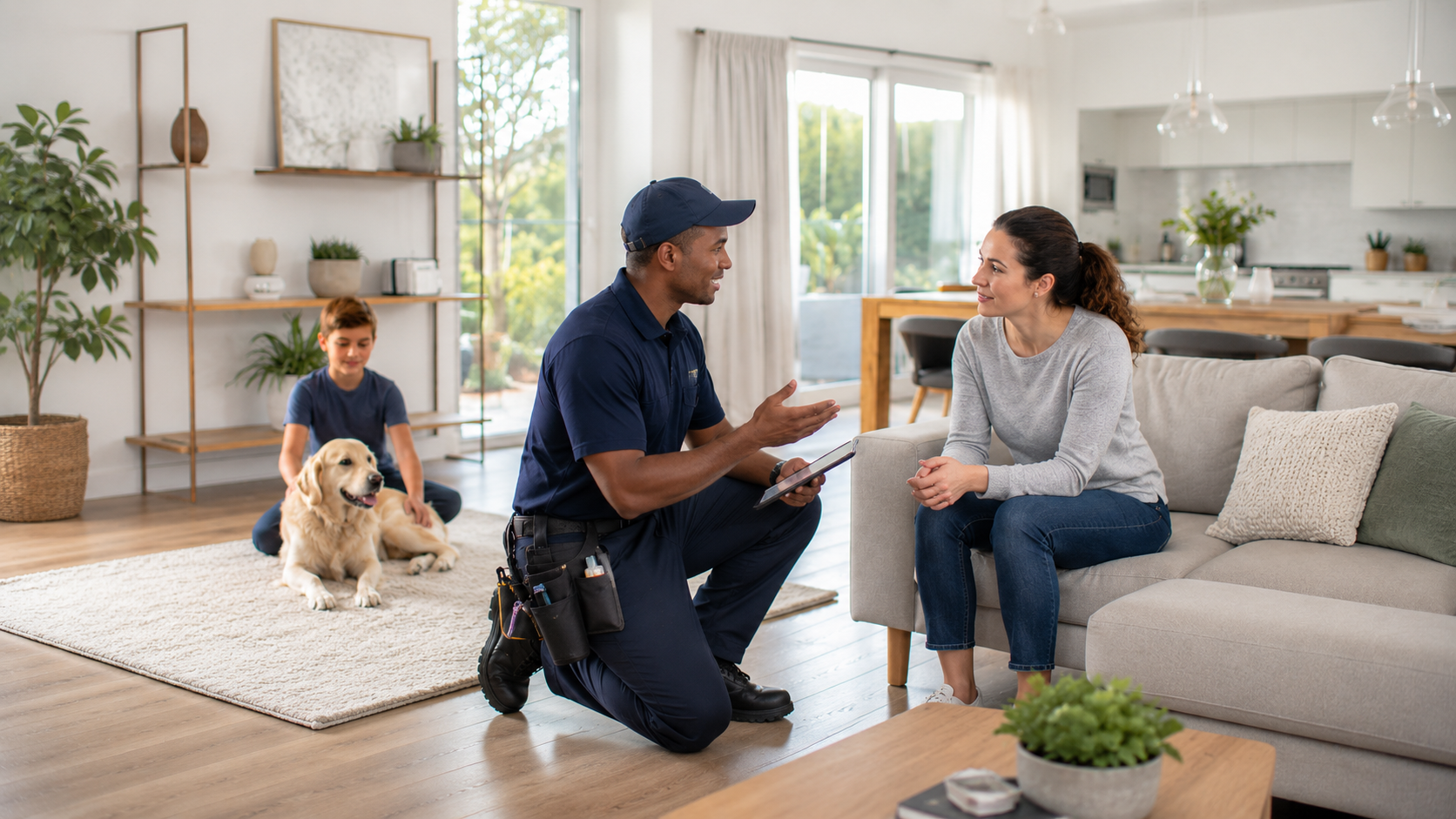
What should you tell the pest control technician before treatment?
Before treatment begins, tell the technician if there are:
- dogs or cats in the home
- birds, fish, reptiles, or small pets
- babies or toddlers
- children who play on the floor
- pregnant household members
- elderly or sensitive household members
- allergies or respiratory concerns
- pet bowls, pet beds, toys, or litter trays near treatment areas
- food preparation areas that need special care
This information helps the technician give more appropriate preparation and aftercare guidance.
It also helps reduce unnecessary exposure and avoid preventable problems.
How should you prepare pets before pest control?
Pet preparation depends on the treatment, but common steps may include:
- keeping pets away from treatment areas
- moving pet bowls, bedding, and toys
- covering or moving aquariums if advised
- keeping birds or small animals away from treated rooms
- preventing pets from licking treated surfaces
- keeping pets away until re-entry or drying guidance has been followed
- asking the technician what applies to your specific treatment
For flea and tick treatments, the pet environment may be especially important because the pest problem can involve pet bedding, carpets, floors, and outdoor areas.
The key is to mention pets early so the right precautions can be explained before work begins.
How should you prepare children before pest control?
If you have children at home, especially babies or toddlers, preparation may include:
- keeping children away from active treatment areas
- removing toys from floors or treatment zones
- storing food, bottles, and utensils where relevant
- keeping children out of treated rooms until advised
- avoiding contact with treated surfaces
- following instructions before cleaning or mopping treated areas
- asking about re-entry times if treatment is done indoors
This is especially important where children crawl, touch floors, play near skirting boards, or put hands and objects in their mouths.
The aim is not to create fear. The aim is to make sure the treatment is handled responsibly.
What should you do after pest control if you have pets or children?
After treatment, follow the technician’s instructions carefully.
Common aftercare guidance may include:
- waiting before re-entering certain areas
- keeping pets and children away from treated zones temporarily
- allowing treated areas to dry or settle
- not washing treated surfaces too soon
- not disturbing bait stations, traps, or treated areas
- ventilating rooms where advised
- monitoring pest activity after treatment
- asking before cleaning areas that were treated
The exact aftercare depends on the service.
For example, the advice after cockroach treatment may not be the same as the advice after rodent control, bed bug treatment, or flea treatment.
Can you clean after pest control?
Usually, you should avoid cleaning treated areas too soon unless the technician says it is safe to do so.
Cleaning too early may reduce the effectiveness of the treatment.
This is especially important for treatments that rely on product remaining in specific cracks, crevices, skirting areas, bait zones, or pest movement routes.
You may still be able to clean non-treated areas, but always ask what should and should not be disturbed.
For households with pets and children, this matters because people often want to wipe everything down immediately. In some cases, that may interfere with the treatment.
Is DIY pest control safer for pets and children?
Not necessarily.
Many people assume DIY pest control is safer because they control the product and application themselves.
In reality, DIY can create extra risk when:
- the wrong product is chosen
- too much product is used
- products are applied incorrectly
- instructions are misunderstood
- products are placed where pets or children can access them
- different products are mixed or overused
- the source of the infestation is not properly addressed
DIY also often treats only the visible problem.
That can lead to repeated product use without solving the infestation properly.
Professional pest control can be safer and more effective when the treatment is selected correctly, applied responsibly, and supported by clear customer guidance.
Is delaying pest control safer?
Not always.
Sometimes customers delay treatment because they are worried about pets and children, but the pest problem itself may already be creating a bigger household concern.
Delaying treatment can be a problem with:
- cockroach contamination in kitchens
- rodent droppings and urine in ceilings or living areas
- bed bug infestations becoming more established
- fleas and ticks affecting pets and indoor spaces
- ongoing pest activity in high-use household areas
- pests spreading into more rooms or hidden areas
The goal is not to avoid treatment at all costs.
The goal is to make sure the treatment is handled properly and that the correct preparation and aftercare advice is followed.
Which pest problems need extra care around pets and children?
All pest control should be handled responsibly, but some pest problems need especially clear guidance.
These include:
- flea and tick treatments where pets are part of the environment
- rodent treatments where bait or traps may be used
- bed bug treatments in bedrooms and sleeping areas
- cockroach treatments in kitchens and cupboards
- general pest control in high-use living areas
- treatments near children’s rooms, pet areas, or food areas
This does not mean those services cannot be done safely.
It means the technician and household should be clear about preparation, access, aftercare, and what areas should be avoided.
Why trained professional guidance matters
One reason customers feel unsure before booking is that they do not yet know:
- what treatment is suitable
- what preparation is needed
- whether pets need to be moved
- whether children should stay out of rooms
- when treated areas can be used again
- whether specific surfaces should be avoided or cleaned later
That uncertainty is normal.
The important point is that pest control should be assessed and guided by trained professionals.
Customers should expect to be advised based on the specific treatment being provided.
Preparation guidance, treatment precautions, and aftercare instructions may vary from one pest problem to another.
Why book pest control through CleanLab SA?
Booking pest control through CleanLab SA gives customers a structured way to arrange professional pest control help.
CleanLab SA’s listed professionals are reviewed by customers and expected to meet clear standards. Customers also get support from booking to completion.
That means the value is not only in the pest control itself, but also in the booking structure around it:
- reviewed listed professionals
- clear standards to remain listed
- customer review visibility during booking
- support from booking to completion
- a clearer path for booking-related assistance where needed
For households with pets and children, this matters because customers often want clear expectations, responsible handling, and guidance they can follow before and after treatment.
You can learn more from CleanLab SA’s Booking Protection and Professional Standards pages.
Find pest control in your city
If you are comparing pest control options and want to check services in your area, these pages may help:
- Cape Town Pest Control
- Durban Pest Control
- Johannesburg Pest Control
- Pretoria Pest Control
- Randburg Pest Control
You can also start with CleanLab SA’s main pest control services page if you are still comparing pest types.
Final answer: is pest control safe for pets and children?
Yes — pest control can be carried out safely in homes with pets and children when the correct treatment is used properly, by trained professionals, with the right precautions and aftercare guidance.
The key point is that not every treatment is the same.
The pest type, treatment method, treatment area, household layout, pets, children, and aftercare instructions all matter.
If you are dealing with ants, cockroaches, rodents, bed bugs, fleas, ticks, silverfish, or another household pest issue, the best next step is to review the relevant pest control service and follow the preparation and aftercare guidance for that treatment.